


Brexit

Progress Recognised, Again

The European Commission has once again proposed removing Gibraltar from its list of high-risk jurisdictions for money laundering and terrorism financing — a long-awaited recognition of the Rock’s progress in strengthening its financial oversight.
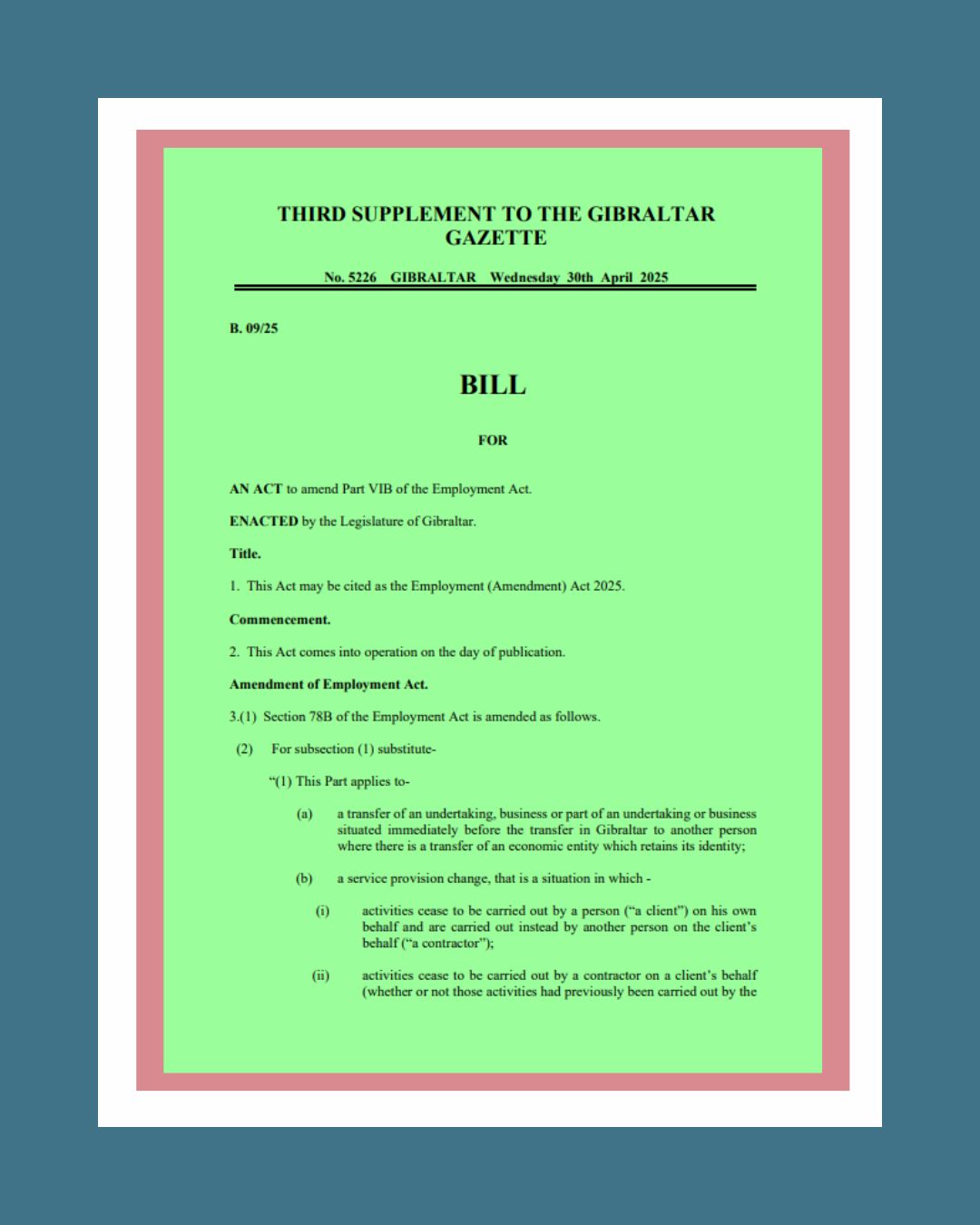
Employment Law Alignment
The Gibraltar Government has introduced a new Employment (Amendment) Act 2025, confirming that key worker protections will apply during the transfer of services between companies, commonly known as TUPE (Transfer of Undertakings Protection of Employment) in the UK.

Brexit See Saw
This week, Chief Minister Fabian Picardo travelled to Madrid for a series of meetings aimed at progressing Gibraltar’s position in the UK/EU treaty negotiations. His schedule included talks with Spanish Parliamentary groups, trade unions, and last night's late-night media appearance on Spain’s TVE news. During a meeting with Spain’s largest trade union, CCOO, discussions focused on “the vital importance of a mutually beneficial agreement that protects the rights of cross-frontier workers,” according to the Government press release.

What’s YOUR preference?
The EU mandates a minimum VAT rate of 15%, but there is no maximum. While Gibraltar has ruled out introducing VAT, the Government is considering either a sales tax or a transaction tax as part of a potential agreement with the EU. Both would have different impacts on businesses and consumers.

Adios British Brands? An Opinion
For decades, our economy has thrived as a bastion of Britishness and British goods are at the heart of what makes Gibraltar unique. But could aligning with EU regulations including tariffs on UK imports mean it's time to wave adios to British goods?

Key Brexit Briefings
This week, the GFSB participated in two important meetings on key Brexit-related developments. These sessions reflect the GFSB’s ongoing work to keep members informed and ensure their voices are heard.

Sales Tax Incoming?
We’ve been given further insight into what post-Treaty taxation could look like. Speaking with GBC’s Jonathan Scott, the Chief Minister, Fabian Picardo shared potential changes to Gibraltar’s taxation model, including the introduction of a sales tax. Here's what we know...

CM’s NY Message
In his annual New Year Message, the Chief Minister has outlined what we can expect over the next 12 months. As well as plans for a new reclamation project, Mr Picardo gave updates on treaty negotiations, digital initiatives, housing plans and a potential new sales tax... Here are our key takeouts...

All Eyes On EU
The European Commission has now proposed a phased rollout of its digital Entry/Exit System (EES) for non-EU nationals entering the Schengen zone. Originally planned for November 2024 (The EES was actually initially supposed to start operating in 2022. It was then postponed until May 2023, then until the end of 2023 and finally, until 10 November), the start date has been delayed further due to readiness concerns.

UK Access Secured
In what's been a busy week for Gibraltar Parliament, crucial legislation to implement the Gibraltar Access Regime (GAR) that ensures long-term access to the UK market for Gibraltar’s financial services firms was passed.