
 Gibraltar Federation of Small Businesses


 Gibraltar Federation of Small Businesses

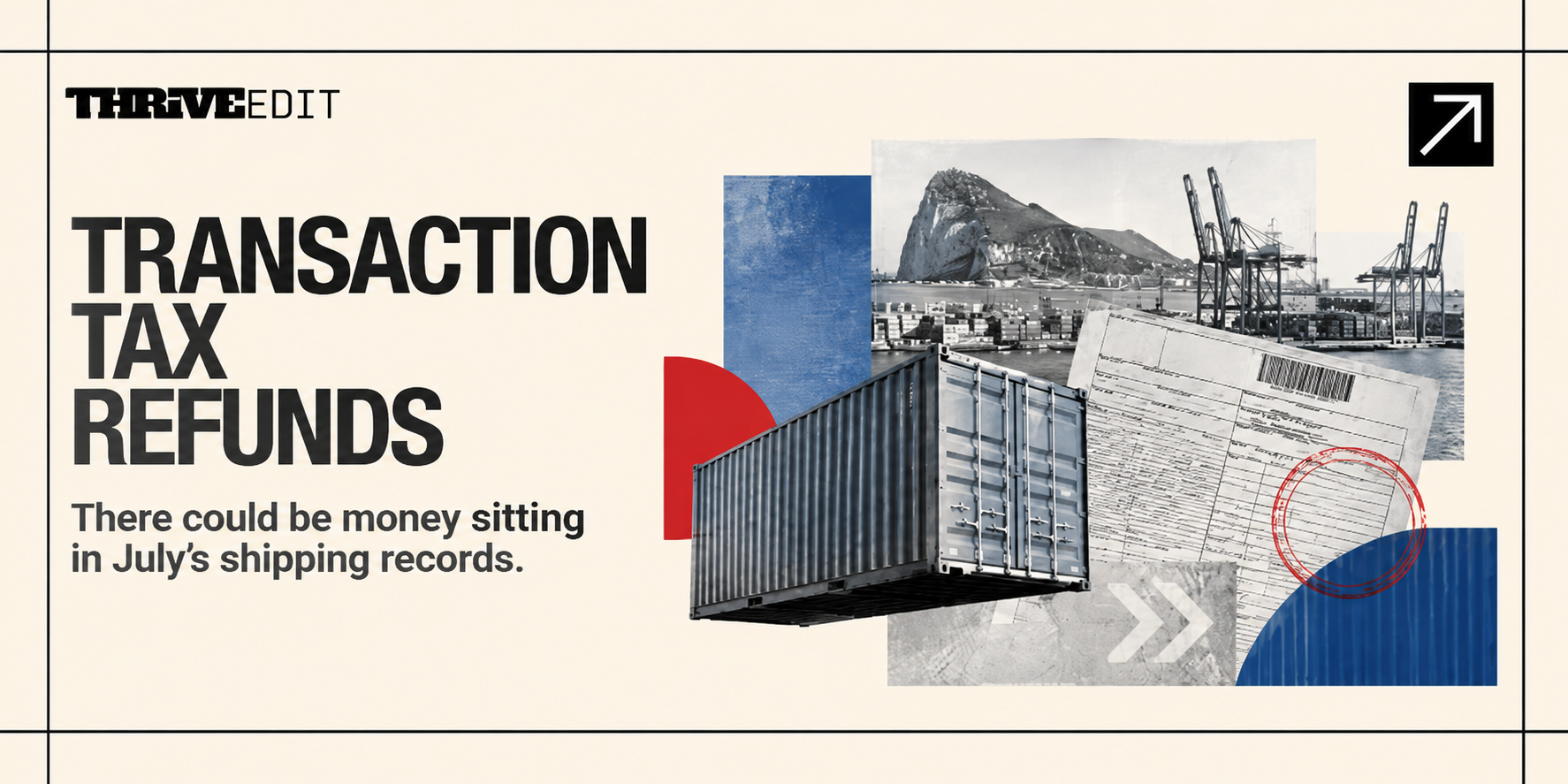
Some businesses may be able to recover part of the Transaction Tax paid on goods that were already on their way to the Rock before 15 July. The deciding factor is when the journey started, and the evidence may already be sitting in your shipping records.
If your business imported goods around the Treaty changeover, it is worth going back through the paperwork. HM Customs has published a new refund process covering goods whose movement to Gibraltar had actually started before 15 July 2026, but which arrived and were cleared after Gibraltar’s new customs and Transaction Tax regime came into effect.
Where Transaction Tax was subsequently paid on a qualifying consignment, Customs can reassess the goods using the Import Duty regime that applied before 15 July. If that calculation shows the business paid more under the new system, the verified difference can be refunded. (Government of Gibraltar)
For importers that had stock, equipment or customer orders moving towards Gibraltar during the changeover, that makes a review of July consignments worthwhile.
You may have a claim if:
You will need:
If a clearing agent handled the customs declaration: submit the claim through them.
If you are a registered ASYCUDA trader lodging your own declarations: you can submit directly to HM Customs.
The most important distinction is between buying something and moving it. An order placed before 15 July does not qualify simply because it was ordered, invoiced or paid for before the changeover. The transport itself must have started.
That principle was included in the Government’s pre-implementation guidance and has now been translated into a claims process. Article 269 of the UK-EU Agreement provides transitional treatment for goods whose movement began before the new arrangements took effect and finished afterwards. (Government of Gibraltar)
For a Gibraltar business, the first job is therefore to identify consignments that straddled 15 July and establish exactly when each one left its point of dispatch.
Customs needs reliable transport evidence showing that the goods had begun their journey before the cut-off.
Its guidance gives examples including:
Other reliable transport evidence may also be considered. This is where good record-keeping becomes valuable. Businesses that routinely retain freight documents alongside invoices and customs entries should be able to establish fairly quickly which consignments merit a closer look. If records are spread between your business, supplier, freight company and clearing agent, it may take a little more digging.
HM Customs recommends identifying the relevant SAD / E-number for each potential claim. You then need to bring that entry together with the commercial invoice, proof of payment and evidence showing when the shipment actually began.
Where a clearing agent originally lodged the declaration, the claim should go back through that clearing agent. Businesses registered on ASYCUDA that submit their own declarations can apply directly.
Completed claims and supporting documents are submitted to refunds@hmcustoms.gov.gi. The same address can be used where clarification is required. (Government of Gibraltar)
The procedure does not automatically refund all the Transaction Tax paid on an eligible shipment. Customs will reassess the consignment according to the pre-15 July Import Duty treatment that would have applied. The amount refundable is the verified difference between what was paid and what should have been due under those transitional arrangements.
Depending on the goods involved and the previous duty rate, that difference will vary. Submitting a claim also does not guarantee a refund. Customs must verify both the eligibility of the shipment and the amount claimed, and can reject an application if the evidence does not sufficiently demonstrate that transport started before 15 July. (Government of Gibraltar)
For businesses regularly importing stock, July may have involved dozens or hundreds of customs entries. A structured review will make more sense than trying to remember individual deliveries. Start with goods cleared shortly after 15 July and work backwards through the associated transport records.
Ask:
The Government’s guidance does not state a specific closing date for these refund claims, but there is little benefit in leaving potentially eligible consignments buried in the filing system. If you’re already dealing with the operational consequences of Gibraltar’s new customs arrangements, this is one piece of the transition that could produce a direct financial return.
A couple of hours spent checking July’s shipping records may be time well spent. If you’re finding this process, please let us know. Email the office on gfsb@gfsb.gi.




Governments and geopolitical strategists use simulations to test what might happen when other players react. The same thinking can help businesses challenge assumptions, anticipate competitors and prepare for decisions before real money is on the line.

From Hong Kong to Abu Dhabi, Gibraltar is pursuing new industries and investors as part of a major economic diversification drive. Minister Nigel Feetham says the campaign is already generating business. The bigger question is how far those opportunities can spread through Gibraltar’s wider economy.

Gibraltar plans a new residency route for financially independent over-55s alongside a new business think tank announced at GibLink London.
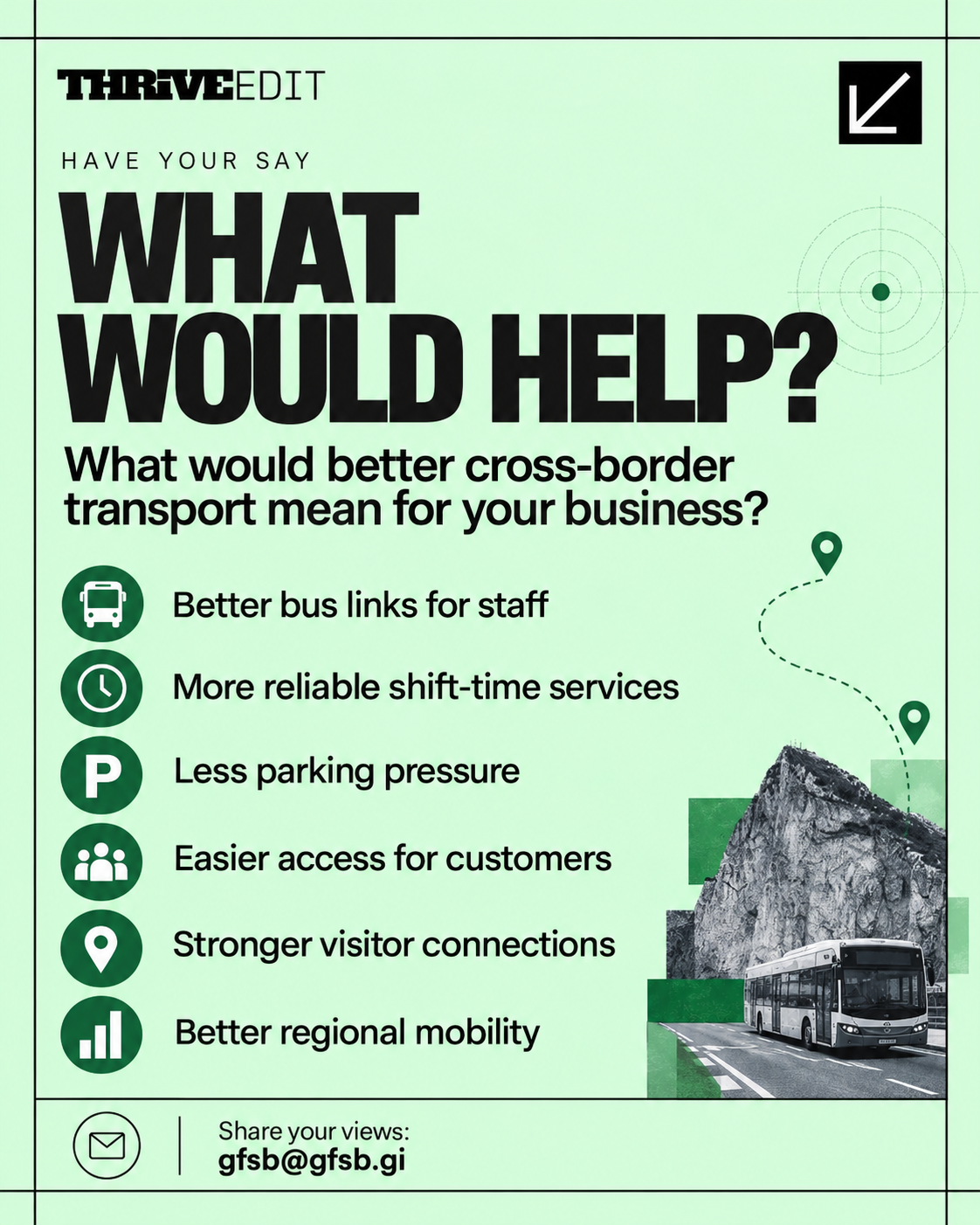
New frontier lanes and discussions around a cross-border transport interchange raise questions about buses, workers, visitors and business connectivity.
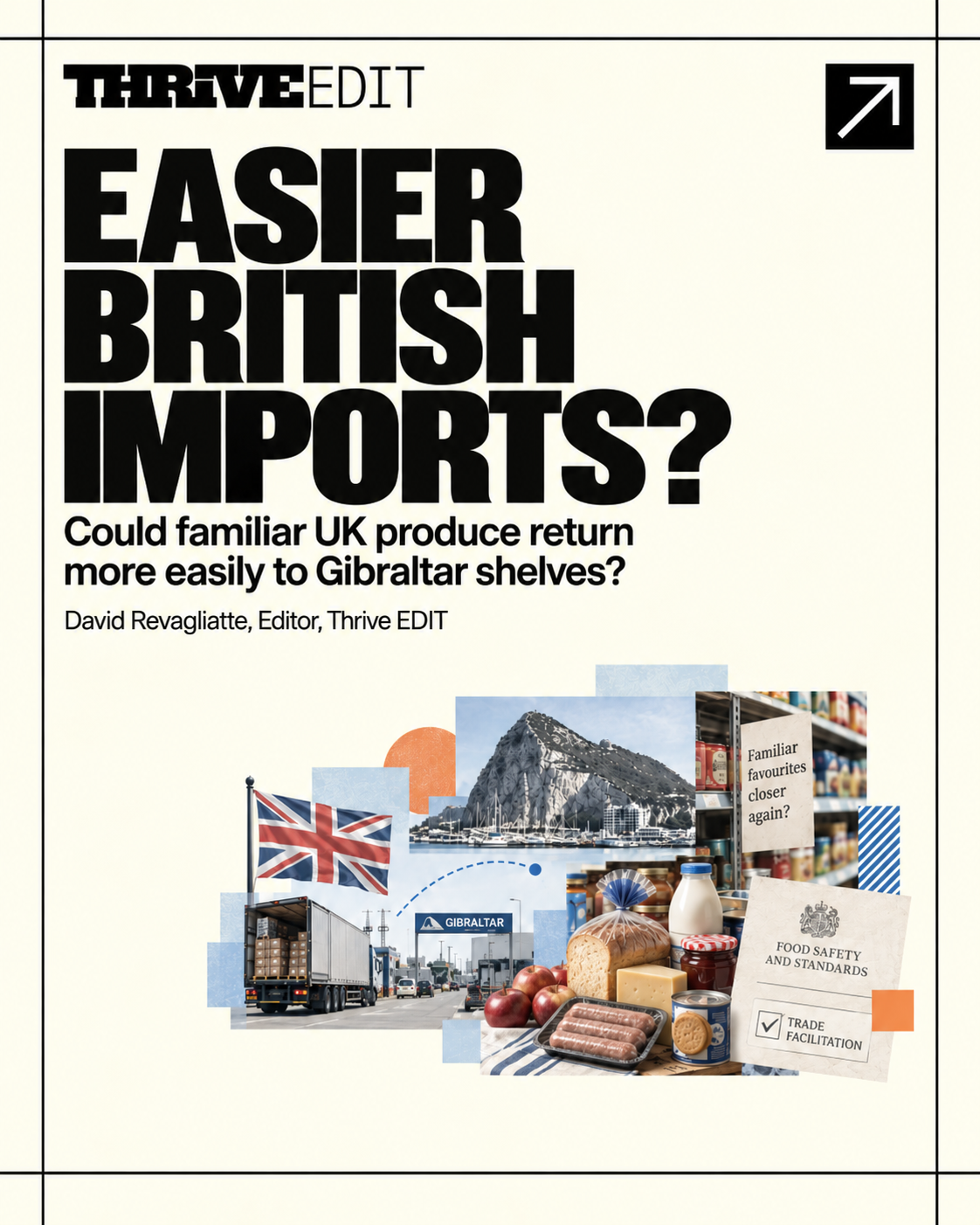
Could a future UK-EU food agreement make it easier for British produce to return to Gibraltar shelves? British produce has long been part of Gibraltar’s shopping experience; I wrote about it a couple of years ago, before we had a Treaty in place. From supermarket staples and fresh food to familiar household brands, we’ve spent […]