


 Gibraltar Federation of Small Businesses


 Gibraltar Federation of Small Businesses

Gibraltar has long been home to many international businesses. Gaming giants, UK-based insurance companies and far-flung fintech firms are all drawn here thanks to our strategic location and business-friendly environment. Carl Clavering moved his insurance business to Gibraltar, and it’s safe to say, it’s transformed his life. When I caught up with Carl, it was clear that his decision to relocate wasn’t just about tax advantages or access to the UK market —it was about finding a place that felt like home, both for his business and his family.
Early Days
Carl’s career in the insurance industry spanned over 30 years before he decided to take the plunge into entrepreneurship. His UK-based company, BHR Assist, was born in 2019 with a simple yet powerful mission: to reduce the high costs of credit hire claims for insurers. BHR Assist collects data on hire vehicle rates across the UK and Northern Ireland, providing insurance companies with real-time, court-compliant hire rates, helping to settle claims at a fair price.
The business gained traction quickly, but Carl felt there was more room to grow. Gibraltar had become a familiar name in his circle, especially as many of his clients were Gibraltar-based insurers. “It struck me that Gibraltar could offer us the edge we needed,” Carl shared. “I was aware of the favourable tax environment, but what sealed the deal was the government infrastructure and the potential for new businesses to thrive.”
Finding Gibraltar
In January 2020, Carl made his first trip to Gibraltar, and his initial impression was unforgettable. “It was like stepping into a different world—British phone boxes, but palm trees and blue skies,” Carl recalled. “The signs were in English, but the weather was glorious. It felt familiar but new at the same time.”
Carl was immediately struck by how accessible everything was. Through local contacts like Tanya Wilkinson at T & N Properties and lawyer Mark Ellul from Ellul & Co., Carl quickly got to grips with the ins and outs of setting up a business in Gibraltar. Tanya helped him find office space and guided him through local regulations, while Mark walked him through the intricacies of Gibraltar’s tax system and residency requirements. “Tanya and Mark were crucial,” Carl admits. “Without their help, I don’t think I would have had the confidence to make the leap.”
Getting through COVID
As Carl prepared to move his business to Gibraltar, the world was hit by the COVID-19 pandemic. What was meant to be a seamless transition suddenly became a challenge of isolation and uncertainty. “I was in Gibraltar alone, completely cut off. It was daunting,” Carl recalled.
The pandemic brought the insurance industry to a standstill. With fewer cars on the roads, there were fewer accidents—and thus fewer claims for Carl’s services. His major contract with a Gibraltar-based insurer was put on indefinite hold, leaving Carl wondering if the move had been a mistake.
Yet, Gibraltar’s government stepped in to offer support. Through his lawyer, Carl worked with government officials to address his tax commitments, and instead of penalising the fledgling business, the government showed flexibility. “I was amazed at how personal and proactive the response was. It wasn’t like the UK, where you’re just another number. Gibraltar genuinely wanted to help,” Carl explained.


Coming Back Stronger
Despite the initial setbacks, Carl’s faith in Gibraltar never wavered. As the pandemic eased, BHR Assist began to bounce back. “We joined the Gibraltar Federation of Small Businesses and the support we received was phenomenal. The GFSB was a lifeline during that time—offering advice, connections, and the encouragement we needed to keep going.”
Today, BHR Assist is doing well. Carl has secured over 50 clients, including several major insurers based in Gibraltar. The company’s innovative approach—using technology to provide live, real-time data on hire vehicle rates—has saved insurers more than £50 million in credit hire costs. “We’re the only firm in Gibraltar providing Basic Hire Rate services, and that gives us a unique competitive edge,” Carl explained.
BHR Assist’s success is not just about numbers—it’s about relationships. “I’ve met so many influential people here,” Carl shared. “Instead of a dusty boardroom in London, we’re discussing business deals over a glass of wine in Vinopolis, under the sunshine. That’s the magic of Gibraltar.”
Building a Life
Carl’s move to Gibraltar wasn’t just about business. Over time, the Rock became his home. He met his wife, Sosi, a Moroccan woman who has since moved to Gibraltar with him, and together they have two sons, Aymane and Adam, born just this past summer. “I never expected to build a family here, but Gibraltar gave me that too. It’s more than a business destination—it’s a place to build a life.”
Looking back, Carl sees his move to Gibraltar as one of the best decisions he ever made. “I came here for the tax benefits and business opportunities, but I stayed because of the people and the sense of community. Gibraltar is a place that supports you and pushes you to succeed.”
Why Gibraltar?
For business owners considering Gibraltar, Carl’s advice is simple: go for it. “This place is bursting with opportunity. The government and local networks like the GFSB are genuinely invested in your success. Whether you’re setting up a new venture or moving an established business, Gibraltar is the place to be.”


Artificial Intelligence promises unprecedented opportunities for small business owners in Gibraltar. As the digital landscape faces constant evolution, understanding AI becomes not just beneficial but essential for businesses aiming to thrive in 2024. In this article, we aim to demystify the complexities surrounding AI, offering an approachable guide to its fundamentals, history, and practical applications for businesses, providing you with the knowledge to embrace this technology confidently.

The Treaty between the EU and the UK over Gibraltar is finally giving us some clarity, and yet, it also reminds us just how much sits outside our control. The finer details will take months to surface. Political tides may shift. Promises will be tested by practicalities. Every day, we face issues beyond our reach: new legislation, competitor actions, market trends, customer behaviour, staff turnover, illness, family responsibilities, global events. All of it lives in what Stephen Covey calls the Circle of Concern - things we care about, but cannot directly change. The more we fixate on them, the more frustration can grow.

Last month marked eight years since the UK voted to leave the European Union. I remember the exact moment I read the headline ‘UK Votes to Leave the EU’ on my phone and the feeling of shock that started to set in. My first thought was, “Er, now what?” Little did I know I would still be asking that question eight years later… Eight years of uncertainty, negotiations, grace periods, frameworks, and meticulously crafted non-statements. But still no solution.

Over the past 18 years, I've had the privilege of working with a diverse range of businesses and industries, gaining insights into the challenges they face in implementing effective diversity and inclusion strategies. Often, DEI&B is viewed as a 'nice to have' rather than an essential component of business success. With this in mind, I'm excited to share valuable insights and practical steps to help you create environments where everyone can thrive. You've probably heard of DEI&B, but what do these letters really mean, and why do they matter for you and your organisation? Diversity includes differences like race, gender, age, neurodiversity, disability, LGBTQ+, culture, and more; Equity ensures equal opportunities for all; Inclusion values everyone's contributions; and Belonging means individuals feel accepted and integral to the organisation.

We’ve said it before and it’s only getting louder: AI is reshaping how businesses work. From chatbots and smart analytics to automated content and decision-making tools, AI is helping smaller firms punch well above their weight. But with that power comes responsibility. As AI use grows, so do the risks around data privacy, and under GDPR, getting it wrong can mean serious fines and lasting reputational damage.

Whether you’re an ebook tapper or traditional page turner, there are thousands of books that can make you better at business. Áine Panter, Head of the School of Business at the University of Gibraltar has curated a list of must-reads that will inspire, inform, and equip you for success.
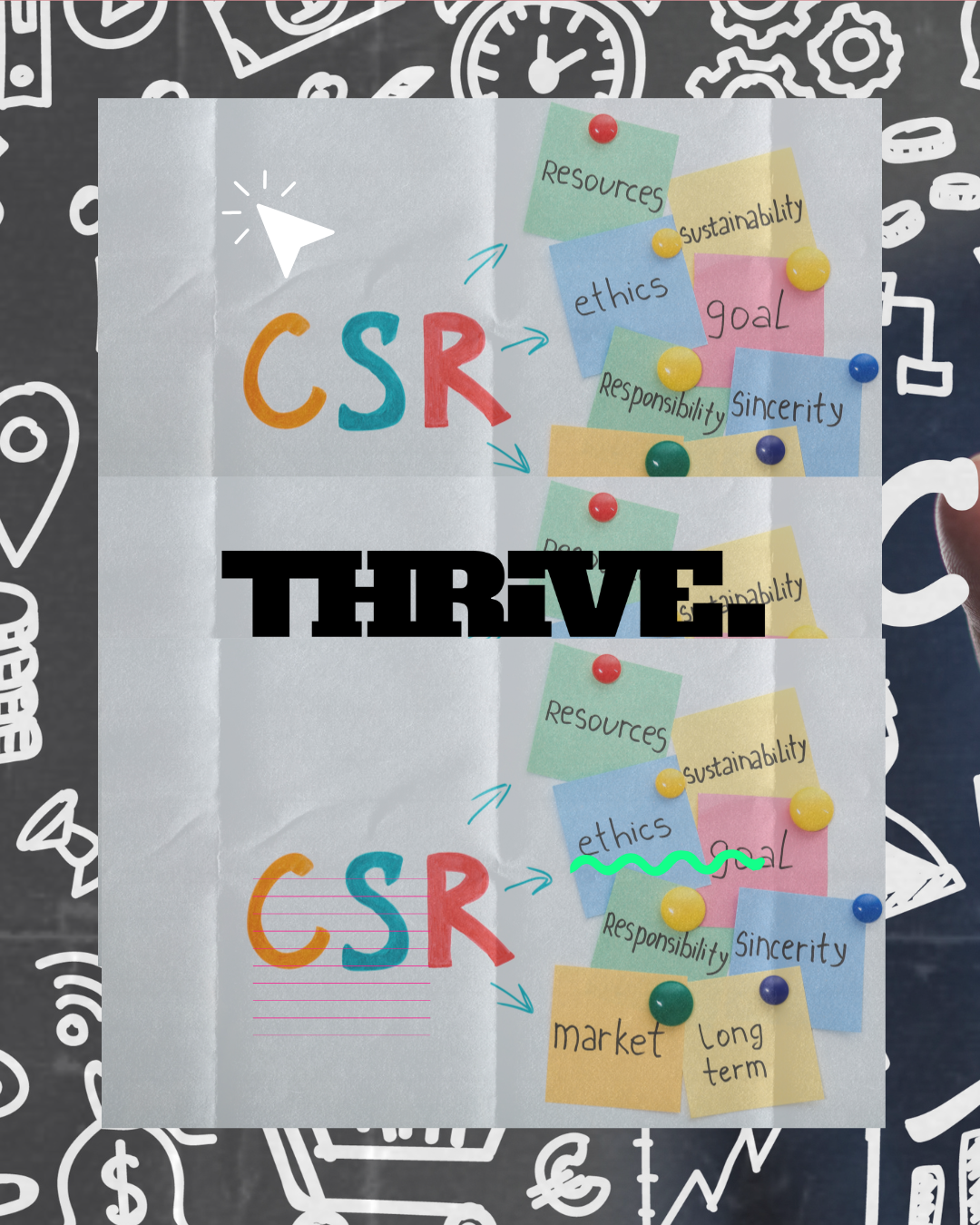
Corporate Social Responsibility is no longer just for big companies. Small and medium-sized businesses are making a real impact through practical, authentic actions that reflect who they are. From supporting sport, culture and charities to rolling up sleeves for environmental projects, consistent CSR builds trust, loyalty and pride. When businesses show up for their community in meaningful ways, those efforts are noticed and often returned.

Introducing the Thrive Catalog - A curated collection of goodies selected by our editorial team each quarter. Everything featured is available right here, right now at prices that are better than or compete with the internet.

Thrive catches up with Nick Pitaluga TEP, Managing Director of Gibraltar Trust & Corporate Services Limited - “GTCS”. From starting out as a messenger to leading his firm through a major merger, Nick talks about the importance of stepping outside your comfort zone and offers inspiration for anyone carving their own niche.

Mental health issues affect us all. How we manage our daily stresses and anxieties have an impact on our relationships, how we perform in our job and the workplace environment, and our outlook on life. Becoming self-aware of what affects us, managing how we respond to triggers and using tools to help us work through them, are all part of our journey towards MENTAL FITNESS, which is how we should be positively defining it.

Did you know that what you eat directly affects your energy levels, brain function, and stress resilience? Poor dietary habits—such as skipping meals, consuming too much caffeine, or relying on processed foods—can lead to energy crashes, brain fog, and reduced efficiency. On the other hand, a well-balanced diet stabilises blood sugar, enhances cognitive function, and keeps stress levels in check.


You have a brilliant idea. You can picture the logo, the customers, maybe even the first sale. But without a clear plan for how to get there, the idea risks staying exactly that - an idea. Starting a business without a plan is like setting off on a trip with no map. You might eventually arrive somewhere, but it is unlikely to be where you hoped. A business plan is not just paperwork. When written with care, it is a roadmap that guides every decision, a pitch that wins support, and a source of confidence on the days when challenges mount.

AI is poised to reshape the legal profession, with 31% of law firm leaders predicting major disruption by 2025. Scott Simmons explores how AI could improve client outcomes, streamline workflows, and drive value. Whether you’re cautious or curious, it’s time to explore AI’s potential.

When it comes to ideation in business, there’s no one-size-fits-all approach. Every business, team, and leader has their own way of generating and refining ideas. Whether it’s through structured brainstorming sessions, casual conversations, or solo reflection, the goal is to unlock creativity and find solutions. We’ve asked four GFSB members to share how they approach ideation in their fields. As you read, think about how you generate ideas and remember that sometimes, the best results come from trying something new.

Fair recruitment is based on the principle that candidates are judged on their ability to do the job rather than influenced by factors such as an applicant’s gender, religion, ethnicity, or any other quality unrelated to their skills and expertise. As the Founder of Rock Learning and the Co-Founder of the ‘Count me In’ DEIB Conference, I have developed a deep understanding of the topic and how small businesses can implement inclusive hiring practices.

When you’re a small business, staying one step ahead of the competition is essential. Yet, many small business owners grapple with the decision to invest in employee training and development. With limited resources and immediate financial pressures, it can unintentionally get pushed to the bottom of the priority list. However, investing in your team’s learning and development is a strategic move that can yield significant returns.

From the increasing influence of AI to the rise of social commerce and sustainability-driven consumer demand, the key to success lies in adapting strategically rather than chasing every new trend. This guide breaks down the most impactful trends for the year ahead—offering insights on how to integrate them into your business without losing sight of what already works. Smart adaptation, not blind reinvention, is the name of the game. Here's what to expect and how to make it work for you.

If you’ve been dreaming of starting your own business, you’re not alone. Data from the UK’s Office for National Statistics (ONS) revealed that the annual number of companies registered is edging closer to the one million mark, that’s up by 75,000 in 2022 which itself was 30,000 higher than in 2021. Whether it's following a passion, aiming for financial independence, or breaking free from the 9-5 grind, every entrepreneurial journey begins with one crucial thing: a solid idea. But coming up with that perfect idea can be tough. This is where brainstorming comes in—it’s the creative springboard that can help you turn your business dreams into reality.

One of the most dangerous things anyone can say in business is, "We've always done it this way." This phrase doesn't age well and puts businesses at risk. "We've always done it this way" can quickly look like "flogging a dead horse." This doesn't always mean that businesses need to change everything. Some things, like great service, never go out of fashion. But when sales start to slow down, it's always a good idea to consider taking a new approach. Rebranding a product, service, or entire enterprise can be part of this process. But rebranding should never be taken lightly.


In business, we often concentrate on the what and how of an enterprise.