


 Gibraltar Federation of Small Businesses


 Gibraltar Federation of Small Businesses

If you’ve been dreaming of starting your own business, you’re not alone. Data from the UK’s Office for National Statistics (ONS) revealed that the annual number of companies registered is edging closer to the one million mark, that’s up by 75,000 in 2022 which itself was 30,000 higher than in 2021.
Whether it’s following a passion, aiming for financial independence, or breaking free from the 9-5 grind, every entrepreneurial journey begins with one crucial thing: a solid idea. But coming up with that perfect idea can be tough. This is where brainstorming comes in—it’s the creative springboard that can help you turn your business dreams into reality.
Step One:Ideate, Ideate, Ideate
At the planning stage, the seeds of your business are still forming. Brainstorming helps you dig into your creativity and turn your thoughts into actionable ideas. It’s a way to move from having a dream to having a plan to pursue. Here’s our guide to ideation
This is all about getting your ideas on paper without worrying about structure or perfection. This technique is perfect if you’re stuck or unsure where to begin. The aim is to overcome overthinking and let ideas flow freely.
Take Action: Set a timer for 15-30 minutes and write continuously. Don’t edit or organise—just get everything down on paper.
BlueSky Thinking is about removing limitations and imagining unrestricted possibilities. It encourages you to dream big, beyond constraints like money, time, or resources. This method can spark innovative and creative ideas that you wouldn’t have otherwise considered.
Take Action: Ask open-ended questions such as, “If I had unlimited resources, what business would I start?” or “What does the perfect solution look like, without limits?” This lets you explore all avenues without worrying about practicalities.
If you’re a fan of structure, this one’s for you. It’s particularly helpful if you already have a business concept but need to make it more innovative or competitive.
Substitute: What can you replace to improve this idea?
Combine: Can two ideas be merged into one?
Adapt: How can you tweak an existing idea for a new market or purpose?
Modify: What aspects could be changed to make it better?
Put to another use: Could your product or service be applied in a new way?
Eliminate: What can you remove to simplify the idea?
Reverse: Can the process be flipped to see it from a new angle?
Instead of asking how to succeed, this method helps you explore the potential failures of an idea. By thinking from a completely different perspective, you can uncover risks or weaknesses that might have been overlooked.
Take Action: Ask questions like, “What would make this business fail?” or “What’s the opposite of my idea?” This method can reveal potential challenges or lead to unexpected insights.
If you’re more of a visual thinker, Mind Mapping is a great way to organise and connect your ideas. By laying them out visually, you can spot patterns, links, and themes that might not be obvious in a traditional brainstorming list.
Take Action: Start with your central idea and create branches that represent key aspects such as products, services, or customers. Then, break each branch down into smaller, related ideas.
Step Two: ‘Real World’ Your Idea
Getting creative is an essential (and enjoyable) first step, but it is equally important to get real-world feedback. Engaging with other entrepreneurs and business experts will help you determine whether your idea is viable.
Networks like the GFSB provide essential support, advice, and mentorship from fellow entrepreneurs. Sharing your ideas helps you gain feedback and refine your business concept.
Workshops and events offer insights from experienced entrepreneurs, covering trends and best practices. They’re also great for networking and building valuable connections.
A mentor offers personalised advice, helping you navigate challenges and avoid mistakes. Their experience can be key to keeping your business on track and growing.
Brainstorming is a powerful tool for shaping and refining your business ideas. Techniques like these can help unlock your creativity and guide you toward a viable business concept. But remember, generating ideas is only the first step. The next move is to test and validate them in the real world. That’s where resources like the GFSB’s new How to Start a Business Guide comes in. This guide provides invaluable advice, practical steps, and expert insights to help you navigate the path from idea to action.


When stakeholder conversations become difficult, most organisations focus on communication. Kerstin Andlaw argues the real issue runs deeper. It is not what we say, but how we stay in the relationship when pressure rises. In complex environments, the ability to work with tension, not avoid it, is what separates transactional engagement from true collaboration.

Whether you’re building a business from the ground up or hoping to grow an existing operation, having a strong business development strategy is the foundation of success. But real, sustainable growth doesn’t come from chasing the next big thing, it comes from getting the essentials right. So, what are the fundamentals you can’t afford to ignore? In my view, this starts with something I call the “Holy Trinity” of small business marketing...


You have a brilliant idea. You can picture the logo, the customers, maybe even the first sale. But without a clear plan for how to get there, the idea risks staying exactly that - an idea. Starting a business without a plan is like setting off on a trip with no map. You might eventually arrive somewhere, but it is unlikely to be where you hoped. A business plan is not just paperwork. When written with care, it is a roadmap that guides every decision, a pitch that wins support, and a source of confidence on the days when challenges mount.

When you’re a small business, staying one step ahead of the competition is essential. Yet, many small business owners grapple with the decision to invest in employee training and development. With limited resources and immediate financial pressures, it can unintentionally get pushed to the bottom of the priority list. However, investing in your team’s learning and development is a strategic move that can yield significant returns.

After teaching in schools for 18 years I decided to take the plunge and embark on a self-employed life. Driven by my passion for teaching children with special educational needs I set out to discover alternative ways to make education accessible to all. My vision was to have the individual in mind, with their own strengths and challenges, and with that came the birth of ‘edYOUcation Clare Francis’; bringing the YOU into learning.

Over the past few years, I’ve noticed the same logo cropping up more and more often. On coffee cups. On consultancy websites. In email signatures and pitch decks. The familiar B Corp badge, quietly signalling that a business is trying to do things differently. With our horizons widening post-treaty, could this globally-relevant badge could become a way of promoting your CSR values to an international market?

Finding someone who listens, understands, and guides you can make all the difference. For women in Gibraltar, the Women’s Mentorship Programme offers just that – honest conversations and valuable support from people with lived experience who understand. Now in its sixth cycle, the programme pairs women with mentors to help them navigate work, life, and everything in between. Ok, full disclosure: as a recently appointed mentor, that last sentence somewhat triggers the old imposter syndrome and self-doubt, but I am honoured to be part of this scheme and look forward to doing my very best in the months ahead.

Technology is having a major effect on every aspect of our lives, and the retail environment is not immune to these changes. Not only has online shopping revolutionised the way we think about buying and consuming, but it has also dramatically changed how we shop in physical stores.

Starting and running a small business is rewarding but comes with its fair share of challenges. The path of entrepreneurship is often characterised by immense dedication, long hours, and tough decisions. As a small business owner, you're not just responsible for the operations and growth of your company and team, but also for your own wellbeing.

Whilst Brexit hasn’t exactly been a positive event, we can’t deny that it’s also been the catalyst for diversification and change. It was a true ‘before and after’ moment that made businesses rethink their strategies and, in many cases, change their direction of travel. Gibraltar’s newest bank, justbank, is born from this process. As well as heralding the arrival of a new bank, this fresh start gave the team at IDT Finance the opportunity to create innovative and tailored banking solutions from the ground up. I met with Managing Director, Damian Asquez, and Head of Corporate Banking, Nikolai Gafan, to find out more.

As the CEO of a specialist security business called Paladin Defence and close protection operative/ private security contractor, I have experienced security threats of all types since 1990. From opportunistic personal attacks to targeted organised commercial crime, I feel there is a lot more we should be doing to defend and protect ourselves. Understandably, Gibraltar is considered to have a relatively low crime rate; but what are the realistic threats and risks to small businesses in our corner of the Mediterranean?

Building a personal brand isn't just about showcasing your professional accomplishments; it's about weaving your unique narrative, passions, and values into a cohesive identity that resonates with others. Here's how you can bring your personal brand to life, with practical examples to guide you at every step.

In the latest edition of Thrive, regular contributor John Hayes reflects on the uncertainty facing small and medium-sized businesses in Gibraltar. From Brexit fallout to ever-changing frontier delays, he unpacks why the border remains a top concern—and how local firms are adapting. While resolving post-Brexit cross-border issues is beyond the scope of this correspondent, there are practical steps business owners can take to mitigate and manage the challenges of this uncertainty.

Fair recruitment is based on the principle that candidates are judged on their ability to do the job rather than influenced by factors such as an applicant’s gender, religion, ethnicity, or any other quality unrelated to their skills and expertise. As the Founder of Rock Learning and the Co-Founder of the ‘Count me In’ DEIB Conference, I have developed a deep understanding of the topic and how small businesses can implement inclusive hiring practices.

Finding time to sit down with a book can feel like a luxury sometimes. We seem to be pulled in all sorts of directions, yet many of us still want to learn and stay exposed to new ideas. Podcasts have filled part of that gap. They’re accessible, conversational and easy to consume while commuting or […]

When you’ve been running your own business for a while, you know what works, and it’s easy to rely on the skills that got you to where you are. Chances are, you’re comfortable doing things in a certain way, and your team knows what to expect from your leadership style.

Love is big business. According to official statistics, 1,745 weddings took place in Gibraltar in 2021 followed by another 1,761 weddings in 2022 and a further 1640 in 2023. That’s around 33 weddings each week or 6 every single day. With an estimated population of around 33,000, it’s safe to say that, no, we aren’t all marrying each other, but that Gibraltar is a very popular place for many people to come and say ‘I do’. In fact, in all three years, non-residents outnumbered residents by an average of 90% to 10%. The stats point to a healthy wedding sector, one that our Minister for Tourism, Christian Santos is keen to develop. In an interview with the Gibraltar Chronicle he recently said he wanted; “Gibraltar to be the Las Vegas of Europe” when it comes to weddings. Unlike Vegas, we don’t have Elvis. But we do have John. Music legend John Lennon famously married Yoko Ono here in 1969 and put the Rock on the map for ‘Fast Track’ weddings. If music’s not your thing, acting legend Sean Connery (AKA James Bond) also tied the knot here (twice)!
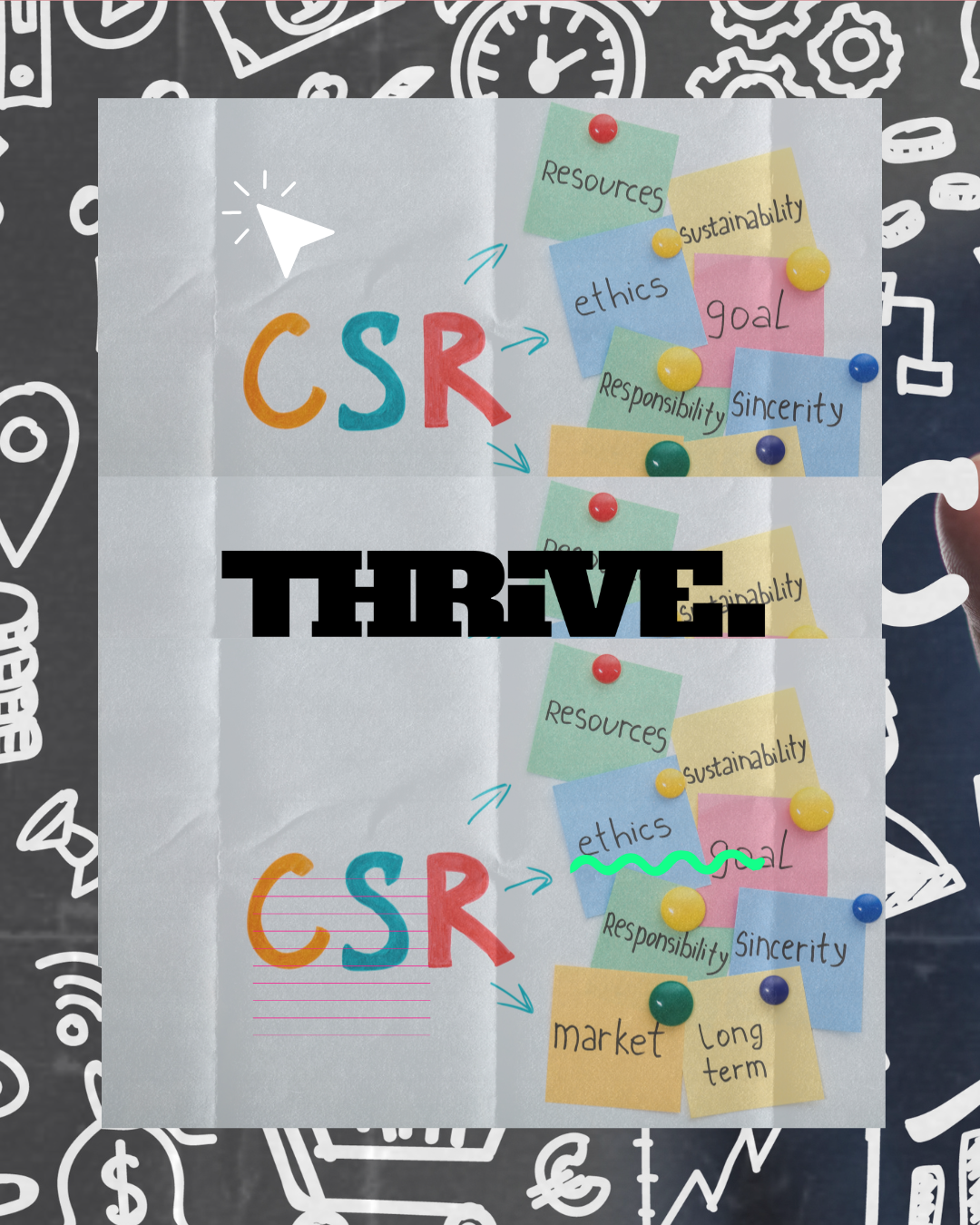
Corporate Social Responsibility is no longer just for big companies. Small and medium-sized businesses are making a real impact through practical, authentic actions that reflect who they are. From supporting sport, culture and charities to rolling up sleeves for environmental projects, consistent CSR builds trust, loyalty and pride. When businesses show up for their community in meaningful ways, those efforts are noticed and often returned.

When it comes to ideation in business, there’s no one-size-fits-all approach. Every business, team, and leader has their own way of generating and refining ideas. Whether it’s through structured brainstorming sessions, casual conversations, or solo reflection, the goal is to unlock creativity and find solutions. We’ve asked four GFSB members to share how they approach ideation in their fields. As you read, think about how you generate ideas and remember that sometimes, the best results come from trying something new.

Raju Purswani examines Ted Baker’s fall, sharing sharp lessons for entrepreneurs: stay true to your brand, beware of overhauls that alienate customers, and balance growth with identity. A cautionary tale with insights every business can learn from.