


 Gibraltar Federation of Small Businesses


 Gibraltar Federation of Small Businesses

Eran Shay’s journey is emblematic of the modern entrepreneur. A self-confessed ‘out-of-the-box’ thinker, he swapped a successful corporate career and a senior role at Deloitte to pursue his own projects and business opportunities. Since then, Eran has founded two successful businesses, Benefit Business Solutions and Gibraltar Pass and is President of the Gibraltar-Israel Chamber of Commerce (Gibrael). A true business champion, Eran has served on the Board of the Gibraltar Federation of Small Businesses (GFSB) for the last seven years. In addition, he was recently elected Senior Vice President of the European Small Business Alliance. I was lucky enough to spend time with him to learn more…

“I joined the GFSB as I believe much more innovation needs to be brought to Gibraltar”, starts Eran. “In my opinion, it reflects the characteristics of small businesses; it is agile, results-driven, forward-looking and has lots of initiative – it’s an exciting network to be part of.” He sees the organisation as the ideal platform to introduce much-needed innovation to Gibraltar. As part of his diverse, unremunerated role on the GFSB’s Board, Eran oversees its annual Innovation Awards, “Only by being part of influential organisations like the GFSB can you bring about the changes required to encourage innovation.”
Before asking about his recent appointment to the ESBA Board, I wanted to know more about the organisation itself, “Since being founded in 1988, ESBA has been an incubator for groundbreaking projects that address the unique challenges facing small and micro businesses across Europe. From steering the WEgate platform that empowers women entrepreneurs, to playing an ongoing role in Early Warning Europe aimed at crisis management during the pandemic, ESBA has consistently been at the forefront of change.” Says Eran, “I’ve been involved with ESBA since 2019. Today, it represents almost one million small businesses and covers 36 European countries, Turkey, and Israel. In a way, ESBA could be seen as the umbrella organisation for many national and sector-specific Small Business Federations.”

Speaking of his appointment, Eran said “I am delighted to have been elected as ESBA Senior Vice-President. It is an honour to be appointed to this role in a year in which ESBA is celebrating its 25th Anniversary. I look forward to working with the ESBA Board to continue delivering value for our members and hope to meet more of our members this coming year.” For his part, David Caro, ESBA President said, “We have had a long association with Eran and I am delighted he has joined the Board in this important role”.
Gibraltar is no longer a member of the European Union so I wanted to understand what real-term benefits come with being a member of ESBA. “First, it is important to mention that the GFSB is a founding member of the ESBA. It is actually the only remaining founding member of ESBA and has built a strong relationship during this time. The fact that ESBA held its 25th Anniversary Board meeting in Gibraltar is a testament to this bond.” Speaking of why this link to the EU is essential, Eran continues, “Being such a small nation, it is important for the GFSB and Gibraltar in general to have access to top decision-makers at the Pan-European level. This helps us better understand how certain things are done in other European countries, get insights to possible solutions to challenges we face here, and be able to tap into a much greater pool of resources and networks through other member organisations.”
For Eran, his vision for his tenure as Senior VP is clear. “I’ve been involved with ESBA since 2019, but COVID has meant that many ideas and projects we had in mind, had to take a back seat while ESBA was assisting its members in surviving these challenging times. I hope that now, post-COVID, we will be able to progress on some of those initiatives and hold more social events to meet our members.”


AI is poised to reshape the legal profession, with 31% of law firm leaders predicting major disruption by 2025. Scott Simmons explores how AI could improve client outcomes, streamline workflows, and drive value. Whether you’re cautious or curious, it’s time to explore AI’s potential.

With its largely service-based economy, you'd be forgiven for thinking that Gibraltar didn't have to deal with the problem of toxic waste, perhaps more commonly seen in countries reliant on manufacturing, mining and even agriculture. However, every gaming company, insurance firm, fintech organisation, retailer, restaurant, and literally every other business on the Rock is potentially responsible for producing a particularly nasty waste byproduct - e-waste.

Fair recruitment is based on the principle that candidates are judged on their ability to do the job rather than influenced by factors such as an applicant’s gender, religion, ethnicity, or any other quality unrelated to their skills and expertise. As the Founder of Rock Learning and the Co-Founder of the ‘Count me In’ DEIB Conference, I have developed a deep understanding of the topic and how small businesses can implement inclusive hiring practices.

Two decades is a long time for any business - with all the strife that businesses large and small have had to endure these past four years, it seems that anxiety among business owners has never been higher. I recently had the pleasure of chatting with Garren Thompson, co-owner and co-founder of Gibraltar hair & beauty salon Miss Shapes, based on Bishop Rapallo’s Ramp. As the business recently hit the 20-year milestone, we discussed the highs and lows of creating a successful salon in a saturated market, how he and his team created their new range of Miss Shapes branded Hair & Beauty products and how this will help build success for another 20 years.

Thrive catches up with Nick Pitaluga TEP, Managing Director of Gibraltar Trust & Corporate Services Limited - “GTCS”. From starting out as a messenger to leading his firm through a major merger, Nick talks about the importance of stepping outside your comfort zone and offers inspiration for anyone carving their own niche.
When stakeholder conversations become difficult, most organisations focus on communication. Kerstin Andlaw argues the real issue runs deeper. It is not what we say, but how we stay in the relationship when pressure rises. In complex environments, the ability to work with tension, not avoid it, is what separates transactional engagement from true collaboration.


You have a brilliant idea. You can picture the logo, the customers, maybe even the first sale. But without a clear plan for how to get there, the idea risks staying exactly that - an idea. Starting a business without a plan is like setting off on a trip with no map. You might eventually arrive somewhere, but it is unlikely to be where you hoped. A business plan is not just paperwork. When written with care, it is a roadmap that guides every decision, a pitch that wins support, and a source of confidence on the days when challenges mount.

There’s something slightly uncomfortable about sending a contract to a client when you run a small business. Especially in Gibraltar, where relationships matter and business often begins with a conversation over un cafelito rather than a legal document. When you know someone personally, or you’ve been introduced by a mutual contact, it can feel unnecessary to formalise everything. You tell yourself that an email thread is enough. Or that you’ll sort the paperwork later. I used to think like that. Over time, and through a few situations that were more stressful than they needed to be, I’ve realised that putting things in writing isn’t about distrust. It’s about creating guardrails for growth. The clearer the boundaries, the freer you are to focus on doing good work.

If you’ve been dreaming of starting your own business, you’re not alone. Data from the UK’s Office for National Statistics (ONS) revealed that the annual number of companies registered is edging closer to the one million mark, that’s up by 75,000 in 2022 which itself was 30,000 higher than in 2021. Whether it's following a passion, aiming for financial independence, or breaking free from the 9-5 grind, every entrepreneurial journey begins with one crucial thing: a solid idea. But coming up with that perfect idea can be tough. This is where brainstorming comes in—it’s the creative springboard that can help you turn your business dreams into reality.

Technology is having a major effect on every aspect of our lives, and the retail environment is not immune to these changes. Not only has online shopping revolutionised the way we think about buying and consuming, but it has also dramatically changed how we shop in physical stores.

When you’re a small business, staying one step ahead of the competition is essential. Yet, many small business owners grapple with the decision to invest in employee training and development. With limited resources and immediate financial pressures, it can unintentionally get pushed to the bottom of the priority list. However, investing in your team’s learning and development is a strategic move that can yield significant returns.

If, like me, you spend more time than you should doom scrolling LinkedIn, you could be tempted into thinking no-one fails. LinkedIn has become a hyperbolic haven and a place to scream and shout about success. But what about failures - why aren’t we talking about them? In business, failure is inevitable. I mean it. Whether it's a product flop, a marketing misstep, or a company on the brink of collapse, every entrepreneur will face moments that test them. Yet, history has shown that these failures can often be the starting point for something extraordinary.

After teaching in schools for 18 years I decided to take the plunge and embark on a self-employed life. Driven by my passion for teaching children with special educational needs I set out to discover alternative ways to make education accessible to all. My vision was to have the individual in mind, with their own strengths and challenges, and with that came the birth of ‘edYOUcation Clare Francis’; bringing the YOU into learning.

The Treaty between the EU and the UK over Gibraltar is finally giving us some clarity, and yet, it also reminds us just how much sits outside our control. The finer details will take months to surface. Political tides may shift. Promises will be tested by practicalities. Every day, we face issues beyond our reach: new legislation, competitor actions, market trends, customer behaviour, staff turnover, illness, family responsibilities, global events. All of it lives in what Stephen Covey calls the Circle of Concern - things we care about, but cannot directly change. The more we fixate on them, the more frustration can grow.

Whether you’re an ebook tapper or traditional page turner, there are thousands of books that can make you better at business. Áine Panter, Head of the School of Business at the University of Gibraltar has curated a list of must-reads that will inspire, inform, and equip you for success.

In the latest edition of Thrive, regular contributor John Hayes reflects on the uncertainty facing small and medium-sized businesses in Gibraltar. From Brexit fallout to ever-changing frontier delays, he unpacks why the border remains a top concern—and how local firms are adapting. While resolving post-Brexit cross-border issues is beyond the scope of this correspondent, there are practical steps business owners can take to mitigate and manage the challenges of this uncertainty.

In an age where small businesses must adapt to stay in business, outsourcing has long been a way to enhance efficiency and streamline operations. Derived from the simple philosophy of delegating certain non-core tasks to external experts, outsourcing allows businesses to concentrate on their primary objectives and strengths. For the uninitiated, it's about seeking external expertise for tasks outside your comfort zone, skills base or business's main expertise.
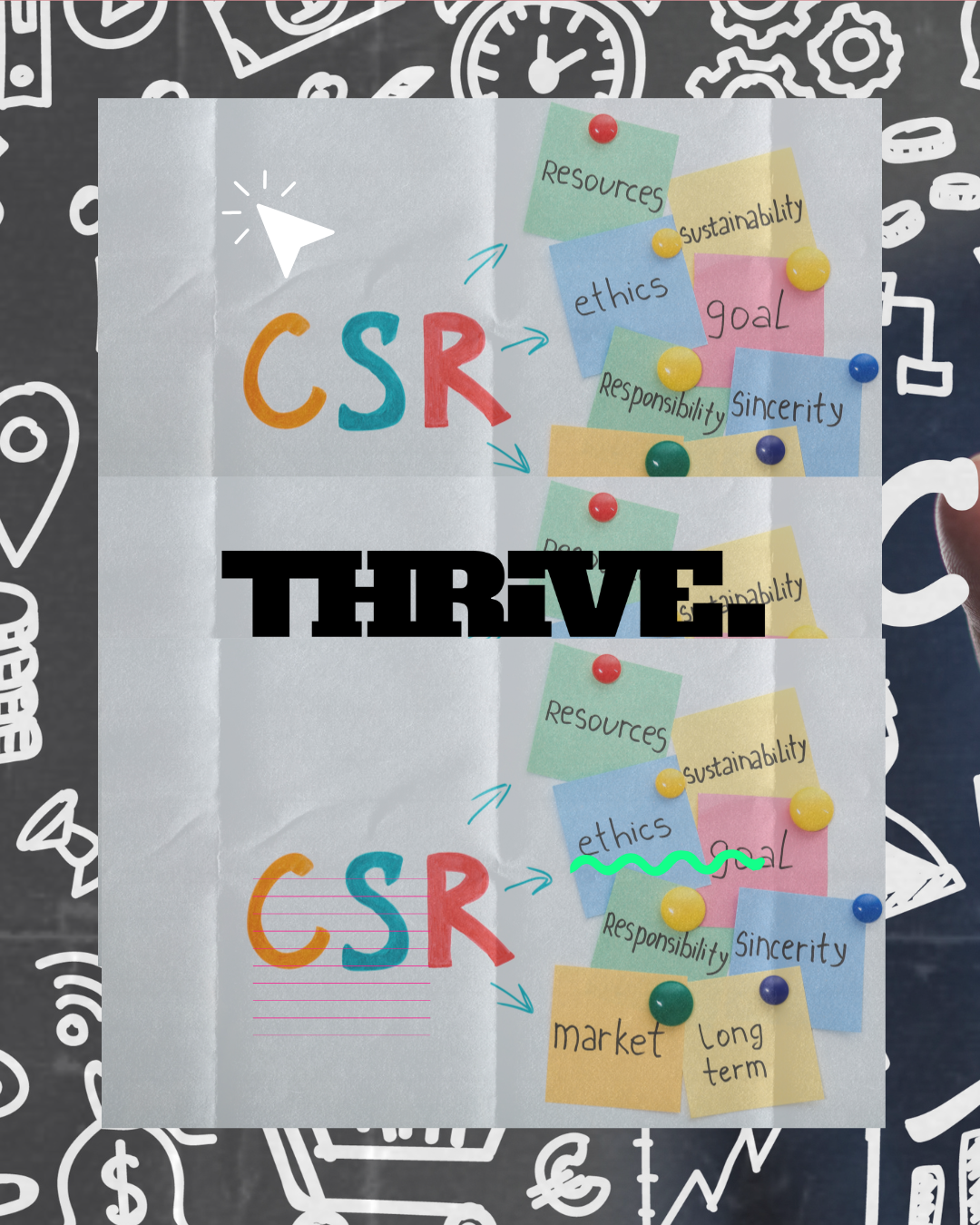
Corporate Social Responsibility is no longer just for big companies. Small and medium-sized businesses are making a real impact through practical, authentic actions that reflect who they are. From supporting sport, culture and charities to rolling up sleeves for environmental projects, consistent CSR builds trust, loyalty and pride. When businesses show up for their community in meaningful ways, those efforts are noticed and often returned.

For many businesses, standing out from the crowd in an already crowded marketplace is a mammoth task. But for Fresquita one of the ways they tackled this issue was with highly creative packaging.


Success doesn’t just happen; it’s built on a strong foundation of preparation, clarity, and taking consistent action. Whether you’re launching a new business, taking your current side-hustle full-time, or looking to scale in a competitive market, having the right plan in place is essential.