


 Gibraltar Federation of Small Businesses


 Gibraltar Federation of Small Businesses

Success doesn’t just happen; it’s built on a strong foundation of preparation, clarity, and taking consistent action. Whether you’re launching a new business, taking your current side-hustle full-time, or looking to scale in a competitive market, having the right plan in place is essential. This checklist aims to simplify the process so you can focus on what matters.
1. Clarify Your Vision and Goals
Your vision provides direction, while well-defined goals turn that vision into a practical, achievable plan. By aligning your ambitions with measurable targets, you create a path forward that allows you to track progress, adjust when needed, and celebrate wins along the way.
Take Action:
Reflect on last year’s performance: What worked? What didn’t work? Why?
Define (or refine) your long-term vision for the business.
Break this year’s goals into SMART targets: Specific, Measurable, Achievable, Relevant, and Time-Bound.
Create quarterly milestones to keep yourself on track.
2. Strengthen Your Finances
Your financial health is the foundation of every successful business decision. Without a clear understanding of cash flow, profits, and expenses, you risk reactive planning or missed opportunities. By taking control of your finances now, you create stability, reduce stress, and ensure you have the resources to invest in growth when the time comes.
Take Action:
Conduct a thorough financial review of your cash flow, profit margins, and expenses.
Update your budget for the year, identifying areas to save or invest.
Build a contingency fund to cover unexpected challenges.
3. Streamline Your Operations
Time is every entrepreneur’s most valuable resource. If your operations are inefficient or disorganised, you’ll end up losing focus, energy, and money. Streamlining your processes, through automation, delegation, and smarter systems, frees you to focus on the work that moves you closer to your SMART goals.
Take Action:
Identify any operational bottlenecks that slow you down or drain resources.
Identify opportunities to automate repetitive tasks using software or online tools.
Consider whether you can outsource low-impact tasks so you can focus on strategy, leadership, and growth.
4. Invest in Your Team (or Yourself)
Your business will only grow as much as the people behind it. Investing in professional development – whether it’s for your team or yourself – builds the skills, confidence, and motivation that drive long-term success. If you’re a solopreneur, upskilling also makes you more versatile and better equipped to handle challenges as they arise.
Take Action:
Identify skill gaps for you or your team and seek out relevant training opportunities.
Dedicate time each week to learning key skills like marketing, leadership or finance.
5. Embrace Technology and Innovation
Staying competitive requires staying ahead of the upcoming tools and trends. Embracing technology doesn’t just improve efficiency; it enhances customer satisfaction, speeds up decision-making, and gives you an edge in a competitive market. The right innovations will help you achieve more with less effort.
Take Action:
Identify areas where technology can save you time, money or frustration.
Research emerging trends in your industry that might provide a competitive edge moving forward.
Refresh your digital presence, including your website and social media accounts.
6. Focus on Your Customers
Your customers are at the heart of your business, and nurturing those relationships is key to long-term success. By actively listening to their needs and improving their experience, you create loyalty, trust, and repeat business. Loyal customers also help to spread the word about your business, bringing organic growth with them.
Take Action:
Review your ideal customer profile: Have their needs or preferences changed?
Actively collect customer feedback and use it to improve your offers.
Implement tools like loyalty schemes, personalised communication, or improved service to keep customers engaged.
7. Stay Adaptable
The only constant in business is change. Even with the best plans, unexpected challenges or opportunities will arise. The key to success is adaptability – the ability to reassess, pivot, and remain open to new ideas. Flexibility allows you to stay ahead of the curve and take advantage of opportunities that your competitors might miss.
Take Action:
Set aside time for monthly or quarterly reviews of your goals and progress.
Adjust your plans when necessary to stay aligned with new opportunities or challenges.
Celebrate your wins, no matter how small. Progress builds momentum.
Remember, success in business doesn’t happen by accident; it happens through preparation, clarity, and taking aligned action. This checklist gives you the roadmap you need to make the most of this new year, one step at a time. Commit to consistent progress, stay adaptable, and don’t forget to celebrate every achievement along the way.


If, like me, you spend more time than you should doom scrolling LinkedIn, you could be tempted into thinking no-one fails. LinkedIn has become a hyperbolic haven and a place to scream and shout about success. But what about failures - why aren’t we talking about them? In business, failure is inevitable. I mean it. Whether it's a product flop, a marketing misstep, or a company on the brink of collapse, every entrepreneur will face moments that test them. Yet, history has shown that these failures can often be the starting point for something extraordinary.

In an age where small businesses must adapt to stay in business, outsourcing has long been a way to enhance efficiency and streamline operations. Derived from the simple philosophy of delegating certain non-core tasks to external experts, outsourcing allows businesses to concentrate on their primary objectives and strengths. For the uninitiated, it's about seeking external expertise for tasks outside your comfort zone, skills base or business's main expertise.

When you’re a small business, staying one step ahead of the competition is essential. Yet, many small business owners grapple with the decision to invest in employee training and development. With limited resources and immediate financial pressures, it can unintentionally get pushed to the bottom of the priority list. However, investing in your team’s learning and development is a strategic move that can yield significant returns.

Technology is having a major effect on every aspect of our lives, and the retail environment is not immune to these changes. Not only has online shopping revolutionised the way we think about buying and consuming, but it has also dramatically changed how we shop in physical stores.

One of the most dangerous things anyone can say in business is, "We've always done it this way." This phrase doesn't age well and puts businesses at risk. "We've always done it this way" can quickly look like "flogging a dead horse." This doesn't always mean that businesses need to change everything. Some things, like great service, never go out of fashion. But when sales start to slow down, it's always a good idea to consider taking a new approach. Rebranding a product, service, or entire enterprise can be part of this process. But rebranding should never be taken lightly.

Pets are like family, right? As a proud cat dad, I’d actually go further and say that they are family. Over the years, I have spent my well-earned money on (many) toys, beds, treats and vet bills for my two feline furballs Nacho and Drake. And I am not alone. According to a recent Fortune Business Insight report, the global pet care market was valued at a massive £171.78 billion in 2022 and is projected to grow from £180.06 billion in 2023 to £269.29 billion by 2030.


You have a brilliant idea. You can picture the logo, the customers, maybe even the first sale. But without a clear plan for how to get there, the idea risks staying exactly that - an idea. Starting a business without a plan is like setting off on a trip with no map. You might eventually arrive somewhere, but it is unlikely to be where you hoped. A business plan is not just paperwork. When written with care, it is a roadmap that guides every decision, a pitch that wins support, and a source of confidence on the days when challenges mount.

Over the past few years, I’ve noticed the same logo cropping up more and more often. On coffee cups. On consultancy websites. In email signatures and pitch decks. The familiar B Corp badge, quietly signalling that a business is trying to do things differently. With our horizons widening post-treaty, could this globally-relevant badge could become a way of promoting your CSR values to an international market?

Did you know that what you eat directly affects your energy levels, brain function, and stress resilience? Poor dietary habits—such as skipping meals, consuming too much caffeine, or relying on processed foods—can lead to energy crashes, brain fog, and reduced efficiency. On the other hand, a well-balanced diet stabilises blood sugar, enhances cognitive function, and keeps stress levels in check.

For many businesses, standing out from the crowd in an already crowded marketplace is a mammoth task. But for Fresquita one of the ways they tackled this issue was with highly creative packaging.

Welcome to the fifth edition of Thrive magazine. Too often the narrative around business focuses on success and, in my view, we forget to talk about failure. That’s why we lead this edition with EPIC FAILS by Katie Buller—because understanding what doesn’t work is just as important as what does.

Thrive catches up with Nick Pitaluga TEP, Managing Director of Gibraltar Trust & Corporate Services Limited - “GTCS”. From starting out as a messenger to leading his firm through a major merger, Nick talks about the importance of stepping outside your comfort zone and offers inspiration for anyone carving their own niche.

AI is poised to reshape the legal profession, with 31% of law firm leaders predicting major disruption by 2025. Scott Simmons explores how AI could improve client outcomes, streamline workflows, and drive value. Whether you’re cautious or curious, it’s time to explore AI’s potential.

In the latest edition of Thrive, regular contributor John Hayes reflects on the uncertainty facing small and medium-sized businesses in Gibraltar. From Brexit fallout to ever-changing frontier delays, he unpacks why the border remains a top concern—and how local firms are adapting. While resolving post-Brexit cross-border issues is beyond the scope of this correspondent, there are practical steps business owners can take to mitigate and manage the challenges of this uncertainty.
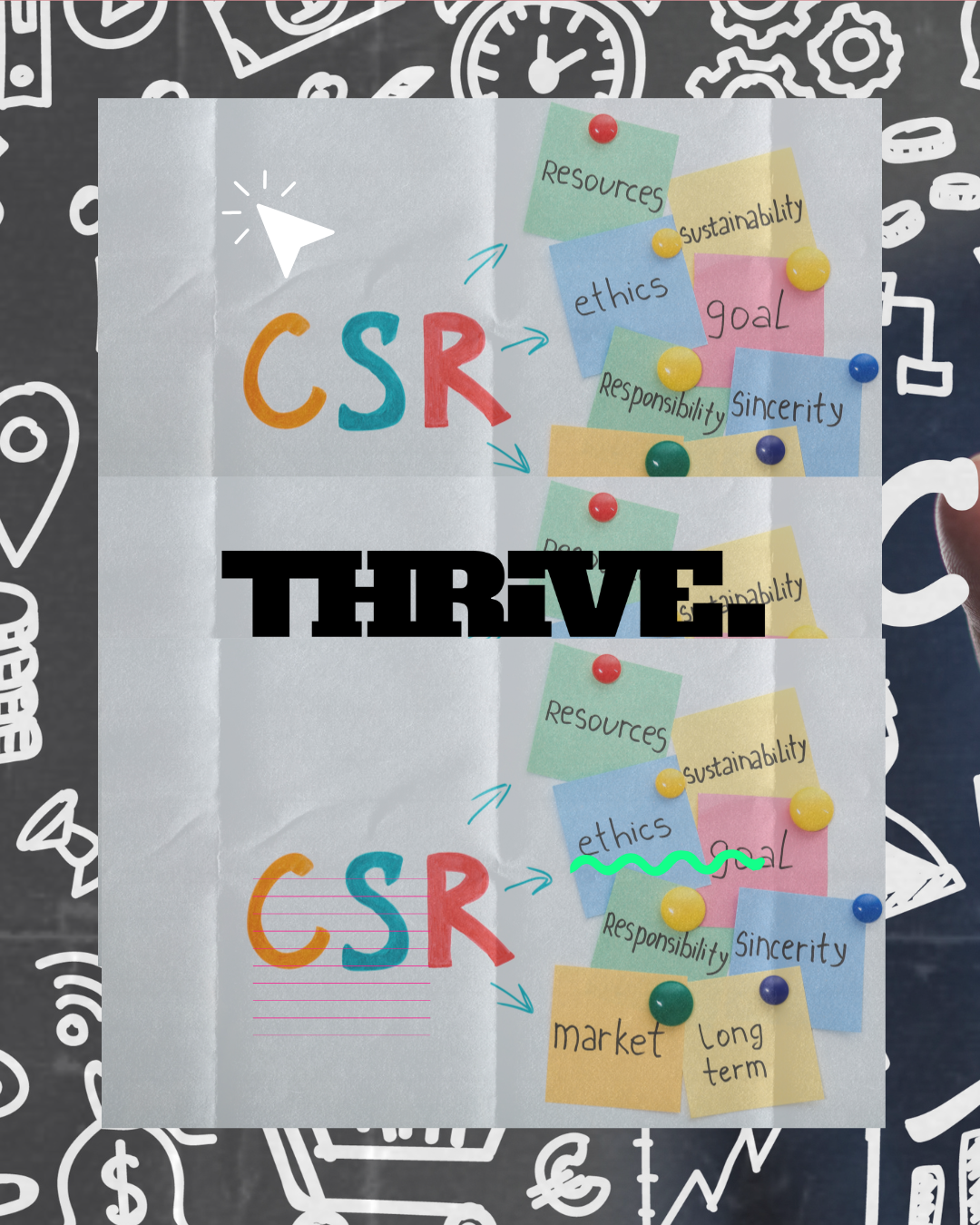
Corporate Social Responsibility is no longer just for big companies. Small and medium-sized businesses are making a real impact through practical, authentic actions that reflect who they are. From supporting sport, culture and charities to rolling up sleeves for environmental projects, consistent CSR builds trust, loyalty and pride. When businesses show up for their community in meaningful ways, those efforts are noticed and often returned.

The world of work is undergoing a significant transformation, driven by the accelerating capabilities of Generative AI. While robots taking over our jobs might be a sci-fi trope, AI’s ability to learn, create, and automate tasks is undeniably impacting various industries. Generative AI is the umbrella term used to describe the type of AI that can create new content and ideas. This can include text, images, music, code and other types of content. We are now seeing how powerful this tool can be. But is this a threat or a powerful tool waiting to be harnessed? We set out to find out, what does the use of Generative AI look like in Gibraltar?

Forget everything you know about online shopping—eCommerce is evolving fast. While giants like Amazon and eBay once ruled, a new wave of platforms such as TikTok Shop, Shein, and Temu are reshaping the industry. But beneath the flashy deals and viral trends lies a growing conversation about sustainability, waste, and the hidden costs of convenience.

Fair recruitment is based on the principle that candidates are judged on their ability to do the job rather than influenced by factors such as an applicant’s gender, religion, ethnicity, or any other quality unrelated to their skills and expertise. As the Founder of Rock Learning and the Co-Founder of the ‘Count me In’ DEIB Conference, I have developed a deep understanding of the topic and how small businesses can implement inclusive hiring practices.

With its largely service-based economy, you'd be forgiven for thinking that Gibraltar didn't have to deal with the problem of toxic waste, perhaps more commonly seen in countries reliant on manufacturing, mining and even agriculture. However, every gaming company, insurance firm, fintech organisation, retailer, restaurant, and literally every other business on the Rock is potentially responsible for producing a particularly nasty waste byproduct - e-waste.

My name is John Hayes, and I'm a really busy guy. Busy procrastinating most of the time. You wouldn't believe how many unessential tasks I had to complete before sitting down and writing this article. Those sales reports and emails don't check themselves. Yep, I've been busy. Busy doing nothing. We've all had one of those days where we feel like we've been incredibly "busy" - but can't quite put our finger on what we actually accomplished. Maybe we spent three hours answering emails, another two fiddling with a spreadsheet no one asked for, and another hour in a meeting that could have been an email or WhatsApp message. At the end of it all, the to-do list somehow got longer, not shorter.