


 Gibraltar Federation of Small Businesses


 Gibraltar Federation of Small Businesses

After teaching in schools for 18 years I decided to take the plunge and embark on a self-employed life. Driven by my passion for teaching children with special educational needs I set out to discover alternative ways to make education accessible to all. My vision was to have the individual in mind, with their own strengths and challenges, and with that came the birth of ‘edYOUcation Clare Francis’; bringing the YOU into learning.
After contacting Dyslexia Gibraltar I started to tutor children with dyslexia. My focus was on working on their executive functioning skills; developing a holistic approach to learning incorporating study skills, memory techniques and improving focus. I spent some time teaching my students how our brains are wired for growth and that how we think and what we say to ourselves will have an impact on our learning, this improved their metacognition and helped them grow in confidence.
As my business grew I had more and more neurodivergent students enrol, and the more I experienced my students’ challenges and learnt about their strengths the more I saw the need to advocate for inclusion in both education, and the workplace. I saw the strengths neurodivergent individuals demonstrated and the value in having a neurodiverse workforce.
So what exactly does neurodiversity mean and how can we make sure we are inclusive?
Neurodiversity refers to the natural differences in human brains and how they work. It includes everyone, whether neurodivergent or neurotypical. Like biodiversity, but with human brains!
When we think of inclusion it is easy to fall into the assumption that this simply means allowing an individual to take part, rather than making adjustments, which is what true inclusion requires. When employing an individual who uses a wheelchair, physical accessibility would be considered. Likewise, when employing an individual who is neurodivergent, accessibility to the job requirements need to be thought of. That is, reasonable adjustments should be put in place.
So what type of adjustments are we talking about? And what is considered to be ‘reasonable’?
When it comes to adjustments the list is extensive and a workplace needs assessment would need to be done to establish which adjustments would be required. Having said this, there are certain adjustments that can be made standard to ensure inclusion is of high value to the business. From staff training to support an inclusive culture at work, to the correct font being used to be dyslexia friendly, to using pastel coloured paper and providing alternative interview processes and environments in which to work in, there are many things which can be made policy to support neurodivergent individuals which will not hinder neurotypical employees. Having an inclusive policy which ensures such measures are always in place means the need for individual workplace needs assessments will be reduced.
It is important to note the word ‘reasonable’ when considering making reasonable adjustments. A workplace needs assessor will not just evaluate the individual’s needs. They will always consider the suitability of the job role, the size of the cost and how this fits with the size of the company. They will consider the impact of the adjustments to the business, employer and colleagues. When requesting a workplace needs assessment to be done you will find that most recommended adjustments are cost effective, easy to implement and benefit all involved.
So why bother with it all?
The increase of neurodivergent individuals is often talked about. Is it due to faster and more accurate diagnosis? Is it to do with our food? Is it a result of modern technology use and change of lifestyle? In my opinion, the answer to these questions is: who cares?
Could it be that, as with biodiversity, neurodiversity is needed? That our brains are evolving? Adapting?
With ‘Dyslexic Thinking’ now being a skill in LinkedIn, and companies such as Microsoft, Google Cloud and Ford Motor Company actively seeking neurodivergent talent via their recruitment process, more employers are beginning to focus on the benefits and strengths of a neurodiverse workforce.
Problem solving, innovation, outside the box thinking, attention to detail, being able to work under pressure and creativity are but a few of the skills associated with individuals with dyslexia, ADHD and ASD for example.
With the rapidly growing use of A.I etc it is not surprising that measures of intelligence and sought after employability skills are changing. To quote Richard Branson, a proud dyslexic:
“In this new world, thinking differently is your biggest asset.” (Intelligence 5.0 report, Made By Dyslexia 2024).
With local businesses seeking advice on how to become more inclusive and the ministry of Equality’s SNDO team ensuring their 40 Supported Needs and Disability Coordinators received training on Neurodiversity and Inclusion in the Workplace, I’m excited to see neurodiverse workforces positively impacting our community.


Finding someone who listens, understands, and guides you can make all the difference. For women in Gibraltar, the Women’s Mentorship Programme offers just that – honest conversations and valuable support from people with lived experience who understand. Now in its sixth cycle, the programme pairs women with mentors to help them navigate work, life, and everything in between. Ok, full disclosure: as a recently appointed mentor, that last sentence somewhat triggers the old imposter syndrome and self-doubt, but I am honoured to be part of this scheme and look forward to doing my very best in the months ahead.

Introducing the Thrive Catalog - A curated collection of goodies selected by our editorial team each quarter. Everything featured is available right here, right now at prices that are better than or compete with the internet.

With its largely service-based economy, you'd be forgiven for thinking that Gibraltar didn't have to deal with the problem of toxic waste, perhaps more commonly seen in countries reliant on manufacturing, mining and even agriculture. However, every gaming company, insurance firm, fintech organisation, retailer, restaurant, and literally every other business on the Rock is potentially responsible for producing a particularly nasty waste byproduct - e-waste.


You have a brilliant idea. You can picture the logo, the customers, maybe even the first sale. But without a clear plan for how to get there, the idea risks staying exactly that - an idea. Starting a business without a plan is like setting off on a trip with no map. You might eventually arrive somewhere, but it is unlikely to be where you hoped. A business plan is not just paperwork. When written with care, it is a roadmap that guides every decision, a pitch that wins support, and a source of confidence on the days when challenges mount.

For many businesses, standing out from the crowd in an already crowded marketplace is a mammoth task. But for Fresquita one of the ways they tackled this issue was with highly creative packaging.
When stakeholder conversations become difficult, most organisations focus on communication. Kerstin Andlaw argues the real issue runs deeper. It is not what we say, but how we stay in the relationship when pressure rises. In complex environments, the ability to work with tension, not avoid it, is what separates transactional engagement from true collaboration.

Over the past 18 years, I've had the privilege of working with a diverse range of businesses and industries, gaining insights into the challenges they face in implementing effective diversity and inclusion strategies. Often, DEI&B is viewed as a 'nice to have' rather than an essential component of business success. With this in mind, I'm excited to share valuable insights and practical steps to help you create environments where everyone can thrive. You've probably heard of DEI&B, but what do these letters really mean, and why do they matter for you and your organisation? Diversity includes differences like race, gender, age, neurodiversity, disability, LGBTQ+, culture, and more; Equity ensures equal opportunities for all; Inclusion values everyone's contributions; and Belonging means individuals feel accepted and integral to the organisation.

Two decades is a long time for any business - with all the strife that businesses large and small have had to endure these past four years, it seems that anxiety among business owners has never been higher. I recently had the pleasure of chatting with Garren Thompson, co-owner and co-founder of Gibraltar hair & beauty salon Miss Shapes, based on Bishop Rapallo’s Ramp. As the business recently hit the 20-year milestone, we discussed the highs and lows of creating a successful salon in a saturated market, how he and his team created their new range of Miss Shapes branded Hair & Beauty products and how this will help build success for another 20 years.

Over the past few years, I’ve noticed the same logo cropping up more and more often. On coffee cups. On consultancy websites. In email signatures and pitch decks. The familiar B Corp badge, quietly signalling that a business is trying to do things differently. With our horizons widening post-treaty, could this globally-relevant badge could become a way of promoting your CSR values to an international market?

We all have bad days, right? In business, that can mean we don’t bring our A-game to work and perhaps our service slips. Maybe a dish takes too long to reach a table or a staff member sounds distracted at the till. This could lead to negative Google Reviews or on ‘that’ Facebook group that […]

When it comes to ideation in business, there’s no one-size-fits-all approach. Every business, team, and leader has their own way of generating and refining ideas. Whether it’s through structured brainstorming sessions, casual conversations, or solo reflection, the goal is to unlock creativity and find solutions. We’ve asked four GFSB members to share how they approach ideation in their fields. As you read, think about how you generate ideas and remember that sometimes, the best results come from trying something new.

Fair recruitment is based on the principle that candidates are judged on their ability to do the job rather than influenced by factors such as an applicant’s gender, religion, ethnicity, or any other quality unrelated to their skills and expertise. As the Founder of Rock Learning and the Co-Founder of the ‘Count me In’ DEIB Conference, I have developed a deep understanding of the topic and how small businesses can implement inclusive hiring practices.
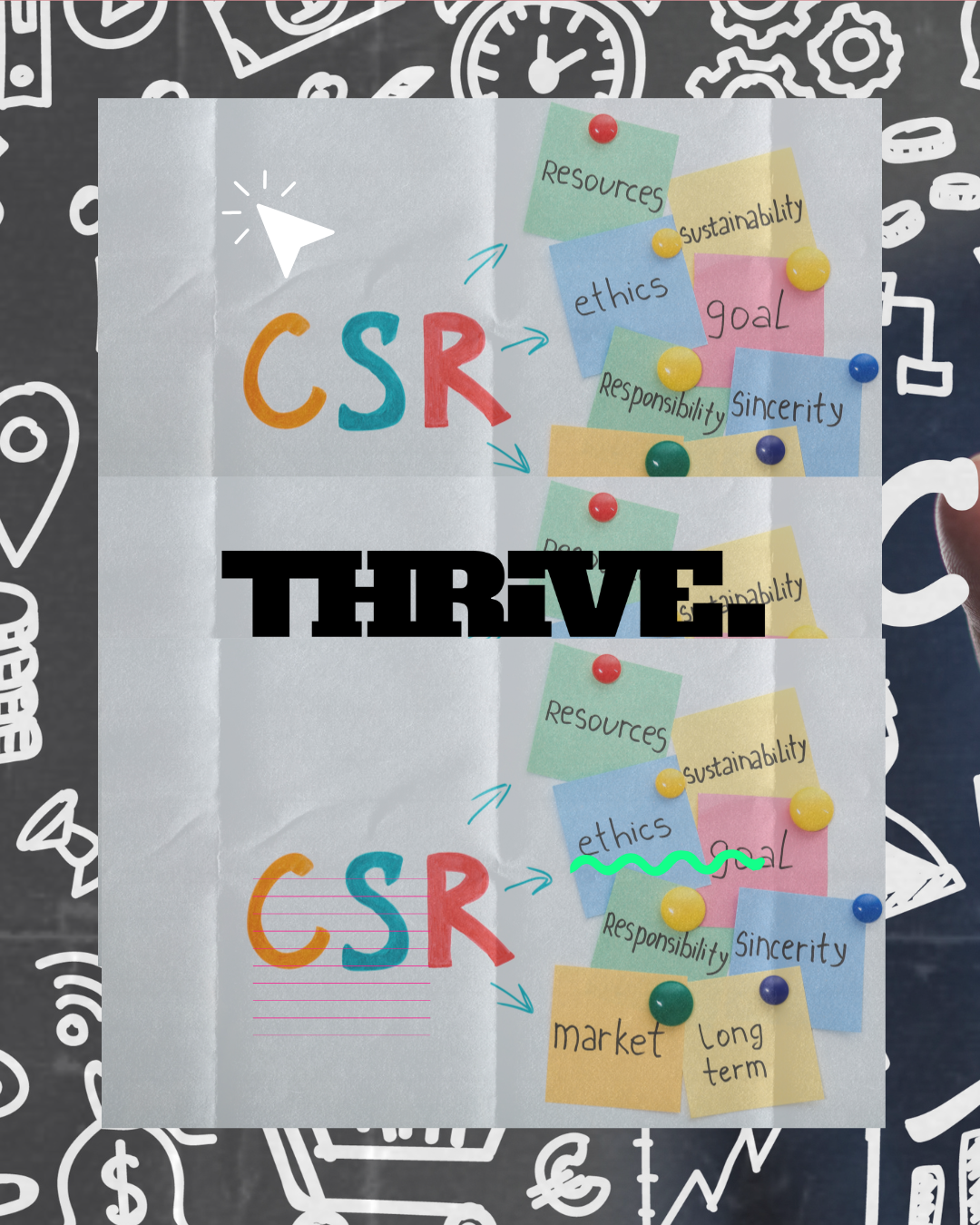
Corporate Social Responsibility is no longer just for big companies. Small and medium-sized businesses are making a real impact through practical, authentic actions that reflect who they are. From supporting sport, culture and charities to rolling up sleeves for environmental projects, consistent CSR builds trust, loyalty and pride. When businesses show up for their community in meaningful ways, those efforts are noticed and often returned.

In the latest edition of Thrive, regular contributor John Hayes reflects on the uncertainty facing small and medium-sized businesses in Gibraltar. From Brexit fallout to ever-changing frontier delays, he unpacks why the border remains a top concern—and how local firms are adapting. While resolving post-Brexit cross-border issues is beyond the scope of this correspondent, there are practical steps business owners can take to mitigate and manage the challenges of this uncertainty.

Gibraltar has long been home to many international businesses. Gaming giants, UK-based insurance companies and far-flung fintech firms are all drawn here thanks to our strategic location and business-friendly environment. Carl Clavering moved his insurance business to Gibraltar, and it’s safe to say, it’s transformed his life. When I caught up with Carl, it was clear that his decision to relocate wasn't just about tax advantages or access to the UK market —it was about finding a place that felt like home, both for his business and his family.

From the increasing influence of AI to the rise of social commerce and sustainability-driven consumer demand, the key to success lies in adapting strategically rather than chasing every new trend. This guide breaks down the most impactful trends for the year ahead—offering insights on how to integrate them into your business without losing sight of what already works. Smart adaptation, not blind reinvention, is the name of the game. Here's what to expect and how to make it work for you.
If you’re looking to grow your business, expand your reach post Treaty or simply try something new, collaboration can be one of the most effective ways to do it. The key is approaching it with a bit of structure. And resisting the urge to say yes to everything just because someone seemed nice over a […]

My name is John Hayes, and I'm a really busy guy. Busy procrastinating most of the time. You wouldn't believe how many unessential tasks I had to complete before sitting down and writing this article. Those sales reports and emails don't check themselves. Yep, I've been busy. Busy doing nothing. We've all had one of those days where we feel like we've been incredibly "busy" - but can't quite put our finger on what we actually accomplished. Maybe we spent three hours answering emails, another two fiddling with a spreadsheet no one asked for, and another hour in a meeting that could have been an email or WhatsApp message. At the end of it all, the to-do list somehow got longer, not shorter.

Welcome to the fifth edition of Thrive magazine. Too often the narrative around business focuses on success and, in my view, we forget to talk about failure. That’s why we lead this edition with EPIC FAILS by Katie Buller—because understanding what doesn’t work is just as important as what does.

If, like me, you spend more time than you should doom scrolling LinkedIn, you could be tempted into thinking no-one fails. LinkedIn has become a hyperbolic haven and a place to scream and shout about success. But what about failures - why aren’t we talking about them? In business, failure is inevitable. I mean it. Whether it's a product flop, a marketing misstep, or a company on the brink of collapse, every entrepreneur will face moments that test them. Yet, history has shown that these failures can often be the starting point for something extraordinary.