


 Gibraltar Federation of Small Businesses


 Gibraltar Federation of Small Businesses

There’s something slightly uncomfortable about sending a contract to a client when you run a small business.
Especially in Gibraltar, where relationships matter and business often begins with a conversation over un cafelito rather than a legal document. When you know someone personally, or you’ve been introduced by a mutual contact, it can feel unnecessary to formalise everything. You tell yourself that an email thread is enough. Or that you’ll sort the paperwork later.
I used to think like that. Over time, and through a few situations that were more stressful than they needed to be, I’ve realised that putting things in writing isn’t about distrust. It’s about creating guardrails for growth. The clearer the boundaries, the freer you are to focus on doing good work.
The risks rarely start with bad intentions
Most business problems don’t begin with conflict. They begin with slightly different assumptions.
An executive coach believes a project has a defined end point. The client assumes ongoing support is included. A supplier believes delivery is complete at dispatch. The customer expects installation too. The invoice arrives, and suddenly the relationship feels strained.
Large organisations manage this through formal agreements as standard practice. Smaller businesses often do not. Yet we are usually more exposed. Cash flow is tighter. Margins are thinner. One disputed project or unpaid invoice can hurt.
A written agreement will not eliminate risk. But it reduces ambiguity and gives you something solid to stand on when questions arise.
When you’re the smaller party
One of the hardest lessons for me was navigating this as a smaller business. Early on, I often began work without anything properly documented. I guess I was grateful for the business, acting on goodwill. The conversations were positive. The intent felt clear. And I did not want to be the awkward one insisting on paperwork.
But when a larger client repeatedly delays confirming scope or fees by prioritising other things, vulnerability creeps in. Not necessarily because they are acting unfairly, but because the imbalance is obvious. The longer expectations remain undefined, the harder they are to reset. Avoiding the agreement conversation does not protect the relationship. It simply postpones it.
What does “an agreement” actually mean?
I’ve learnt that it does not always mean a 20-page contract. At its simplest, a clearly worded email confirming scope, deliverables, timelines and fees can form a binding agreement. For well-defined projects, that may be enough. Precision matters more than length.
For ongoing services, a Service Level Agreement can set expectations around response times and performance standards. Professional services often rely on concise Letters of Engagement outlining responsibilities, fees and liability limits.
Product-based businesses should have clear Terms and Conditions covering payment, delivery, warranties and governing law, particularly as cross-border trade grows more complex.
Full commercial contracts become appropriate where value, risk or duration increase. These may address intellectual property, confidentiality and termination rights. They feel heavier, but sometimes the stakes justify that detail.
What I’ve learnt (so far)
If there’s one lesson I’ve learned so far, it’s that agreements are not there to restrict you. They are there to steady you. They act as guardrails for growth, giving both sides the confidence to move forward without second-guessing what was agreed.
Have the conversation early. Write it down clearly. You may find, as I did, that structure doesn’t cool a relationship. It strengthens it and gives your business the space it needs to grow well.


Welcome to the fifth edition of Thrive magazine. Too often the narrative around business focuses on success and, in my view, we forget to talk about failure. That’s why we lead this edition with EPIC FAILS by Katie Buller—because understanding what doesn’t work is just as important as what does.

Fair recruitment is based on the principle that candidates are judged on their ability to do the job rather than influenced by factors such as an applicant’s gender, religion, ethnicity, or any other quality unrelated to their skills and expertise. As the Founder of Rock Learning and the Co-Founder of the ‘Count me In’ DEIB Conference, I have developed a deep understanding of the topic and how small businesses can implement inclusive hiring practices.

Finding time to sit down with a book can feel like a luxury sometimes. We seem to be pulled in all sorts of directions, yet many of us still want to learn and stay exposed to new ideas. Podcasts have filled part of that gap. They’re accessible, conversational and easy to consume while commuting or […]

Raju Purswani examines Ted Baker’s fall, sharing sharp lessons for entrepreneurs: stay true to your brand, beware of overhauls that alienate customers, and balance growth with identity. A cautionary tale with insights every business can learn from.

Whilst Brexit hasn’t exactly been a positive event, we can’t deny that it’s also been the catalyst for diversification and change. It was a true ‘before and after’ moment that made businesses rethink their strategies and, in many cases, change their direction of travel. Gibraltar’s newest bank, justbank, is born from this process. As well as heralding the arrival of a new bank, this fresh start gave the team at IDT Finance the opportunity to create innovative and tailored banking solutions from the ground up. I met with Managing Director, Damian Asquez, and Head of Corporate Banking, Nikolai Gafan, to find out more.

“People want to know the stories behind the products they buy. It’s not just about what’s on the shelf, but the journey it took to get there.” – Stella, Spirit of The Rock As consumer habits shift towards mindfulness and sustainability, the concept of slow shopping has emerged, offering both challenges and opportunities for small businesses. Slow shopping encourages consumers to take their time, make more thoughtful purchases, and focus on quality over quantity.

Introducing the Thrive Catalog - A curated collection of goodies selected by our editorial team each quarter. Everything featured is available right here, right now at prices that are better than or compete with the internet.


Since 2007, Earth Hour has been known as the biggest hour for the planet as millions of people switch their “lights off” as a symbolic action for the environment

My name is John Hayes, and I'm a really busy guy. Busy procrastinating most of the time. You wouldn't believe how many unessential tasks I had to complete before sitting down and writing this article. Those sales reports and emails don't check themselves. Yep, I've been busy. Busy doing nothing. We've all had one of those days where we feel like we've been incredibly "busy" - but can't quite put our finger on what we actually accomplished. Maybe we spent three hours answering emails, another two fiddling with a spreadsheet no one asked for, and another hour in a meeting that could have been an email or WhatsApp message. At the end of it all, the to-do list somehow got longer, not shorter.
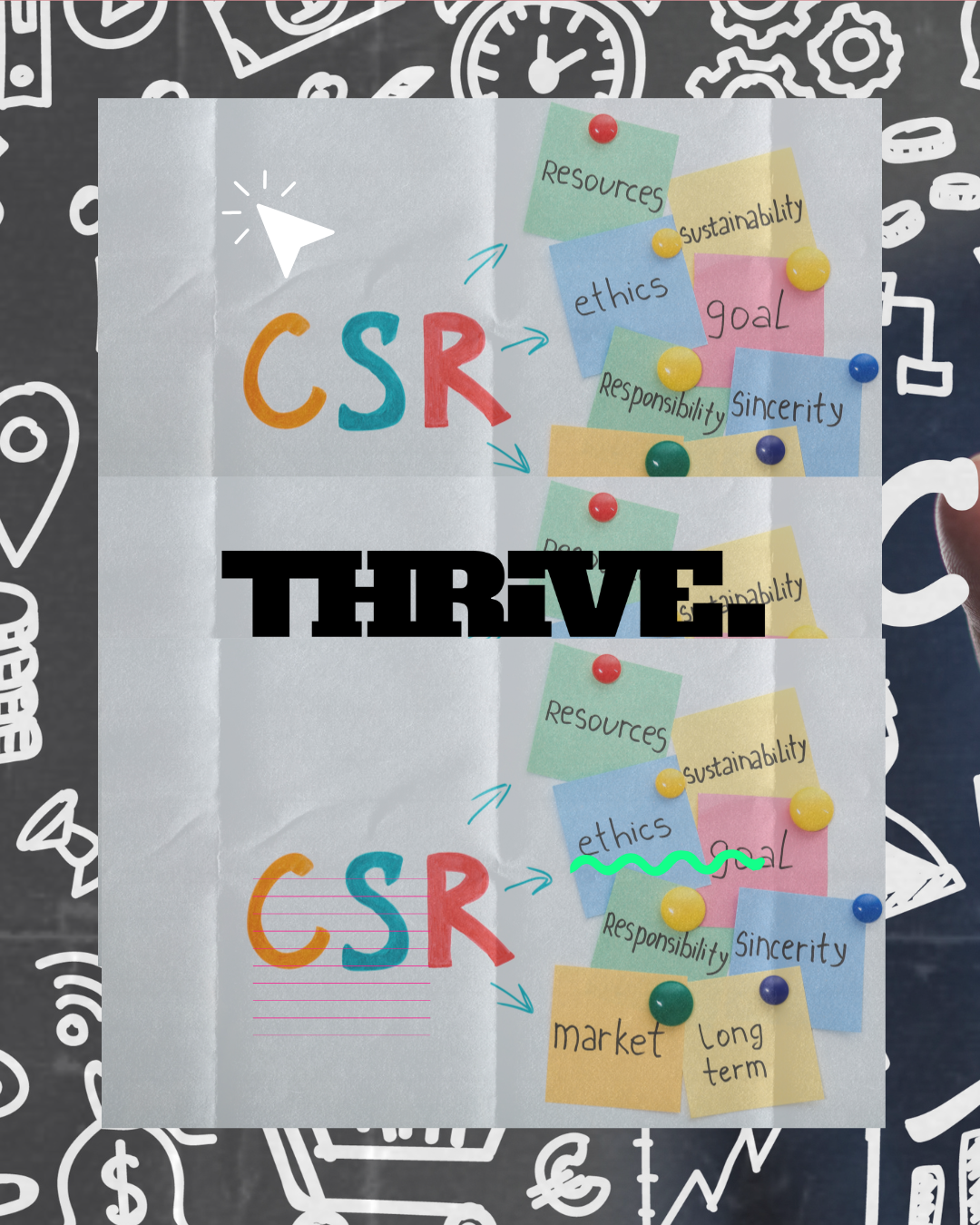
Corporate Social Responsibility is no longer just for big companies. Small and medium-sized businesses are making a real impact through practical, authentic actions that reflect who they are. From supporting sport, culture and charities to rolling up sleeves for environmental projects, consistent CSR builds trust, loyalty and pride. When businesses show up for their community in meaningful ways, those efforts are noticed and often returned.

From the increasing influence of AI to the rise of social commerce and sustainability-driven consumer demand, the key to success lies in adapting strategically rather than chasing every new trend. This guide breaks down the most impactful trends for the year ahead—offering insights on how to integrate them into your business without losing sight of what already works. Smart adaptation, not blind reinvention, is the name of the game. Here's what to expect and how to make it work for you.

One of the most dangerous things anyone can say in business is, "We've always done it this way." This phrase doesn't age well and puts businesses at risk. "We've always done it this way" can quickly look like "flogging a dead horse." This doesn't always mean that businesses need to change everything. Some things, like great service, never go out of fashion. But when sales start to slow down, it's always a good idea to consider taking a new approach. Rebranding a product, service, or entire enterprise can be part of this process. But rebranding should never be taken lightly.

Who doesn’t love a good office gossip? Hushed conversations by the coffee machine, knowing glances across the office, colleagues who "just thought you should know" – it’s all just harmless banter, right? Not quite. While gossip might seem like an inevitable part of office life, the reality is much less entertaining. Workplace backbiting can destroy trust, drain morale, and impact team productivity. Few people understand this better than Norwegian psychotherapist Glenn Rolfsen. With over two decades of experience in psychotherapy, Glenn has dedicated his career to helping businesses tackle workplace negativity head-on. His innovative "Gozzip" method has been transforming office cultures worldwide, earning him recognition at TEDx talks and WHO conferences.

Technology is having a major effect on every aspect of our lives, and the retail environment is not immune to these changes. Not only has online shopping revolutionised the way we think about buying and consuming, but it has also dramatically changed how we shop in physical stores.

If, like me, you spend more time than you should doom scrolling LinkedIn, you could be tempted into thinking no-one fails. LinkedIn has become a hyperbolic haven and a place to scream and shout about success. But what about failures - why aren’t we talking about them? In business, failure is inevitable. I mean it. Whether it's a product flop, a marketing misstep, or a company on the brink of collapse, every entrepreneur will face moments that test them. Yet, history has shown that these failures can often be the starting point for something extraordinary.

Artificial Intelligence promises unprecedented opportunities for small business owners in Gibraltar. As the digital landscape faces constant evolution, understanding AI becomes not just beneficial but essential for businesses aiming to thrive in 2024. In this article, we aim to demystify the complexities surrounding AI, offering an approachable guide to its fundamentals, history, and practical applications for businesses, providing you with the knowledge to embrace this technology confidently.

Imposter syndrome is a psychological behaviour where individuals, including many high achievers, struggle with persistent feelings of self-doubt, inadequacy, or the fear of being exposed as a fraud. Despite their achievements, those experiencing imposter syndrome believe they are undeserving of their success or worry that they've misled others into overestimating their abilities.

We’ve said it before and it’s only getting louder: AI is reshaping how businesses work. From chatbots and smart analytics to automated content and decision-making tools, AI is helping smaller firms punch well above their weight. But with that power comes responsibility. As AI use grows, so do the risks around data privacy, and under GDPR, getting it wrong can mean serious fines and lasting reputational damage.

Running a small business is an exciting journey, but without proper bookkeeping, it can quickly become overwhelming. Imagine trying to make critical business decisions without knowing how much money is in your account or being caught off guard by a hefty tax bill because records weren’t kept up to date. Good bookkeeping isn’t just about staying compliant; it’s about gaining control over your business, planning for growth, and avoiding costly mistakes.

If you’ve been dreaming of starting your own business, you’re not alone. Data from the UK’s Office for National Statistics (ONS) revealed that the annual number of companies registered is edging closer to the one million mark, that’s up by 75,000 in 2022 which itself was 30,000 higher than in 2021. Whether it's following a passion, aiming for financial independence, or breaking free from the 9-5 grind, every entrepreneurial journey begins with one crucial thing: a solid idea. But coming up with that perfect idea can be tough. This is where brainstorming comes in—it’s the creative springboard that can help you turn your business dreams into reality.