

 Gibraltar Federation of Small Businesses


 Gibraltar Federation of Small Businesses

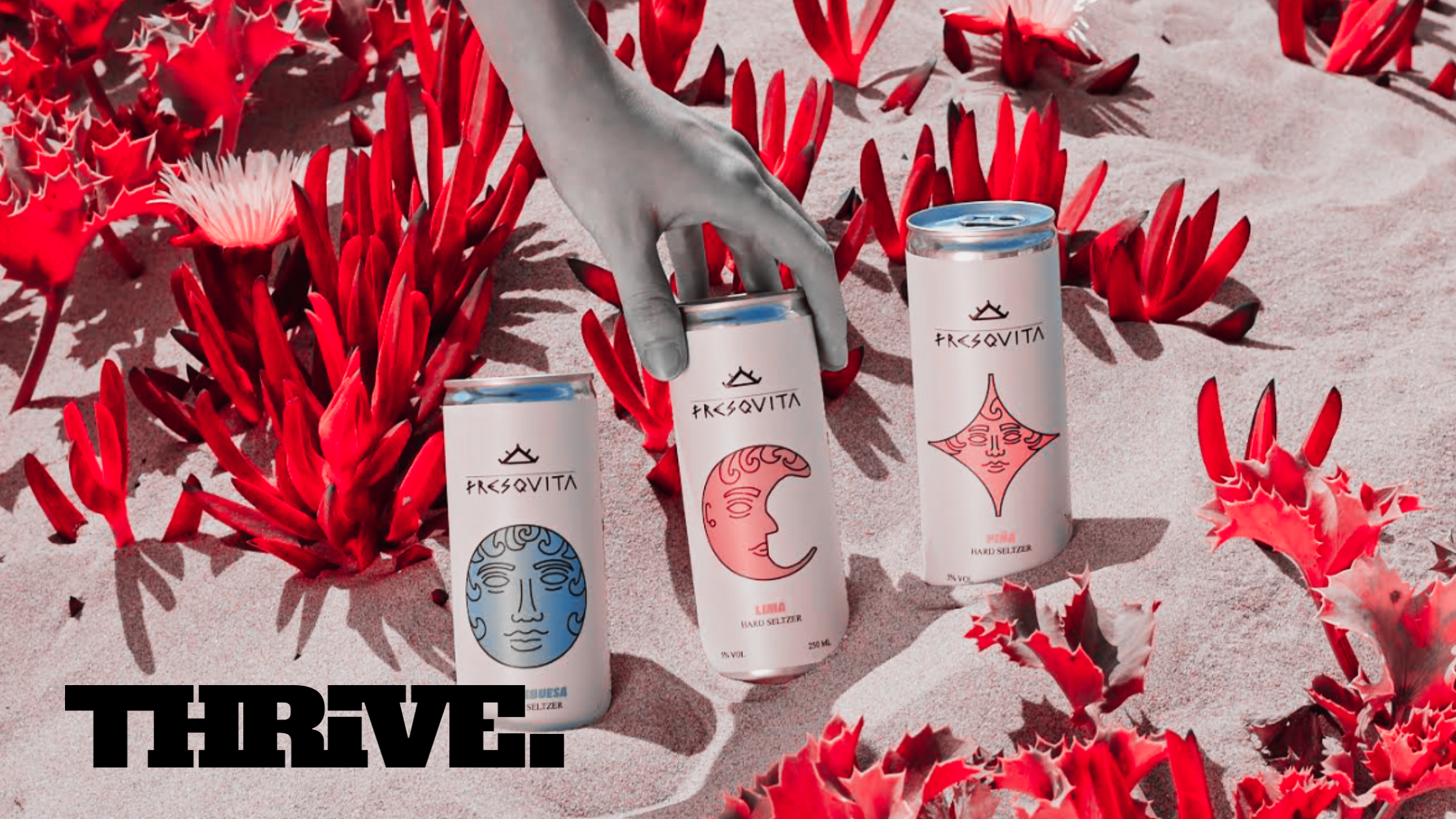
For many businesses, standing out from the crowd in an already crowded marketplace is a mammoth task. But for Fresquita one of the ways they tackled this issue was with highly creative packaging.
Fresquita is Madrid’s first premium hard seltzer. Hard seltzers come in many forms but typically consist of an alcohol base mixed with sparkling water. Fresquita is a hard seltzer combining vodka with sparkling water. It comes in three flavours: lime, raspberry and pineapple so there is something for everyone.
Founders Alex and Beatrice first became acquainted with Hard Seltzer’s back when they lived in Amsterdam and soon fell in love with them.
“What we love about Hard Seltzer was how clean it was. We live a healthy lifestyle but wanted to keep up our healthy habits even in our social time. We left Amsterdam and missed this cleaner living option so decided to start up our own one in Madrid,” comments Alex.
Hard Seltzer began in the US back in 2016 with brands like White Claw leading the market. The drink is tailored to an audience who are increasingly looking for drinks with a lower alcohol percentage with less and more natural ingredients.
Combining Alex’s 5 years of sales experience both in the US and Europe selling alcohol brands such as LOLEA; and Beatrice’s 5 years of design and illustration they set about crafting their hard seltzer.
SMALL STEPS
With Hard Seltzer being such a new concept in Spain, initially the founders had some difficulty finding a distillery that knew what Hard Seltzer was and could help them develop a great one.
“Part of the challenge when you are introducing a new product to the market is the lack of awareness of it even at the manufacturing level. Very few of the distilleries knew what a Hard Seltzer was, let alone had tried one,” comments Beatrice. After much back and forth they found the perfect spot in Barcelona.
“Once we had gotten over that initial hurdle and had a product that we were happy with we turned our attention to the packaging design. During the design stages we often asked ourselves, in a market with a known heritage of more traditional alcohol options such as wine, sherry and beer, how could we convince someone to try something new?”
PACKAGING
With such a new product that people are not familiar with, the founders found it imperative to create attractive packaging for the brand. The brand’s designer Beatrice explains more: “ We wanted to entice people’s curiosity by creating an attractive product that people would be excited to try. As my co-founder Alex is half Swedish, I was inspired by his Nordic roots to build the packaging of the brand. The typography for our brand was inspired by nordic runes. On our cans, above our brand name I made an icon which represents Odin’s eye. In Nordic mythology Odin;(who some of you may recognise as Thor’s father from the Marvel films), sacrifices one eye in order to gain higher
knowledge. “We like to joke that his missing eye is the one that you find on our cans’” adds Beatrice.
“For the illustrations of the flavours we wanted them to be an interpretation of the faces of famous Gods. We loved the idea of combining a fresh and modern design with touches of classical mythology to ground the brand. So our Raspberry flavour represents Aphrodite, our Lime Artemis and our Pineapple flavour the sun god Apollo.”
EMBRACING THE SENSES
Beatrice and Alex also found ways to make their Hard Seltzer a full sensory experience. As well as both the sense of smell and taste, the founders were very playful with the sense of touch when it came to the packaging design.
Alex explains “ We wanted for Fresquita to have a certain texture to it so that it would be instantly recognisable in any bar or restaurant. We also felt that the relief applied to the logo sent signals to the consumer about the quality of the product. It’s an artisanal, premium product and we wanted to ensure that the packaging reflected that.”
Fresquita is exclusively sold by Stagnettos in Gibraltar. If you would like to order it for your bar or restaurant send an email to info@vivafresquita.com.


With its largely service-based economy, you'd be forgiven for thinking that Gibraltar didn't have to deal with the problem of toxic waste, perhaps more commonly seen in countries reliant on manufacturing, mining and even agriculture. However, every gaming company, insurance firm, fintech organisation, retailer, restaurant, and literally every other business on the Rock is potentially responsible for producing a particularly nasty waste byproduct - e-waste.

Artificial Intelligence promises unprecedented opportunities for small business owners in Gibraltar. As the digital landscape faces constant evolution, understanding AI becomes not just beneficial but essential for businesses aiming to thrive in 2024. In this article, we aim to demystify the complexities surrounding AI, offering an approachable guide to its fundamentals, history, and practical applications for businesses, providing you with the knowledge to embrace this technology confidently.

Thrive catches up with Nick Pitaluga TEP, Managing Director of Gibraltar Trust & Corporate Services Limited - “GTCS”. From starting out as a messenger to leading his firm through a major merger, Nick talks about the importance of stepping outside your comfort zone and offers inspiration for anyone carving their own niche.
If you’re looking to grow your business, expand your reach post Treaty or simply try something new, collaboration can be one of the most effective ways to do it. The key is approaching it with a bit of structure. And resisting the urge to say yes to everything just because someone seemed nice over a […]

When it comes to ideation in business, there’s no one-size-fits-all approach. Every business, team, and leader has their own way of generating and refining ideas. Whether it’s through structured brainstorming sessions, casual conversations, or solo reflection, the goal is to unlock creativity and find solutions. We’ve asked four GFSB members to share how they approach ideation in their fields. As you read, think about how you generate ideas and remember that sometimes, the best results come from trying something new.


Welcome to the fifth edition of Thrive magazine. Too often the narrative around business focuses on success and, in my view, we forget to talk about failure. That’s why we lead this edition with EPIC FAILS by Katie Buller—because understanding what doesn’t work is just as important as what does.

Whether you’re building a business from the ground up or hoping to grow an existing operation, having a strong business development strategy is the foundation of success. But real, sustainable growth doesn’t come from chasing the next big thing, it comes from getting the essentials right. So, what are the fundamentals you can’t afford to ignore? In my view, this starts with something I call the “Holy Trinity” of small business marketing...

If, like me, you spend more time than you should doom scrolling LinkedIn, you could be tempted into thinking no-one fails. LinkedIn has become a hyperbolic haven and a place to scream and shout about success. But what about failures - why aren’t we talking about them? In business, failure is inevitable. I mean it. Whether it's a product flop, a marketing misstep, or a company on the brink of collapse, every entrepreneur will face moments that test them. Yet, history has shown that these failures can often be the starting point for something extraordinary.

If you’ve been dreaming of starting your own business, you’re not alone. Data from the UK’s Office for National Statistics (ONS) revealed that the annual number of companies registered is edging closer to the one million mark, that’s up by 75,000 in 2022 which itself was 30,000 higher than in 2021. Whether it's following a passion, aiming for financial independence, or breaking free from the 9-5 grind, every entrepreneurial journey begins with one crucial thing: a solid idea. But coming up with that perfect idea can be tough. This is where brainstorming comes in—it’s the creative springboard that can help you turn your business dreams into reality.

Over the past few years, I’ve noticed the same logo cropping up more and more often. On coffee cups. On consultancy websites. In email signatures and pitch decks. The familiar B Corp badge, quietly signalling that a business is trying to do things differently. With our horizons widening post-treaty, could this globally-relevant badge could become a way of promoting your CSR values to an international market?

Starting and running a small business is rewarding but comes with its fair share of challenges. The path of entrepreneurship is often characterised by immense dedication, long hours, and tough decisions. As a small business owner, you're not just responsible for the operations and growth of your company and team, but also for your own wellbeing.


In an increasingly digital work environment where we have more emails, WhatsApp messages & interruptions than ever before, many business leaders started looking at ways of alleviating the stress that comes with this increased workload. Relaxing the dress code and letting your team dress down and wear in more casual clothing is one way of doing this….Or is it?

“People want to know the stories behind the products they buy. It’s not just about what’s on the shelf, but the journey it took to get there.” – Stella, Spirit of The Rock As consumer habits shift towards mindfulness and sustainability, the concept of slow shopping has emerged, offering both challenges and opportunities for small businesses. Slow shopping encourages consumers to take their time, make more thoughtful purchases, and focus on quality over quantity.
When stakeholder conversations become difficult, most organisations focus on communication. Kerstin Andlaw argues the real issue runs deeper. It is not what we say, but how we stay in the relationship when pressure rises. In complex environments, the ability to work with tension, not avoid it, is what separates transactional engagement from true collaboration.

Last month marked eight years since the UK voted to leave the European Union. I remember the exact moment I read the headline ‘UK Votes to Leave the EU’ on my phone and the feeling of shock that started to set in. My first thought was, “Er, now what?” Little did I know I would still be asking that question eight years later… Eight years of uncertainty, negotiations, grace periods, frameworks, and meticulously crafted non-statements. But still no solution.

There’s something slightly uncomfortable about sending a contract to a client when you run a small business. Especially in Gibraltar, where relationships matter and business often begins with a conversation over un cafelito rather than a legal document. When you know someone personally, or you’ve been introduced by a mutual contact, it can feel unnecessary to formalise everything. You tell yourself that an email thread is enough. Or that you’ll sort the paperwork later. I used to think like that. Over time, and through a few situations that were more stressful than they needed to be, I’ve realised that putting things in writing isn’t about distrust. It’s about creating guardrails for growth. The clearer the boundaries, the freer you are to focus on doing good work.

We recently provided a large local organisation with their uniforms. Once the order was delivered, I felt compelled to send them guidelines on how to take care of their uniform. Spending money on clothes and footwear is not a guarantee on making the right impression, either to yourself, nor anyone else- it’s attention to detail that seals the deal.

My name is John Hayes, and I'm a really busy guy. Busy procrastinating most of the time. You wouldn't believe how many unessential tasks I had to complete before sitting down and writing this article. Those sales reports and emails don't check themselves. Yep, I've been busy. Busy doing nothing. We've all had one of those days where we feel like we've been incredibly "busy" - but can't quite put our finger on what we actually accomplished. Maybe we spent three hours answering emails, another two fiddling with a spreadsheet no one asked for, and another hour in a meeting that could have been an email or WhatsApp message. At the end of it all, the to-do list somehow got longer, not shorter.


Since 2007, Earth Hour has been known as the biggest hour for the planet as millions of people switch their “lights off” as a symbolic action for the environment


In business, we often concentrate on the what and how of an enterprise.