


 Gibraltar Federation of Small Businesses


 Gibraltar Federation of Small Businesses

If, like me, you spend more time than you should doom scrolling LinkedIn, you could be tempted into thinking no-one fails. LinkedIn has become a hyperbolic haven and a place to scream and shout about success. But what about failures – why aren’t we talking about them? In business, failure is inevitable. I mean it. Whether it’s a product flop, a marketing misstep, or a company on the brink of collapse, every entrepreneur will face moments that test them. Yet, history has shown that these failures can often be the starting point for something extraordinary. Some of the most recognisable brands in the world have faced extreme challenges, but through resilience, creativity, and bold decisions, they have turned their failures into defining moments. Let’s explore some inspiring examples of businesses that turned their failures into remarkable comebacks, extracting the key lessons you can apply to your own business journey.
Coca-Cola’s Customer Loyalty
In April 1985, Coca-Cola made what seemed like a logical move: reformulating its flagship drink to re-energise the brand, disrupt the cola market in the United States, and compete with key competitors like Pepsi. The launch of “New Coke” was backed by extensive research and taste tests, yet the decision triggered a backlash that remains infamous to this day. Loyal customers felt betrayed, and protests erupted across the United States.
Rather than digging in their heels, Coca-Cola listened to the outcry. They reintroduced the original recipe as “Coca-Cola Classic” just 79 days later, publicly admitting their mistake. Far from damaging the brand, the New Coke blunder only reinforced customer loyalty that had previously been dwindling. It reminded people why they loved the original product in the first place, and sales soared.
This story highlights the importance of listening to your customers, even when the feedback is hard to hear. For small businesses, customer relationships are often your greatest asset. If a new product or service isn’t landing as expected, engaging directly with your audience can provide the insights you need to adapt, rebuild trust, and ultimately strengthen your brand.
The Instagram Pivot
Before Instagram became the photo-sharing platform used by over two billion people worldwide, it began as an app called Burbn. Part social check-in service, part photo-sharing tool, Burbn offered too many features and struggled to engage users.
Rather than holding on to the original concept, founders Kevin Systrom and Mike Krieger identified what users loved most: sharing photos. They stripped away everything else, rebranded as Instagram, and focused exclusively on photo-sharing, commenting, and liking functions. Just two years later, in 2012, Instagram had millions of users and was acquired by Facebook for $1 billion.
The takeaway? Simplicity and focus will always win. When businesses try to do too much, they risk losing sight of what truly resonates with their audience. For small businesses, this lesson is particularly relevant: identify your strengths, streamline your offers, and don’t be afraid to pivot if something isn’t working.
Sir James Dyson’s Relentless Experimentation
Innovation rarely happens overnight, and no one represents persistence quite like Sir James Dyson. Before creating the world’s first bagless vacuum cleaner, Dyson made 5,127 different tweaks and modifications to his prototypes – each one a failure. The process took five years, but each failure taught him something new.
Eventually, Dyson’s design revolutionised the vacuum cleaner industry, offering a product that was not only innovative but far superior to its competitors. To this day, Dyson’s company is synonymous with cutting-edge technology, high quality engineering, and sleek design, valued at over £7 billion.
Dyson’s story is a powerful lesson in perseverance. For small businesses, especially those working with limited resources or funding, it can be tempting to abandon an idea when the path gets difficult. But setbacks are often stepping stones. Every failed attempt is an opportunity to refine, improve, and ultimately succeed.
Lessons for Gibraltar’s Businesses
The key lesson from these stories is that failure, while daunting, can be a key stepping stone to growth and innovation. Coca-Cola’s New Coke blunder shows the value of listening to your customers and being willing to adapt quickly when something isn’t working. Instagram’s transformation highlights the power of simplifying your offers and focusing on what resonates most with your audience. While Dyson’s relentless experimentation proves that perseverance – no matter how many failures come first – can ultimately lead to groundbreaking success.
For small businesses, these examples offer a clear lesson: when faced with setbacks, don’t panic and don’t give up. Instead, evaluate what went wrong, identify opportunities to pivot or refine your approach, and stay connected to your customers’ needs. Whether it’s a miscalculation, a branding mishap, or a product that doesn’t take off, there’s always an opportunity to learn, adapt, and come back stronger.
Embracing Failure as Part of Success
Failure, while uncomfortable, is often the spark for innovation. The businesses we admire today are built on a foundation of missteps, pivots, and lessons learned the hard way. Failure doesn’t have to be final. By shifting the way we think about our setbacks, we can turn them into opportunities for growth, creativity, and success. After all, as these stories show, it’s not about avoiding failure, but about what you do next.


Finding time to sit down with a book can feel like a luxury sometimes. We seem to be pulled in all sorts of directions, yet many of us still want to learn and stay exposed to new ideas. Podcasts have filled part of that gap. They’re accessible, conversational and easy to consume while commuting or […]

Finding someone who listens, understands, and guides you can make all the difference. For women in Gibraltar, the Women’s Mentorship Programme offers just that – honest conversations and valuable support from people with lived experience who understand. Now in its sixth cycle, the programme pairs women with mentors to help them navigate work, life, and everything in between. Ok, full disclosure: as a recently appointed mentor, that last sentence somewhat triggers the old imposter syndrome and self-doubt, but I am honoured to be part of this scheme and look forward to doing my very best in the months ahead.
When stakeholder conversations become difficult, most organisations focus on communication. Kerstin Andlaw argues the real issue runs deeper. It is not what we say, but how we stay in the relationship when pressure rises. In complex environments, the ability to work with tension, not avoid it, is what separates transactional engagement from true collaboration.


In an increasingly digital work environment where we have more emails, WhatsApp messages & interruptions than ever before, many business leaders started looking at ways of alleviating the stress that comes with this increased workload. Relaxing the dress code and letting your team dress down and wear in more casual clothing is one way of doing this….Or is it?

Fair recruitment is based on the principle that candidates are judged on their ability to do the job rather than influenced by factors such as an applicant’s gender, religion, ethnicity, or any other quality unrelated to their skills and expertise. As the Founder of Rock Learning and the Co-Founder of the ‘Count me In’ DEIB Conference, I have developed a deep understanding of the topic and how small businesses can implement inclusive hiring practices.

Gibraltar has long been home to many international businesses. Gaming giants, UK-based insurance companies and far-flung fintech firms are all drawn here thanks to our strategic location and business-friendly environment. Carl Clavering moved his insurance business to Gibraltar, and it’s safe to say, it’s transformed his life. When I caught up with Carl, it was clear that his decision to relocate wasn't just about tax advantages or access to the UK market —it was about finding a place that felt like home, both for his business and his family.

My name is John Hayes, and I'm a really busy guy. Busy procrastinating most of the time. You wouldn't believe how many unessential tasks I had to complete before sitting down and writing this article. Those sales reports and emails don't check themselves. Yep, I've been busy. Busy doing nothing. We've all had one of those days where we feel like we've been incredibly "busy" - but can't quite put our finger on what we actually accomplished. Maybe we spent three hours answering emails, another two fiddling with a spreadsheet no one asked for, and another hour in a meeting that could have been an email or WhatsApp message. At the end of it all, the to-do list somehow got longer, not shorter.

We recently provided a large local organisation with their uniforms. Once the order was delivered, I felt compelled to send them guidelines on how to take care of their uniform. Spending money on clothes and footwear is not a guarantee on making the right impression, either to yourself, nor anyone else- it’s attention to detail that seals the deal.


Welcome to the fifth edition of Thrive magazine. Too often the narrative around business focuses on success and, in my view, we forget to talk about failure. That’s why we lead this edition with EPIC FAILS by Katie Buller—because understanding what doesn’t work is just as important as what does.

Introducing the Thrive Catalog - A curated collection of goodies selected by our editorial team each quarter. Everything featured is available right here, right now at prices that are better than or compete with the internet.

After teaching in schools for 18 years I decided to take the plunge and embark on a self-employed life. Driven by my passion for teaching children with special educational needs I set out to discover alternative ways to make education accessible to all. My vision was to have the individual in mind, with their own strengths and challenges, and with that came the birth of ‘edYOUcation Clare Francis’; bringing the YOU into learning.


Eran Shay's journey is emblematic of the modern entrepreneur. A self-confessed ‘out-of-the-box’ thinker, he swapped a successful corporate career and a senior role at Deloitte to pursue his own projects and business opportunities.

The world of work is undergoing a significant transformation, driven by the accelerating capabilities of Generative AI. While robots taking over our jobs might be a sci-fi trope, AI’s ability to learn, create, and automate tasks is undeniably impacting various industries. Generative AI is the umbrella term used to describe the type of AI that can create new content and ideas. This can include text, images, music, code and other types of content. We are now seeing how powerful this tool can be. But is this a threat or a powerful tool waiting to be harnessed? We set out to find out, what does the use of Generative AI look like in Gibraltar?

Building a personal brand isn't just about showcasing your professional accomplishments; it's about weaving your unique narrative, passions, and values into a cohesive identity that resonates with others. Here's how you can bring your personal brand to life, with practical examples to guide you at every step.

There’s something slightly uncomfortable about sending a contract to a client when you run a small business. Especially in Gibraltar, where relationships matter and business often begins with a conversation over un cafelito rather than a legal document. When you know someone personally, or you’ve been introduced by a mutual contact, it can feel unnecessary to formalise everything. You tell yourself that an email thread is enough. Or that you’ll sort the paperwork later. I used to think like that. Over time, and through a few situations that were more stressful than they needed to be, I’ve realised that putting things in writing isn’t about distrust. It’s about creating guardrails for growth. The clearer the boundaries, the freer you are to focus on doing good work.
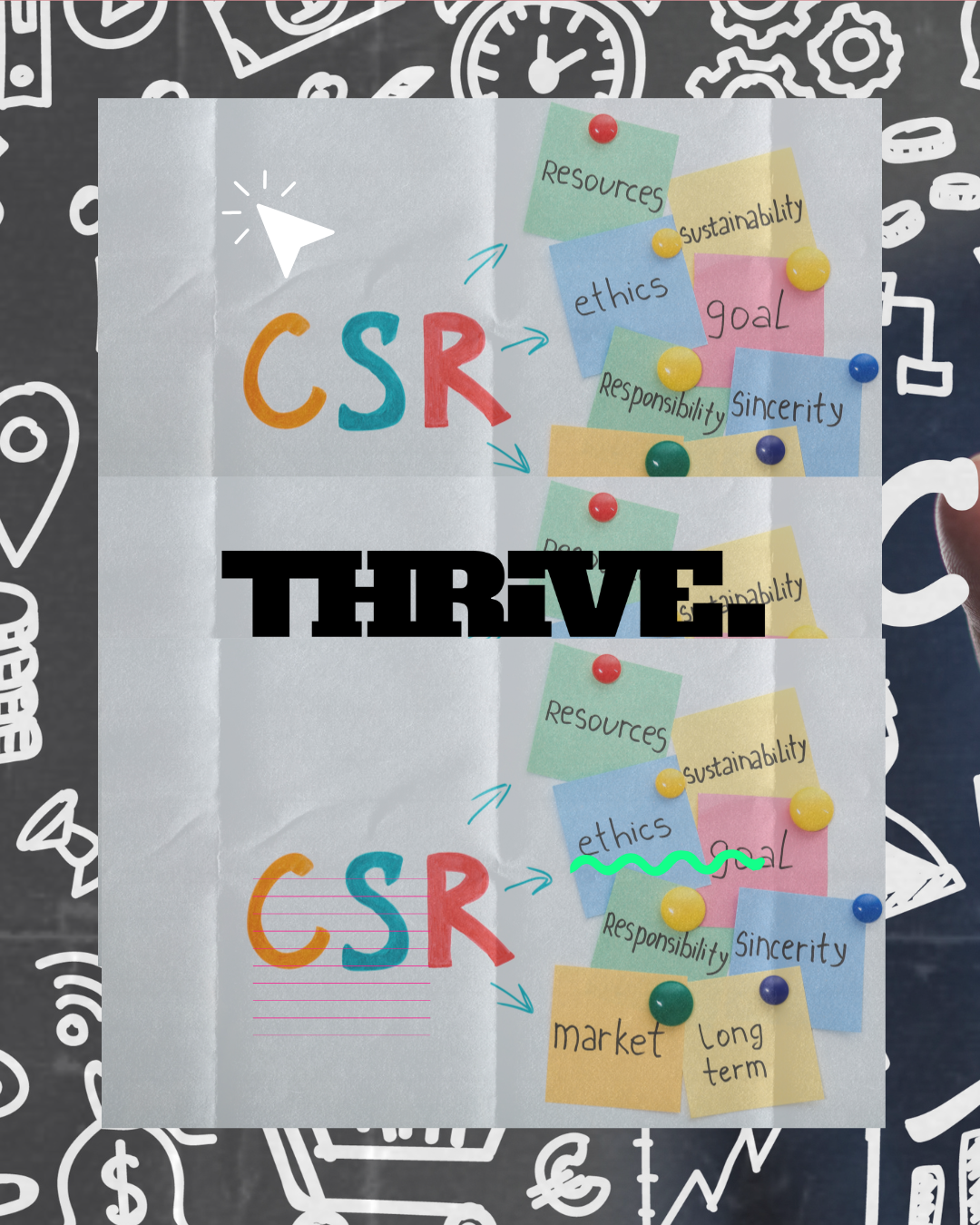
Corporate Social Responsibility is no longer just for big companies. Small and medium-sized businesses are making a real impact through practical, authentic actions that reflect who they are. From supporting sport, culture and charities to rolling up sleeves for environmental projects, consistent CSR builds trust, loyalty and pride. When businesses show up for their community in meaningful ways, those efforts are noticed and often returned.

Technology is having a major effect on every aspect of our lives, and the retail environment is not immune to these changes. Not only has online shopping revolutionised the way we think about buying and consuming, but it has also dramatically changed how we shop in physical stores.


Success doesn’t just happen; it’s built on a strong foundation of preparation, clarity, and taking consistent action. Whether you’re launching a new business, taking your current side-hustle full-time, or looking to scale in a competitive market, having the right plan in place is essential.

You have a brilliant idea. You can picture the logo, the customers, maybe even the first sale. But without a clear plan for how to get there, the idea risks staying exactly that - an idea. Starting a business without a plan is like setting off on a trip with no map. You might eventually arrive somewhere, but it is unlikely to be where you hoped. A business plan is not just paperwork. When written with care, it is a roadmap that guides every decision, a pitch that wins support, and a source of confidence on the days when challenges mount.

AI is poised to reshape the legal profession, with 31% of law firm leaders predicting major disruption by 2025. Scott Simmons explores how AI could improve client outcomes, streamline workflows, and drive value. Whether you’re cautious or curious, it’s time to explore AI’s potential.