


 Gibraltar Federation of Small Businesses


 Gibraltar Federation of Small Businesses

“People want to know the stories behind the products they buy. It’s not just about what’s on the shelf, but the journey it took to get there.” – Stella, Spirit of The Rock
As consumer habits shift towards mindfulness and sustainability, the concept of slow shopping has emerged, offering both challenges and opportunities for small businesses. Slow shopping encourages consumers to take their time, make more thoughtful purchases, and focus on quality over quantity.
The Origins of Slow Shopping
The origins of slow shopping can be traced back to the wider Slow Living Movement, which encourages a more deliberate, thoughtful approach to life. Millennials and Gen Z, in particular, are driving this trend as they become more aware of the impacts of overconsumption and fast-paced lifestyles. These consumers are often willing to pay more for ethically sourced or locally made products that align with their values.
How to Shop Slowly
Shopping slowly is about more than just taking your time—it’s about shoppers making purchases that reflect their values and long-term goals. They think about the story behind the products they buy, consider the environmental impact, and, very often, prioritise quality over convenience. Slow shoppers tend to engage fully with the shopping experience, making each purchase meaningful and thoughtful.
Why is Slow Shopping Gaining Popularity?
Several factors are contributing to the rise of slow shopping, with sustainability being the most significant. As concerns over climate change grow, consumers are increasingly looking for ways to reduce their carbon footprint. Slow shopping offers an alternative by encouraging people to buy less but buy better, supporting products that are durable, ethically made, and environmentally friendly.
Another factor is mindfulness. Many consumers are tired of feeling rushed or pressured into making impulse purchases. Slow shopping gives them the opportunity to take their time, make considered decisions, and enjoy the shopping process. Post-pandemic shifts in lifestyle have further accelerated this trend, with people placing greater importance on meaningful, intentional purchases.
Local Business Insight: Spirit of The Rock
In Gibraltar, businesses like Spirit of The Rock have noticed the impact of slow shopping on customer behaviour. As a company that produces premium, local gin, they’ve seen an increase in customer loyalty as shoppers are more thoughtful and deliberate in their buying choices. “Our customers definitely buy into our story,” explains Stella, “particularly the uniqueness of our products and the fact they are made locally.”
Sustainability has also played a key role. Spirit of The Rock’s commitment to sustainable practices sets them apart, attracting consumers who value eco-friendly choices. However, they also face challenges, such as rising material costs, which have made it difficult to maintain competitive prices. Still, the personal connection they’ve built with customers has led to a high level of repeat business, demonstrating the long-term benefits of slow shopping for small businesses.
Local Business Insight: Green Wave
Green Wave, a local online loyalty card business, has experienced similar benefits from the slow shopping trend. Their focus on sustainability aligns perfectly with the slow shopping ethos. “Shoppers are now more focused on the quality and sustainability of their purchases rather than quantity,” says Lili. Customers who visit Green Wave are drawn to their eco-friendly mission, which is reinforced by their free Eco Loyalty Card app launching in November 2024, rewarding consumers for making mindful, sustainable choices.
Lili points out that while slow shopping increases customer loyalty, businesses may need to adjust to slower product turnover. “We’ve seen slower turnover in certain products, especially those that are designed to last longer, such as reusable goods and sustainable clothing,” she notes. However, the long-term payoff is significant, as customers become more committed to businesses that share their values.
In addition, Green Wave advocates for the introduction of green tax benefits for businesses in Gibraltar that support eco-friendly products and initiatives. Lili believes this would encourage more businesses to embrace sustainability, ultimately benefiting both the environment and the local economy.
Share Your Experiences
Slow shopping represents more than just a shift in consumer behaviour—it’s a movement towards more intentional, mindful, and sustainable consumption. But what do you think? Have you noticed a change in the way people shop? Do you see slow shopping as the future of retail, or just a passing trend?
We’d love to hear your thoughts on how this movement is affecting local businesses and the way we shop. Share your views and join the conversation! editor@gfsb.gi


AI is poised to reshape the legal profession, with 31% of law firm leaders predicting major disruption by 2025. Scott Simmons explores how AI could improve client outcomes, streamline workflows, and drive value. Whether you’re cautious or curious, it’s time to explore AI’s potential.

The world of work is undergoing a significant transformation, driven by the accelerating capabilities of Generative AI. While robots taking over our jobs might be a sci-fi trope, AI’s ability to learn, create, and automate tasks is undeniably impacting various industries. Generative AI is the umbrella term used to describe the type of AI that can create new content and ideas. This can include text, images, music, code and other types of content. We are now seeing how powerful this tool can be. But is this a threat or a powerful tool waiting to be harnessed? We set out to find out, what does the use of Generative AI look like in Gibraltar?

Over the past few years, I’ve noticed the same logo cropping up more and more often. On coffee cups. On consultancy websites. In email signatures and pitch decks. The familiar B Corp badge, quietly signalling that a business is trying to do things differently. With our horizons widening post-treaty, could this globally-relevant badge could become a way of promoting your CSR values to an international market?

Introducing the Thrive Catalog - A curated collection of goodies selected by our editorial team each quarter. Everything featured is available right here, right now at prices that are better than or compete with the internet.

Pets are like family, right? As a proud cat dad, I’d actually go further and say that they are family. Over the years, I have spent my well-earned money on (many) toys, beds, treats and vet bills for my two feline furballs Nacho and Drake. And I am not alone. According to a recent Fortune Business Insight report, the global pet care market was valued at a massive £171.78 billion in 2022 and is projected to grow from £180.06 billion in 2023 to £269.29 billion by 2030.

Whether you’re an ebook tapper or traditional page turner, there are thousands of books that can make you better at business. Áine Panter, Head of the School of Business at the University of Gibraltar has curated a list of must-reads that will inspire, inform, and equip you for success.

Fair recruitment is based on the principle that candidates are judged on their ability to do the job rather than influenced by factors such as an applicant’s gender, religion, ethnicity, or any other quality unrelated to their skills and expertise. As the Founder of Rock Learning and the Co-Founder of the ‘Count me In’ DEIB Conference, I have developed a deep understanding of the topic and how small businesses can implement inclusive hiring practices.

Two decades is a long time for any business - with all the strife that businesses large and small have had to endure these past four years, it seems that anxiety among business owners has never been higher. I recently had the pleasure of chatting with Garren Thompson, co-owner and co-founder of Gibraltar hair & beauty salon Miss Shapes, based on Bishop Rapallo’s Ramp. As the business recently hit the 20-year milestone, we discussed the highs and lows of creating a successful salon in a saturated market, how he and his team created their new range of Miss Shapes branded Hair & Beauty products and how this will help build success for another 20 years.


In business, we often concentrate on the what and how of an enterprise.

When it comes to ideation in business, there’s no one-size-fits-all approach. Every business, team, and leader has their own way of generating and refining ideas. Whether it’s through structured brainstorming sessions, casual conversations, or solo reflection, the goal is to unlock creativity and find solutions. We’ve asked four GFSB members to share how they approach ideation in their fields. As you read, think about how you generate ideas and remember that sometimes, the best results come from trying something new.

Whilst Brexit hasn’t exactly been a positive event, we can’t deny that it’s also been the catalyst for diversification and change. It was a true ‘before and after’ moment that made businesses rethink their strategies and, in many cases, change their direction of travel. Gibraltar’s newest bank, justbank, is born from this process. As well as heralding the arrival of a new bank, this fresh start gave the team at IDT Finance the opportunity to create innovative and tailored banking solutions from the ground up. I met with Managing Director, Damian Asquez, and Head of Corporate Banking, Nikolai Gafan, to find out more.

During a recent and very long overdue catch up with my friend Trina, I had one of those ‘Aha moments’. To be fair, as someone who spends a lot of time interviewing experts, these moments happen to me a lot, but this one was different. In the 20 years Trina and I have been friends, she’s developed marketing strategies for global brands including Coca Cola, Virgin Atlantic, Nestlé and IKEA . Impressive stuff, but it’s what she’s working on now that really got me thinking…Taking inspiration from the military and politics, Trina and her business partners set up The Competitive Wargaming Team and now deliver secret, scenario-based ‘corporate war rooms’ for senior leaders designed to predict and outmaneuver competitor moves.

There’s something slightly uncomfortable about sending a contract to a client when you run a small business. Especially in Gibraltar, where relationships matter and business often begins with a conversation over un cafelito rather than a legal document. When you know someone personally, or you’ve been introduced by a mutual contact, it can feel unnecessary to formalise everything. You tell yourself that an email thread is enough. Or that you’ll sort the paperwork later. I used to think like that. Over time, and through a few situations that were more stressful than they needed to be, I’ve realised that putting things in writing isn’t about distrust. It’s about creating guardrails for growth. The clearer the boundaries, the freer you are to focus on doing good work.

One of the most dangerous things anyone can say in business is, "We've always done it this way." This phrase doesn't age well and puts businesses at risk. "We've always done it this way" can quickly look like "flogging a dead horse." This doesn't always mean that businesses need to change everything. Some things, like great service, never go out of fashion. But when sales start to slow down, it's always a good idea to consider taking a new approach. Rebranding a product, service, or entire enterprise can be part of this process. But rebranding should never be taken lightly.


If you’ve been dreaming of starting your own business, you’re not alone. Data from the UK’s Office for National Statistics (ONS) revealed that the annual number of companies registered is edging closer to the one million mark, that’s up by 75,000 in 2022 which itself was 30,000 higher than in 2021. Whether it's following a passion, aiming for financial independence, or breaking free from the 9-5 grind, every entrepreneurial journey begins with one crucial thing: a solid idea. But coming up with that perfect idea can be tough. This is where brainstorming comes in—it’s the creative springboard that can help you turn your business dreams into reality.

In the latest edition of Thrive, regular contributor John Hayes reflects on the uncertainty facing small and medium-sized businesses in Gibraltar. From Brexit fallout to ever-changing frontier delays, he unpacks why the border remains a top concern—and how local firms are adapting. While resolving post-Brexit cross-border issues is beyond the scope of this correspondent, there are practical steps business owners can take to mitigate and manage the challenges of this uncertainty.
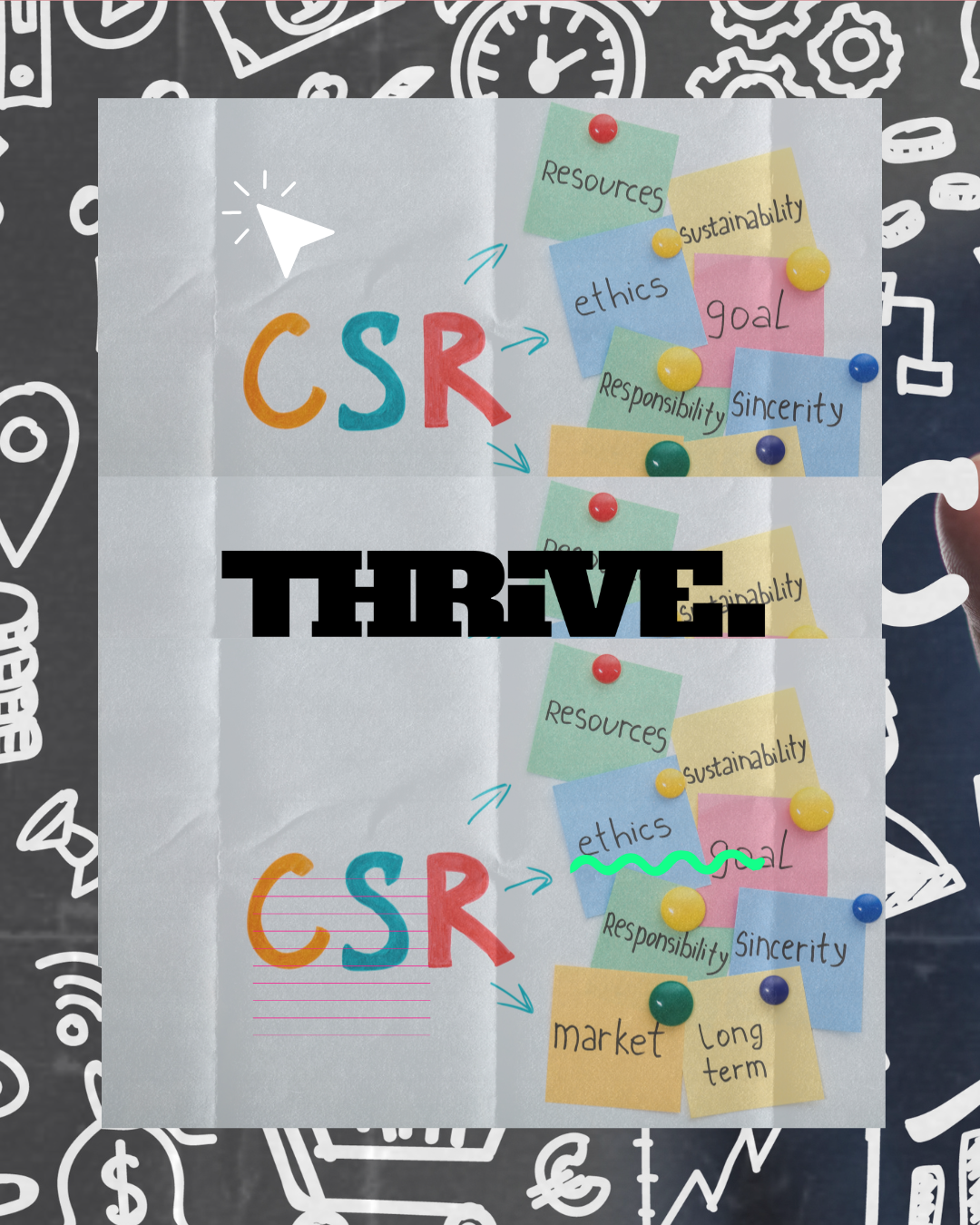
Corporate Social Responsibility is no longer just for big companies. Small and medium-sized businesses are making a real impact through practical, authentic actions that reflect who they are. From supporting sport, culture and charities to rolling up sleeves for environmental projects, consistent CSR builds trust, loyalty and pride. When businesses show up for their community in meaningful ways, those efforts are noticed and often returned.

Technology is having a major effect on every aspect of our lives, and the retail environment is not immune to these changes. Not only has online shopping revolutionised the way we think about buying and consuming, but it has also dramatically changed how we shop in physical stores.

Gibraltar’s size means that shoppers don’t have too far to go to shop. Schools, supermarkets, entertainment, eateries and healthcare are all within easy reach. That hasn’t stopped Gibraltar's business community from wanting to meet its customers' needs online. I met three local businesses that have embraced eCommerce.

When you’re a small business, staying one step ahead of the competition is essential. Yet, many small business owners grapple with the decision to invest in employee training and development. With limited resources and immediate financial pressures, it can unintentionally get pushed to the bottom of the priority list. However, investing in your team’s learning and development is a strategic move that can yield significant returns.