

 Gibraltar Federation of Small Businesses


 Gibraltar Federation of Small Businesses

If you’ve been dreaming of starting your own business, you’re not alone. Data from the UK’s Office for National Statistics (ONS) revealed that the annual number of companies registered is edging closer to the one million mark, that’s up by 75,000 in 2022 which itself was 30,000 higher than in 2021.
Whether it’s following a passion, aiming for financial independence, or breaking free from the 9-5 grind, every entrepreneurial journey begins with one crucial thing: a solid idea. But coming up with that perfect idea can be tough. This is where brainstorming comes in—it’s the creative springboard that can help you turn your business dreams into reality.
Step One:Ideate, Ideate, Ideate
At the planning stage, the seeds of your business are still forming. Brainstorming helps you dig into your creativity and turn your thoughts into actionable ideas. It’s a way to move from having a dream to having a plan to pursue. Here’s our guide to ideation
This is all about getting your ideas on paper without worrying about structure or perfection. This technique is perfect if you’re stuck or unsure where to begin. The aim is to overcome overthinking and let ideas flow freely.
Take Action: Set a timer for 15-30 minutes and write continuously. Don’t edit or organise—just get everything down on paper.
BlueSky Thinking is about removing limitations and imagining unrestricted possibilities. It encourages you to dream big, beyond constraints like money, time, or resources. This method can spark innovative and creative ideas that you wouldn’t have otherwise considered.
Take Action: Ask open-ended questions such as, “If I had unlimited resources, what business would I start?” or “What does the perfect solution look like, without limits?” This lets you explore all avenues without worrying about practicalities.
If you’re a fan of structure, this one’s for you. It’s particularly helpful if you already have a business concept but need to make it more innovative or competitive.
Substitute: What can you replace to improve this idea?
Combine: Can two ideas be merged into one?
Adapt: How can you tweak an existing idea for a new market or purpose?
Modify: What aspects could be changed to make it better?
Put to another use: Could your product or service be applied in a new way?
Eliminate: What can you remove to simplify the idea?
Reverse: Can the process be flipped to see it from a new angle?
Instead of asking how to succeed, this method helps you explore the potential failures of an idea. By thinking from a completely different perspective, you can uncover risks or weaknesses that might have been overlooked.
Take Action: Ask questions like, “What would make this business fail?” or “What’s the opposite of my idea?” This method can reveal potential challenges or lead to unexpected insights.
If you’re more of a visual thinker, Mind Mapping is a great way to organise and connect your ideas. By laying them out visually, you can spot patterns, links, and themes that might not be obvious in a traditional brainstorming list.
Take Action: Start with your central idea and create branches that represent key aspects such as products, services, or customers. Then, break each branch down into smaller, related ideas.
Step Two: ‘Real World’ Your Idea
Getting creative is an essential (and enjoyable) first step, but it is equally important to get real-world feedback. Engaging with other entrepreneurs and business experts will help you determine whether your idea is viable.
Networks like the GFSB provide essential support, advice, and mentorship from fellow entrepreneurs. Sharing your ideas helps you gain feedback and refine your business concept.
Workshops and events offer insights from experienced entrepreneurs, covering trends and best practices. They’re also great for networking and building valuable connections.
A mentor offers personalised advice, helping you navigate challenges and avoid mistakes. Their experience can be key to keeping your business on track and growing.
Brainstorming is a powerful tool for shaping and refining your business ideas. Techniques like these can help unlock your creativity and guide you toward a viable business concept. But remember, generating ideas is only the first step. The next move is to test and validate them in the real world. That’s where resources like the GFSB’s new How to Start a Business Guide comes in. This guide provides invaluable advice, practical steps, and expert insights to help you navigate the path from idea to action.


“People want to know the stories behind the products they buy. It’s not just about what’s on the shelf, but the journey it took to get there.” – Stella, Spirit of The Rock As consumer habits shift towards mindfulness and sustainability, the concept of slow shopping has emerged, offering both challenges and opportunities for small businesses. Slow shopping encourages consumers to take their time, make more thoughtful purchases, and focus on quality over quantity.


In an increasingly digital work environment where we have more emails, WhatsApp messages & interruptions than ever before, many business leaders started looking at ways of alleviating the stress that comes with this increased workload. Relaxing the dress code and letting your team dress down and wear in more casual clothing is one way of doing this….Or is it?

Over the past 18 years, I've had the privilege of working with a diverse range of businesses and industries, gaining insights into the challenges they face in implementing effective diversity and inclusion strategies. Often, DEI&B is viewed as a 'nice to have' rather than an essential component of business success. With this in mind, I'm excited to share valuable insights and practical steps to help you create environments where everyone can thrive. You've probably heard of DEI&B, but what do these letters really mean, and why do they matter for you and your organisation? Diversity includes differences like race, gender, age, neurodiversity, disability, LGBTQ+, culture, and more; Equity ensures equal opportunities for all; Inclusion values everyone's contributions; and Belonging means individuals feel accepted and integral to the organisation.

As the CEO of a specialist security business called Paladin Defence and close protection operative/ private security contractor, I have experienced security threats of all types since 1990. From opportunistic personal attacks to targeted organised commercial crime, I feel there is a lot more we should be doing to defend and protect ourselves. Understandably, Gibraltar is considered to have a relatively low crime rate; but what are the realistic threats and risks to small businesses in our corner of the Mediterranean?

Raju Purswani examines Ted Baker’s fall, sharing sharp lessons for entrepreneurs: stay true to your brand, beware of overhauls that alienate customers, and balance growth with identity. A cautionary tale with insights every business can learn from.

Whether you’re an ebook tapper or traditional page turner, there are thousands of books that can make you better at business. Áine Panter, Head of the School of Business at the University of Gibraltar has curated a list of must-reads that will inspire, inform, and equip you for success.

Last month marked eight years since the UK voted to leave the European Union. I remember the exact moment I read the headline ‘UK Votes to Leave the EU’ on my phone and the feeling of shock that started to set in. My first thought was, “Er, now what?” Little did I know I would still be asking that question eight years later… Eight years of uncertainty, negotiations, grace periods, frameworks, and meticulously crafted non-statements. But still no solution.
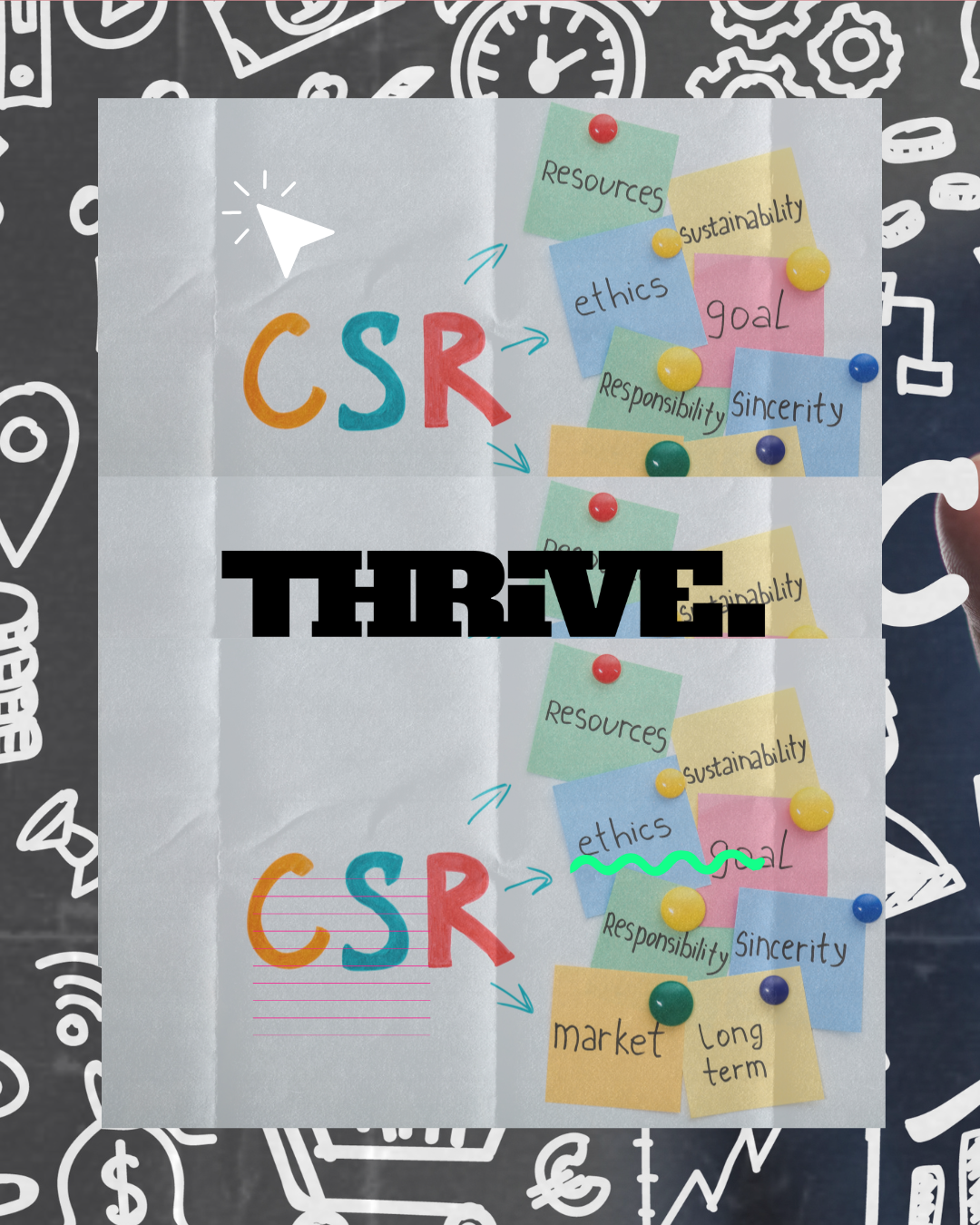
Corporate Social Responsibility is no longer just for big companies. Small and medium-sized businesses are making a real impact through practical, authentic actions that reflect who they are. From supporting sport, culture and charities to rolling up sleeves for environmental projects, consistent CSR builds trust, loyalty and pride. When businesses show up for their community in meaningful ways, those efforts are noticed and often returned.

Technology is having a major effect on every aspect of our lives, and the retail environment is not immune to these changes. Not only has online shopping revolutionised the way we think about buying and consuming, but it has also dramatically changed how we shop in physical stores.

Two decades is a long time for any business - with all the strife that businesses large and small have had to endure these past four years, it seems that anxiety among business owners has never been higher. I recently had the pleasure of chatting with Garren Thompson, co-owner and co-founder of Gibraltar hair & beauty salon Miss Shapes, based on Bishop Rapallo’s Ramp. As the business recently hit the 20-year milestone, we discussed the highs and lows of creating a successful salon in a saturated market, how he and his team created their new range of Miss Shapes branded Hair & Beauty products and how this will help build success for another 20 years.

My name is John Hayes, and I'm a really busy guy. Busy procrastinating most of the time. You wouldn't believe how many unessential tasks I had to complete before sitting down and writing this article. Those sales reports and emails don't check themselves. Yep, I've been busy. Busy doing nothing. We've all had one of those days where we feel like we've been incredibly "busy" - but can't quite put our finger on what we actually accomplished. Maybe we spent three hours answering emails, another two fiddling with a spreadsheet no one asked for, and another hour in a meeting that could have been an email or WhatsApp message. At the end of it all, the to-do list somehow got longer, not shorter.

Thrive catches up with Nick Pitaluga TEP, Managing Director of Gibraltar Trust & Corporate Services Limited - “GTCS”. From starting out as a messenger to leading his firm through a major merger, Nick talks about the importance of stepping outside your comfort zone and offers inspiration for anyone carving their own niche.

Forget everything you know about online shopping—eCommerce is evolving fast. While giants like Amazon and eBay once ruled, a new wave of platforms such as TikTok Shop, Shein, and Temu are reshaping the industry. But beneath the flashy deals and viral trends lies a growing conversation about sustainability, waste, and the hidden costs of convenience.

Introducing the Thrive Catalog - A curated collection of goodies selected by our editorial team each quarter. Everything featured is available right here, right now at prices that are better than or compete with the internet.


Since 2007, Earth Hour has been known as the biggest hour for the planet as millions of people switch their “lights off” as a symbolic action for the environment

AI is poised to reshape the legal profession, with 31% of law firm leaders predicting major disruption by 2025. Scott Simmons explores how AI could improve client outcomes, streamline workflows, and drive value. Whether you’re cautious or curious, it’s time to explore AI’s potential.

The world of work is undergoing a significant transformation, driven by the accelerating capabilities of Generative AI. While robots taking over our jobs might be a sci-fi trope, AI’s ability to learn, create, and automate tasks is undeniably impacting various industries. Generative AI is the umbrella term used to describe the type of AI that can create new content and ideas. This can include text, images, music, code and other types of content. We are now seeing how powerful this tool can be. But is this a threat or a powerful tool waiting to be harnessed? We set out to find out, what does the use of Generative AI look like in Gibraltar?

Did you know that what you eat directly affects your energy levels, brain function, and stress resilience? Poor dietary habits—such as skipping meals, consuming too much caffeine, or relying on processed foods—can lead to energy crashes, brain fog, and reduced efficiency. On the other hand, a well-balanced diet stabilises blood sugar, enhances cognitive function, and keeps stress levels in check.


You have a brilliant idea. You can picture the logo, the customers, maybe even the first sale. But without a clear plan for how to get there, the idea risks staying exactly that - an idea. Starting a business without a plan is like setting off on a trip with no map. You might eventually arrive somewhere, but it is unlikely to be where you hoped. A business plan is not just paperwork. When written with care, it is a roadmap that guides every decision, a pitch that wins support, and a source of confidence on the days when challenges mount.


Eran Shay's journey is emblematic of the modern entrepreneur. A self-confessed ‘out-of-the-box’ thinker, he swapped a successful corporate career and a senior role at Deloitte to pursue his own projects and business opportunities.