


 Gibraltar Federation of Small Businesses


 Gibraltar Federation of Small Businesses

Imposter syndrome is a psychological behaviour where individuals, including many high achievers, struggle with persistent feelings of self-doubt, inadequacy, or the fear of being exposed as a fraud. Despite their achievements, those experiencing imposter syndrome believe they are undeserving of their success or worry that they’ve misled others into overestimating their abilities.
As a content creator, author and trainer, I meet people suffering from imposter syndrome every day. They often disguise their symptoms by telling me they are unable or unwilling to perform tasks that will help them raise their profile and become more successful in whatever they do because of a lack of time or other resources. In reality, they are scared to raise their head above the parapet and shout, “I have an opinion,” because they fear what other people will think of them. This phenomenon is particularly true in small, tight-knit communities like Gibraltar, where everybody knows everybody else.
The good news is that while there may not be a cure for imposter syndrome, you can take steps to alleviate the problem.
Imposter Syndrome made me a writer
A little over 12 years ago, I was speaking at a marketing event about the opportunities available to business owners who were able to position themselves as thought leaders in their respective industries by creating and publishing relevant, timely, and engaging content.
At the end of my session, I was approached by a delegate who found my presentation illuminating but doubted it would work for her. She asked me why anyone would be interested in or believe anything she had to say. It turned out she had a lot to say and the credibility to back it up. With more than 20 years of experience in her industry, she knew not only her products inside out but also everything about her competitors, and she had walked more than a few miles in her customers’ shoes. She was more than qualified to call herself a thought leader, and fear was the only thing holding her back. She was suffering from a severe bout of imposter syndrome.
I took her experience and wrote a short article entitled “Believe in yourself, you’re a thought leader,” which was published on the blog of the marketing company I was working for at the time. The blog clearly resonated with a large audience and quickly went viral, generating tens of thousands of views and countless social media engagements. The success of that blog post provided me with a much-needed confidence boost.
I’d been harbouring an ambition to write a book for a long time. I just didn’t know what that book would be about. Realising I’d hit a deep vein of content with that short blog post, I set about expanding on the topic and turned it into a much more detailed manuscript, which I intended to self-publish. Fate had other ideas for that book. After randomly meeting a publisher at another event, I landed a book deal, and my first book, Becoming THE Expert: Enhancing Your Business Reputation through Thought Leadership Marketing, was published.
That little book took me around the world. I’ve been fortunate enough to speak on the topic of thought leadership marketing everywhere from San Diego to Istanbul and everywhere in between, including numerous presentations and workshops, including my regular Content Marketing Bootcamps here in Gibraltar.
Five books and hundreds of events later, you’d be forgiven for thinking I was a pretty confident public speaker. And yet, whether I’m speaking to a handful of delegates in a training room or a theatre full of attendees at a larger conference, I’m often gripped by pre-event anxiety and find myself catastrophising every potential negative outcome. The fact is, I also suffer from imposter syndrome. I think we all do.
Don’t fret about failure
It’s inevitable that sometimes things don’t quite go to plan. I’ve delivered hundreds of training events and presentations, and while some have been better than others, I can honestly say that only one event was a complete failure. I was ill and in hindsight I should have cancelled the event. My fear of letting people down, ultimately led to me letting people down. I apologised, refunded my delegates, and tried to move on.
Over the years, I’ve learned that people are very forgiving if you treat people right and own your mistakes. However, a symptom of imposter syndrome will guarantee that you only ever focus on those negative experiences and not your previous successes. In such cases, my best advice is to give yourself a shake and continue to put your best foot forward. Good luck – you’ve got this!


Thrive catches up with Nick Pitaluga TEP, Managing Director of Gibraltar Trust & Corporate Services Limited - “GTCS”. From starting out as a messenger to leading his firm through a major merger, Nick talks about the importance of stepping outside your comfort zone and offers inspiration for anyone carving their own niche.
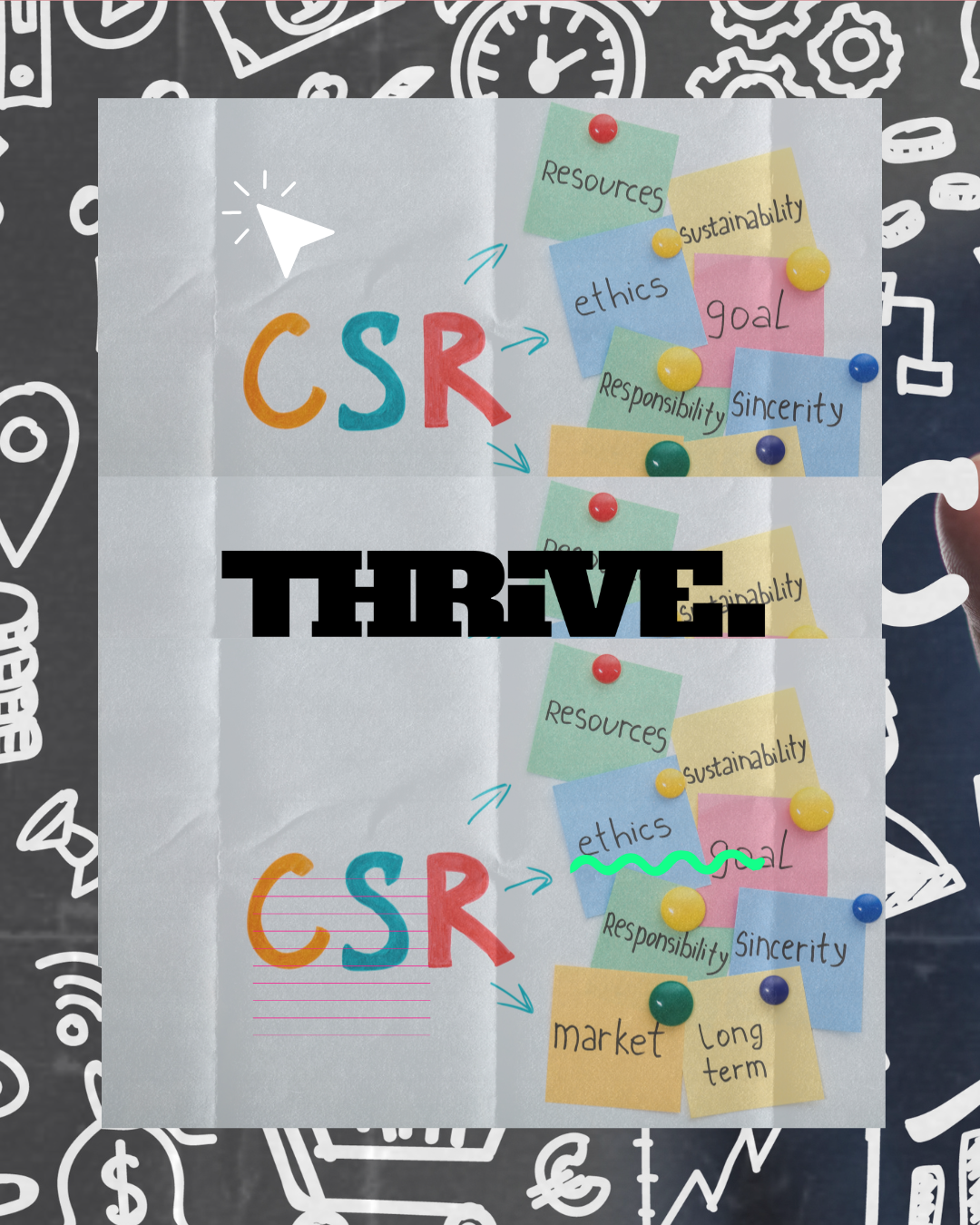
Corporate Social Responsibility is no longer just for big companies. Small and medium-sized businesses are making a real impact through practical, authentic actions that reflect who they are. From supporting sport, culture and charities to rolling up sleeves for environmental projects, consistent CSR builds trust, loyalty and pride. When businesses show up for their community in meaningful ways, those efforts are noticed and often returned.

We recently provided a large local organisation with their uniforms. Once the order was delivered, I felt compelled to send them guidelines on how to take care of their uniform. Spending money on clothes and footwear is not a guarantee on making the right impression, either to yourself, nor anyone else- it’s attention to detail that seals the deal.

Running a small business is an exciting journey, but without proper bookkeeping, it can quickly become overwhelming. Imagine trying to make critical business decisions without knowing how much money is in your account or being caught off guard by a hefty tax bill because records weren’t kept up to date. Good bookkeeping isn’t just about staying compliant; it’s about gaining control over your business, planning for growth, and avoiding costly mistakes.

Technology is having a major effect on every aspect of our lives, and the retail environment is not immune to these changes. Not only has online shopping revolutionised the way we think about buying and consuming, but it has also dramatically changed how we shop in physical stores.

When you’ve been running your own business for a while, you know what works, and it’s easy to rely on the skills that got you to where you are. Chances are, you’re comfortable doing things in a certain way, and your team knows what to expect from your leadership style.

Finding someone who listens, understands, and guides you can make all the difference. For women in Gibraltar, the Women’s Mentorship Programme offers just that – honest conversations and valuable support from people with lived experience who understand. Now in its sixth cycle, the programme pairs women with mentors to help them navigate work, life, and everything in between. Ok, full disclosure: as a recently appointed mentor, that last sentence somewhat triggers the old imposter syndrome and self-doubt, but I am honoured to be part of this scheme and look forward to doing my very best in the months ahead.

Did you know that what you eat directly affects your energy levels, brain function, and stress resilience? Poor dietary habits—such as skipping meals, consuming too much caffeine, or relying on processed foods—can lead to energy crashes, brain fog, and reduced efficiency. On the other hand, a well-balanced diet stabilises blood sugar, enhances cognitive function, and keeps stress levels in check.

We’ve said it before and it’s only getting louder: AI is reshaping how businesses work. From chatbots and smart analytics to automated content and decision-making tools, AI is helping smaller firms punch well above their weight. But with that power comes responsibility. As AI use grows, so do the risks around data privacy, and under GDPR, getting it wrong can mean serious fines and lasting reputational damage.

My name is John Hayes, and I'm a really busy guy. Busy procrastinating most of the time. You wouldn't believe how many unessential tasks I had to complete before sitting down and writing this article. Those sales reports and emails don't check themselves. Yep, I've been busy. Busy doing nothing. We've all had one of those days where we feel like we've been incredibly "busy" - but can't quite put our finger on what we actually accomplished. Maybe we spent three hours answering emails, another two fiddling with a spreadsheet no one asked for, and another hour in a meeting that could have been an email or WhatsApp message. At the end of it all, the to-do list somehow got longer, not shorter.


Success doesn’t just happen; it’s built on a strong foundation of preparation, clarity, and taking consistent action. Whether you’re launching a new business, taking your current side-hustle full-time, or looking to scale in a competitive market, having the right plan in place is essential.

If, like me, you spend more time than you should doom scrolling LinkedIn, you could be tempted into thinking no-one fails. LinkedIn has become a hyperbolic haven and a place to scream and shout about success. But what about failures - why aren’t we talking about them? In business, failure is inevitable. I mean it. Whether it's a product flop, a marketing misstep, or a company on the brink of collapse, every entrepreneur will face moments that test them. Yet, history has shown that these failures can often be the starting point for something extraordinary.

As the CEO of a specialist security business called Paladin Defence and close protection operative/ private security contractor, I have experienced security threats of all types since 1990. From opportunistic personal attacks to targeted organised commercial crime, I feel there is a lot more we should be doing to defend and protect ourselves. Understandably, Gibraltar is considered to have a relatively low crime rate; but what are the realistic threats and risks to small businesses in our corner of the Mediterranean?

Starting and running a small business is rewarding but comes with its fair share of challenges. The path of entrepreneurship is often characterised by immense dedication, long hours, and tough decisions. As a small business owner, you're not just responsible for the operations and growth of your company and team, but also for your own wellbeing.

Two decades is a long time for any business - with all the strife that businesses large and small have had to endure these past four years, it seems that anxiety among business owners has never been higher. I recently had the pleasure of chatting with Garren Thompson, co-owner and co-founder of Gibraltar hair & beauty salon Miss Shapes, based on Bishop Rapallo’s Ramp. As the business recently hit the 20-year milestone, we discussed the highs and lows of creating a successful salon in a saturated market, how he and his team created their new range of Miss Shapes branded Hair & Beauty products and how this will help build success for another 20 years.

AI is poised to reshape the legal profession, with 31% of law firm leaders predicting major disruption by 2025. Scott Simmons explores how AI could improve client outcomes, streamline workflows, and drive value. Whether you’re cautious or curious, it’s time to explore AI’s potential.

From the increasing influence of AI to the rise of social commerce and sustainability-driven consumer demand, the key to success lies in adapting strategically rather than chasing every new trend. This guide breaks down the most impactful trends for the year ahead—offering insights on how to integrate them into your business without losing sight of what already works. Smart adaptation, not blind reinvention, is the name of the game. Here's what to expect and how to make it work for you.


You have a brilliant idea. You can picture the logo, the customers, maybe even the first sale. But without a clear plan for how to get there, the idea risks staying exactly that - an idea. Starting a business without a plan is like setting off on a trip with no map. You might eventually arrive somewhere, but it is unlikely to be where you hoped. A business plan is not just paperwork. When written with care, it is a roadmap that guides every decision, a pitch that wins support, and a source of confidence on the days when challenges mount.

With its largely service-based economy, you'd be forgiven for thinking that Gibraltar didn't have to deal with the problem of toxic waste, perhaps more commonly seen in countries reliant on manufacturing, mining and even agriculture. However, every gaming company, insurance firm, fintech organisation, retailer, restaurant, and literally every other business on the Rock is potentially responsible for producing a particularly nasty waste byproduct - e-waste.

When it comes to ideation in business, there’s no one-size-fits-all approach. Every business, team, and leader has their own way of generating and refining ideas. Whether it’s through structured brainstorming sessions, casual conversations, or solo reflection, the goal is to unlock creativity and find solutions. We’ve asked four GFSB members to share how they approach ideation in their fields. As you read, think about how you generate ideas and remember that sometimes, the best results come from trying something new.