

 Gibraltar Federation of Small Businesses


 Gibraltar Federation of Small Businesses

Why relational capacity matters more than communication strategies.
By Kerstin Andlaw
In many organisations, stakeholder engagement is often approached as a matter of communication; how information is shared, how expectations are managed and how messages are framed.
Yet in practice, the quality of stakeholder relationships rarely depends on communication strategies alone.
The real test often comes when tensions arise, perspectives differ, or organisations must balance collaboration with clear responsibilities and boundaries.
Across many organisations I work with, a common pattern is that difficult conversations are avoided. Attention shifts towards disagreement and winning the argument, while the relationship itself and the tensions and dynamics between people remain largely unaddressed.
Often there is an unspoken hope that these tensions will simply disappear. In reality, they are usually the very obstacle preventing common ground from emerging.
When this happens, communication can become increasingly transactional, rigid and sometimes defensive. This further deepens distance and tension because stakeholders no longer feel heard and trust begins to erode.
The familiar pattern of protecting positions then takes hold. Conversations become less open, tensions escalate, and relationships weaken.
The deeper issue is that stakeholder engagement is not primarily a communication challenge, it is a relational capacity challenge.
Trusting and effective stakeholder engagement becomes difficult when individuals or organisations lack the capacity to work constructively with tension, difference and the relationship itself.
Strong stakeholder relationships, whether internal or external, require relational capacity, the ability to:
Ultimately, relational capacity means staying in dialogue and maintaining a collaborative approach even when perspectives differ or the situation feels stuck.
It is important to be clear that collaboration does not mean softening responsibility or removing clear lines.
A collaborative approach means taking responsibility for the relationship itself and strengthening commitment on both sides to the engagement process.
Sometimes this means attending to the relationship precisely in the moment when it would be easier to blame the other party for being “difficult”.
Choosing dialogue instead of blame is not a soft approach. It is an act of leadership.
TAO|ThriveAsOne worked with the Gibraltar Financial Services Commission (GFSC) over the past nine months to expand on the relational capacity of its people and strengthen stakeholder relationships within a complex regulatory environment.
The programme intentionally focused not only on tools and communication techniques, but on developing the ability to build on trust, navigate power dynamics thoughtfully, remaining constructive even when interests differ and without losing clarity on regulatory responsibilities.
How organisations show up in moments of tension ultimately determines the strength of their relational capital.
“In an increasingly dynamic regulatory landscape, the strength of our stakeholder relationships and our ability to navigate them effectively are as critical as the regulatory expectations themselves.
“What truly sets this approach apart is the close and trusted relationships we have built with firms through consistent engagement and open two-way dialogue. This has enabled a deeper, more nuanced understanding of the firms we supervise, intentionally moving away from outdated, one-size-fits-all customer service questionnaire models towards a more targeted and insight-led approach to supervision.
“The result is a more robust regulatory approach that strengthens outcomes, builds on mutual trust, and delivers lasting value for both our organisation and the stakeholders we serve.” Kerry Blight, GFSC CEO.
As part of the programme, participants developed their ability to deliberately attend to tensions within stakeholder relationships rather than remaining focused purely on content or positions.
Stakeholder relationships often involve competing priorities, organisational pressures, different interpretations of responsibility and regulatory expectations. These dynamics were a central focus of the programme.
Rather than avoiding them, participants were encouraged to develop the capacity to:
“At the GFSC, our regular engagement with firms is central to effective supervision, particularly in a sector as dynamic and impactful as insurance. This programme reinforced the value of clear, outcome-focused dialogue and the discipline of pausing at agreement to ask for ‘any concerns’, a simple step than can bring up any unspoken issues and help further strengthen delivery.
“It is through these deliberate practices that we continue to refine our approach and be the best that we can be in the outcomes we achieve.” Joe Perdoni, GFSC Director of Prudential and Intensive Supervision.
Collaboration is sometimes misunderstood as “giving in” or being overly accommodating. In reality, collaboration means taking shared responsibility for both the relationship and the outcome. When conversations become stuck, the most effective step is often to shift attention from arguing positions to strengthening the relationship that holds the conversation. Remaining steady in holding both the relationship and the content with clarity, empathy and boundaries is a sign of leadership maturity.
While the programme offered practical tools and techniques, developing relational capacity ultimately requires something deeper. It requires the willingness to question our own assumptions and mental models, and the courage to practise ways of engaging that may feel unfamiliar. The quality of attention and intention we bring to stakeholder relationships shapes the outcomes that follow.
Three key insights emerged from the programme:
Reflection for leaders and organisations
How does your organisation respond when stakeholder tensions arise?
Do you create space for dialogue, or move quickly to defend positions?
What capabilities might help you engage more constructively with different perspectives?
Organisations operate within networks of stakeholder relationships, and the quality of those relationships directly influences organisational effectiveness.
Strong stakeholder engagement is not built solely through processes or communication strategies. It grows from the collective relational capacity of organisations and their people to listen deeply, engage openly and navigate complexity with clarity and commitment.
In increasingly complex environments, the ability to stay in dialogue, work constructively with tension and hold both clarity and empathy is not simply a communication skill, it is a core leadership capability.
Kerstin Andlaw works with leaders and organisations on leadership, culture and stakeholder engagement. As Founder and Systemic Change Partner of TAO | ThriveAsOne Consulting, she supports organisations to build the collective capacity to work effectively within complex systems.


Two decades is a long time for any business - with all the strife that businesses large and small have had to endure these past four years, it seems that anxiety among business owners has never been higher. I recently had the pleasure of chatting with Garren Thompson, co-owner and co-founder of Gibraltar hair & beauty salon Miss Shapes, based on Bishop Rapallo’s Ramp. As the business recently hit the 20-year milestone, we discussed the highs and lows of creating a successful salon in a saturated market, how he and his team created their new range of Miss Shapes branded Hair & Beauty products and how this will help build success for another 20 years.

In an age where small businesses must adapt to stay in business, outsourcing has long been a way to enhance efficiency and streamline operations. Derived from the simple philosophy of delegating certain non-core tasks to external experts, outsourcing allows businesses to concentrate on their primary objectives and strengths. For the uninitiated, it's about seeking external expertise for tasks outside your comfort zone, skills base or business's main expertise.

With its largely service-based economy, you'd be forgiven for thinking that Gibraltar didn't have to deal with the problem of toxic waste, perhaps more commonly seen in countries reliant on manufacturing, mining and even agriculture. However, every gaming company, insurance firm, fintech organisation, retailer, restaurant, and literally every other business on the Rock is potentially responsible for producing a particularly nasty waste byproduct - e-waste.

“People want to know the stories behind the products they buy. It’s not just about what’s on the shelf, but the journey it took to get there.” – Stella, Spirit of The Rock As consumer habits shift towards mindfulness and sustainability, the concept of slow shopping has emerged, offering both challenges and opportunities for small businesses. Slow shopping encourages consumers to take their time, make more thoughtful purchases, and focus on quality over quantity.

Love is big business. According to official statistics, 1,745 weddings took place in Gibraltar in 2021 followed by another 1,761 weddings in 2022 and a further 1640 in 2023. That’s around 33 weddings each week or 6 every single day. With an estimated population of around 33,000, it’s safe to say that, no, we aren’t all marrying each other, but that Gibraltar is a very popular place for many people to come and say ‘I do’. In fact, in all three years, non-residents outnumbered residents by an average of 90% to 10%. The stats point to a healthy wedding sector, one that our Minister for Tourism, Christian Santos is keen to develop. In an interview with the Gibraltar Chronicle he recently said he wanted; “Gibraltar to be the Las Vegas of Europe” when it comes to weddings. Unlike Vegas, we don’t have Elvis. But we do have John. Music legend John Lennon famously married Yoko Ono here in 1969 and put the Rock on the map for ‘Fast Track’ weddings. If music’s not your thing, acting legend Sean Connery (AKA James Bond) also tied the knot here (twice)!

There’s something slightly uncomfortable about sending a contract to a client when you run a small business. Especially in Gibraltar, where relationships matter and business often begins with a conversation over un cafelito rather than a legal document. When you know someone personally, or you’ve been introduced by a mutual contact, it can feel unnecessary to formalise everything. You tell yourself that an email thread is enough. Or that you’ll sort the paperwork later. I used to think like that. Over time, and through a few situations that were more stressful than they needed to be, I’ve realised that putting things in writing isn’t about distrust. It’s about creating guardrails for growth. The clearer the boundaries, the freer you are to focus on doing good work.
If you’re looking to grow your business, expand your reach post Treaty or simply try something new, collaboration can be one of the most effective ways to do it. The key is approaching it with a bit of structure. And resisting the urge to say yes to everything just because someone seemed nice over a […]

Forget everything you know about online shopping—eCommerce is evolving fast. While giants like Amazon and eBay once ruled, a new wave of platforms such as TikTok Shop, Shein, and Temu are reshaping the industry. But beneath the flashy deals and viral trends lies a growing conversation about sustainability, waste, and the hidden costs of convenience.

Finding someone who listens, understands, and guides you can make all the difference. For women in Gibraltar, the Women’s Mentorship Programme offers just that – honest conversations and valuable support from people with lived experience who understand. Now in its sixth cycle, the programme pairs women with mentors to help them navigate work, life, and everything in between. Ok, full disclosure: as a recently appointed mentor, that last sentence somewhat triggers the old imposter syndrome and self-doubt, but I am honoured to be part of this scheme and look forward to doing my very best in the months ahead.

Whilst Brexit hasn’t exactly been a positive event, we can’t deny that it’s also been the catalyst for diversification and change. It was a true ‘before and after’ moment that made businesses rethink their strategies and, in many cases, change their direction of travel. Gibraltar’s newest bank, justbank, is born from this process. As well as heralding the arrival of a new bank, this fresh start gave the team at IDT Finance the opportunity to create innovative and tailored banking solutions from the ground up. I met with Managing Director, Damian Asquez, and Head of Corporate Banking, Nikolai Gafan, to find out more.


Welcome to the fifth edition of Thrive magazine. Too often the narrative around business focuses on success and, in my view, we forget to talk about failure. That’s why we lead this edition with EPIC FAILS by Katie Buller—because understanding what doesn’t work is just as important as what does.

In the latest edition of Thrive, regular contributor John Hayes reflects on the uncertainty facing small and medium-sized businesses in Gibraltar. From Brexit fallout to ever-changing frontier delays, he unpacks why the border remains a top concern—and how local firms are adapting. While resolving post-Brexit cross-border issues is beyond the scope of this correspondent, there are practical steps business owners can take to mitigate and manage the challenges of this uncertainty.

Running a small business is an exciting journey, but without proper bookkeeping, it can quickly become overwhelming. Imagine trying to make critical business decisions without knowing how much money is in your account or being caught off guard by a hefty tax bill because records weren’t kept up to date. Good bookkeeping isn’t just about staying compliant; it’s about gaining control over your business, planning for growth, and avoiding costly mistakes.
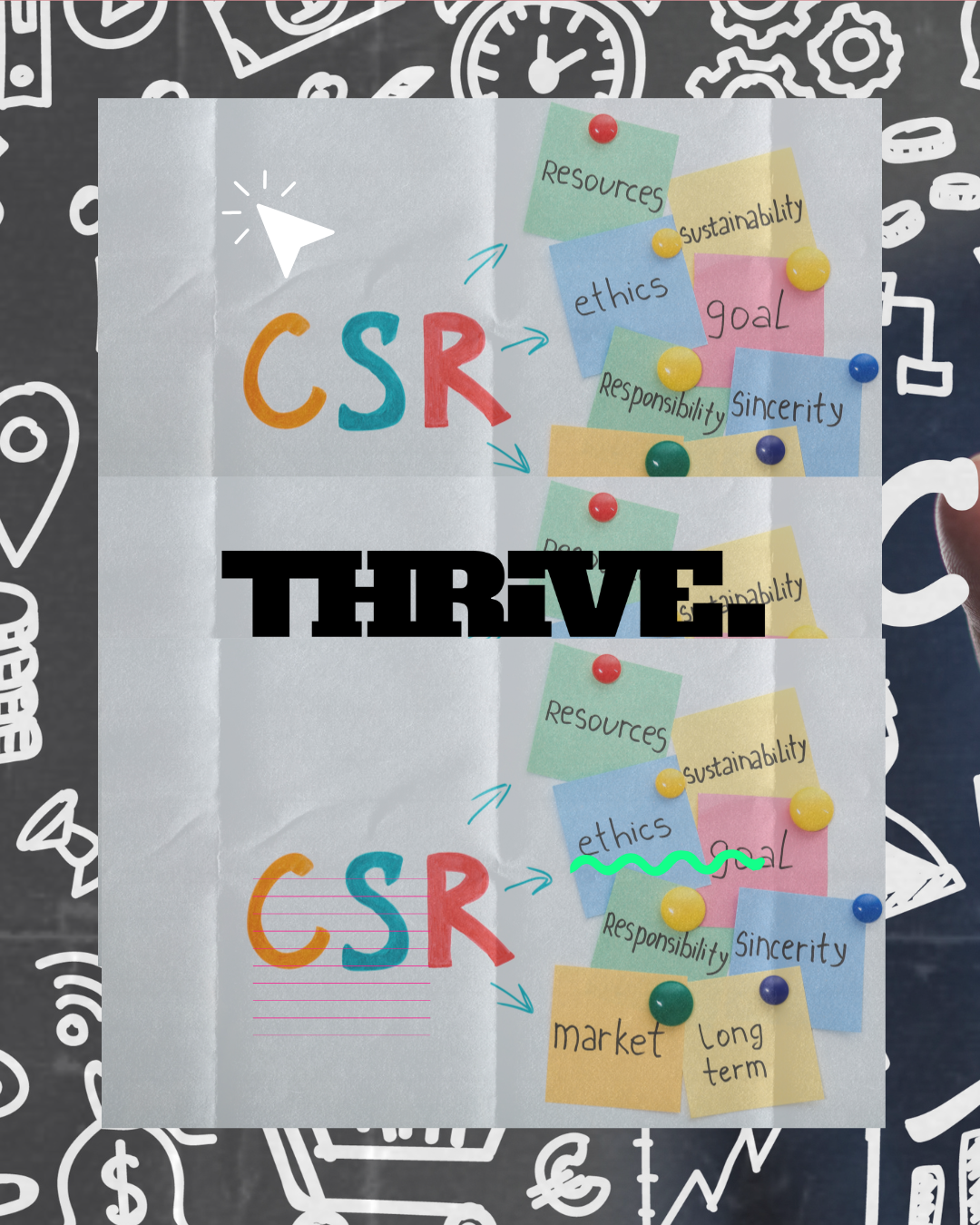
Corporate Social Responsibility is no longer just for big companies. Small and medium-sized businesses are making a real impact through practical, authentic actions that reflect who they are. From supporting sport, culture and charities to rolling up sleeves for environmental projects, consistent CSR builds trust, loyalty and pride. When businesses show up for their community in meaningful ways, those efforts are noticed and often returned.

After teaching in schools for 18 years I decided to take the plunge and embark on a self-employed life. Driven by my passion for teaching children with special educational needs I set out to discover alternative ways to make education accessible to all. My vision was to have the individual in mind, with their own strengths and challenges, and with that came the birth of ‘edYOUcation Clare Francis’; bringing the YOU into learning.


Since 2007, Earth Hour has been known as the biggest hour for the planet as millions of people switch their “lights off” as a symbolic action for the environment

Over the past few years, I’ve noticed the same logo cropping up more and more often. On coffee cups. On consultancy websites. In email signatures and pitch decks. The familiar B Corp badge, quietly signalling that a business is trying to do things differently. With our horizons widening post-treaty, could this globally-relevant badge could become a way of promoting your CSR values to an international market?

Gibraltar’s size means that shoppers don’t have too far to go to shop. Schools, supermarkets, entertainment, eateries and healthcare are all within easy reach. That hasn’t stopped Gibraltar's business community from wanting to meet its customers' needs online. I met three local businesses that have embraced eCommerce.

From the increasing influence of AI to the rise of social commerce and sustainability-driven consumer demand, the key to success lies in adapting strategically rather than chasing every new trend. This guide breaks down the most impactful trends for the year ahead—offering insights on how to integrate them into your business without losing sight of what already works. Smart adaptation, not blind reinvention, is the name of the game. Here's what to expect and how to make it work for you.

Pets are like family, right? As a proud cat dad, I’d actually go further and say that they are family. Over the years, I have spent my well-earned money on (many) toys, beds, treats and vet bills for my two feline furballs Nacho and Drake. And I am not alone. According to a recent Fortune Business Insight report, the global pet care market was valued at a massive £171.78 billion in 2022 and is projected to grow from £180.06 billion in 2023 to £269.29 billion by 2030.