

 Gibraltar Federation of Small Businesses


 Gibraltar Federation of Small Businesses

The European Union has begun the rollout of its new Entry/Exit System (EES), a digital border control scheme that replaces passport stamping with biometric checks for non-EU citizens entering or leaving the Schengen area. The system, described by the European Commission as the “digital backbone” of the EU’s new migration and border policy, will take around six months to be fully operational across participating countries.
What happened:
Spain has started testing the system at Madrid Airport before expanding it to other locations. Major airports and ports in Italy and Germany have also begun gradual implementation. The EES is designed to identify visa overstayers, reduce identity fraud and modernise border management by recording the fingerprints and photographs of travellers from outside the EU.
Once fully in place, all travellers from third countries, including the UK, will need to register biometric data when first entering the Schengen zone. Future crossings will only require electronic verification rather than manual passport stamps.
Why it matters:
According to the Gibraltar Government, the Spanish authorities will not apply the EES at the Gibraltar–Spain border. This exemption aligns with the objectives of the ongoing treaty negotiations, which aim to maintain a fluid border for residents, workers and businesses. The Government has reaffirmed that the system “will not be applied now or at any point in the future” at Gibraltar’s land frontier.
However, Gibraltarians and Gibraltar residents travelling elsewhere in Europe should be aware of the system’s wider rollout. For example, it will likely apply at Malaga Airport for flights from non-EU destinations such as London.
Business impact:
For companies that operate in and out of the EU, the EES represents a significant change in how goods and people move across borders.
Between the lines:
The Gibraltar Government has issued a technical notice advising travellers to check whether EES is in use at their destination and to allow extra time at borders while systems are being tested. It confirmed that under the treaty framework being finalised, legal residents of Gibraltar will remain exempt from EES registration.
What’s next:
The EU expects the Entry/Exit System to be fully operational by April 2026. While the frontier between Gibraltar and Spain remains unchanged, the wider European rollout marks a major shift in how borders are managed. For Gibraltar’s business community, awareness and preparation will be key as Europe adjusts to a more digital border regime.




Governments and geopolitical strategists use simulations to test what might happen when other players react. The same thinking can help businesses challenge assumptions, anticipate competitors and prepare for decisions before real money is on the line.

From Hong Kong to Abu Dhabi, Gibraltar is pursuing new industries and investors as part of a major economic diversification drive. Minister Nigel Feetham says the campaign is already generating business. The bigger question is how far those opportunities can spread through Gibraltar’s wider economy.

Gibraltar plans a new residency route for financially independent over-55s alongside a new business think tank announced at GibLink London.
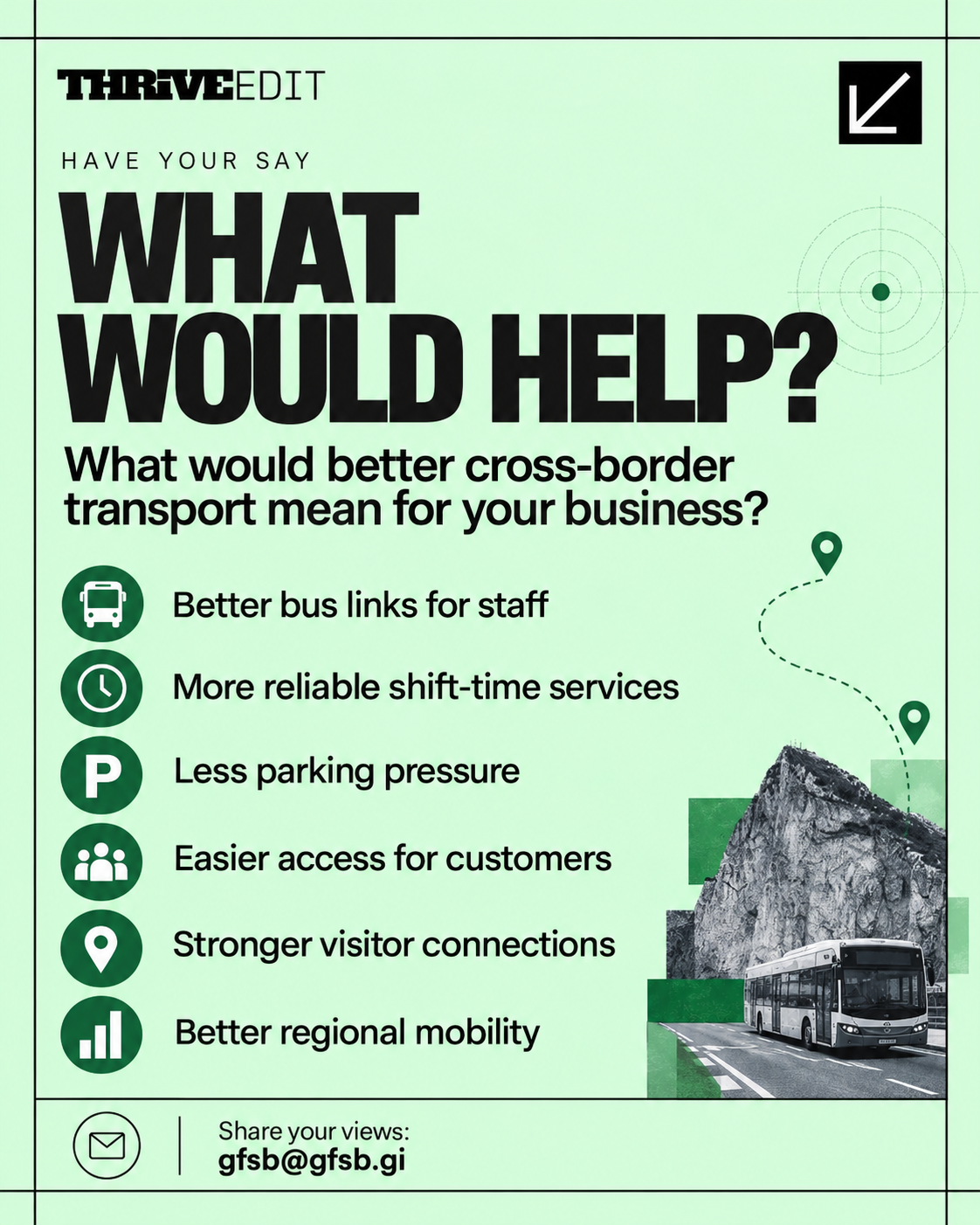
New frontier lanes and discussions around a cross-border transport interchange raise questions about buses, workers, visitors and business connectivity.

Could a future UK-EU food agreement make it easier for British produce to return to Gibraltar shelves? British produce has long been part of Gibraltar’s shopping experience; I wrote about it a couple of years ago, before we had a Treaty in place. From supermarket staples and fresh food to familiar household brands, we’ve spent […]