
 Gibraltar Federation of Small Businesses


 Gibraltar Federation of Small Businesses

By Ramesh Karnani, GFSB Board Director
Over the past few weeks, the Government has published a substantial amount of Treaty-related guidance, including FAQs, technical notes and Town Hall meetings. That has undoubtedly helped build a much clearer picture of what lies ahead.
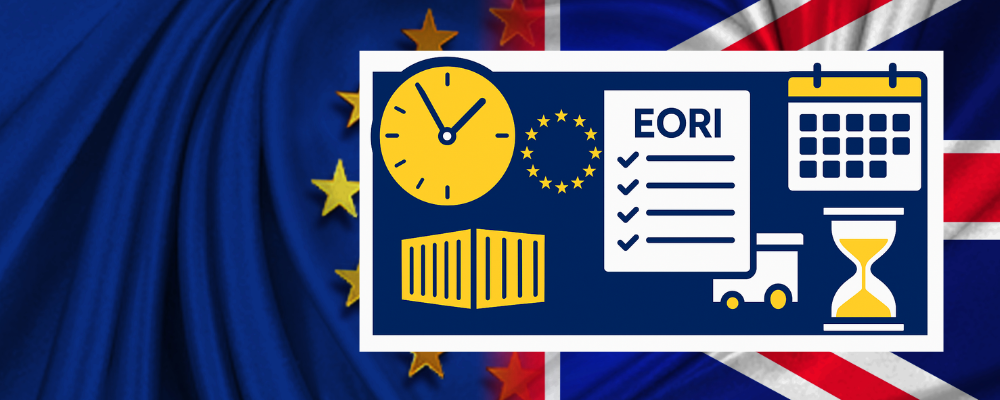
For many importers, however, one issue continues to generate questions for many importers: EORI and NIF registration.
The Government’s guidance explains that businesses importing goods into Gibraltar do not necessarily need to obtain their own EORI number if a customs or freight forwarding agent is carrying out the customs formalities and paying the relevant taxes and duties on their behalf. In those circumstances, the agent’s EORI can be used.
However, some customs agents have already advised clients that they will need to obtain their own EORI numbers after 15 July, creating uncertainty for businesses trying to prepare.
The practical challenge
Many businesses now understand what an EORI number is and why it may be needed. The challenge is obtaining one.
For Gibraltar companies, the process begins with applying for a Spanish NIF (Número de Identificación Fiscal), which is a prerequisite for obtaining an EORI. Applications can be made through an administrative agency, or asesoría, in Spain.
The process requires documentation including the business owner’s passport together with an Apostilled and sworn Spanish translation of the company’s Certificate of Incorporation and latest Company Profile.
For my business, completing the process cost approximately £270.
While many businesses will successfully navigate the process, it illustrates that obtaining an EORI is not simply an online registration exercise and may involve additional cost, paperwork and professional assistance.
Questions still being asked
During last week’s Treaty Town Hall at the GFSB, several practical questions were raised that many importers are still seeking answers to.
Among them were:
These are not questions of principle. They are operational questions that businesses will need to understand before the new arrangements take effect.
Keeping Guidance Consistent
One suggestion emerging from discussions is that the next stage should focus on consistency.
Freight forwarders and customs agents will inevitably become the first point of contact for many importers. Ensuring those businesses receive clear, consistent operational guidance would help create a common understanding of the new procedures and reduce the risk of conflicting advice reaching Gibraltar’s business community.
As implementation approaches, businesses are increasingly moving beyond understanding the Treaty itself. Their focus is now on making sure the day-to-day mechanics of importing, exporting and trading work as smoothly as possible.





How can businesses tell whether workplace training actually works? Explore practical ways to connect learning, behaviour and measurable performance.
Employers with 15 to 50 staff are now inside the final workplace pension extension window. Check eligibility, contributions, opt-outs and compliance requirements.

Investment in automation, logistics, tourism and green technology across the Campo de Gibraltar is reshaping the regional skills base. Here’s what Gibraltar employers should watch.
Imported goods around the Treaty changeover? It is worth going back through July’s paperwork. HM Customs has introduced a refund process for qualifying consignments that had already started their journey to Gibraltar before 15 July but were cleared afterwards.

Clocked out in August? Good for you. Thrive EDIT Editor David Revagliatte rounds up the Gibraltar business stories worth clocking back into. August is supposed to be the month when Gibraltar collectively eases off the accelerator. Judging by the news cycle, nobody told 2026. The first full month of life under the new Treaty arrangements brought a mixture of early optimism and very real teething problems for businesses. New employment rules landed, a pensions deadline crept closer, one of Gibraltar's most important airlines changed hands and a major local bank announced job cuts.