

 Gibraltar Federation of Small Businesses


 Gibraltar Federation of Small Businesses

Trump’s gone rogue, but what does it all mean for us?
Unless you’ve been living under a rock (or, like me, watch the news through your hands these days), you’ll know about Trump’s new trade tariffs… The United States is set to introduce new trade tariffs tomorrow as part of a wider shake up of its international trade policy. The announcement places Gibraltar in a 10% tariff category, alongside the UK and other British Overseas Territories. The EU (including Spain) faces a steeper 20% tariff.
What are trade tariffs?
Trade tariffs increase the cost of doing business across borders and are typically used to protect domestic industries or apply diplomatic pressure. Put simply, trade tariffs raise the cost of doing business across borders. While they’re often used to support domestic industries or apply political pressure, the result for many smaller markets is increased uncertainty. Whilst Gibraltar isn’t a major exporter of goods to the US, we’re still exposed to changes in trade policy – especially in sectors that rely on cross-border services and international clients.
So why now?
The announced duties reflect an ongoing trend towards protectionism in global trade and come at a time of rising global tensions. Trump announced the tariffs in what he billed as ‘Liberation Day’ and told Americans, “We’re going to start being smart, and we’re going to start being very wealthy again,” during his speech. The EU and China are already engaged in similar tit-for-tat tariff skirmishes, and the US appears to be tightening its grip on partners who are seen to benefit unfairly from access to its markets. This has raised concerns across EU member states and the UK about the future of cross-Atlantic trade.
The UK and its territories
One could have hoped for Gibraltar to be exempt from these measures, but unlike many online drop-down country lists, Gibraltar IS included in the US’s list of 10% tariff countries alongside other British Overseas Territories such as Bermuda and the British Virgin Islands. Interestingly though, our friends in Northern Ireland – despite being part of the UK – is facing uncertainty, owing to its unique customs status under the Northern Ireland Protocol. Further evidence (as if we needed any) of how post-Brexit arrangements continue to complicate the UK’s global trade profile.
What it means for Gibraltar
Again, we know that Gibraltar doesn’t export significant volumes of physical goods to the US, but the move may still impact our businesses. For example, should things like professional digital services or online transactions come under the new trade measures, it could create challenges for firms working with US-based partners and clients as they could be affected by increased costs or tighter compliance requirements.
On the GFSB’s side of things, Chairperson Owen Smith, said, “We’ve spoke to members today that do have US facing export business, and they remain unclear as to how it will affect them. For the majority of our members not involved in US facing trade, it just means more uncertainty and bad news for the global economy”
It’s not all bad though. Gibraltar’s inclusion in the lower 10% US tariff category, compared to Spain and the wider EU at 20%, could offer an advantage, but this is unclear as yet. Its alignment with UK trade arrangements, distinct from the EU, could help position Gibraltar as a competitive alternative for US-facing service providers looking for stability, English law, and regulatory familiarity without the additional 20% cost burden faced by European counterparts.
The big questions
Like so much of the news these days, this is a watch-and-wait moment for many of us. Even if the short-term impact is limited, the longer-term trend toward trade fragmentation could present challenges for a service-oriented jurisdiction like Gibraltar that depends on services and shares a border with Spain.
The GFSB will continue to monitor this developing issue closely for its members. If you’re worried about how this might affect your business, please let us know what you think over on the GFSB Glue Up community pages.
Sources: BBC, Guardian, Indian Times, Reuters



Governments and geopolitical strategists use simulations to test what might happen when other players react. The same thinking can help businesses challenge assumptions, anticipate competitors and prepare for decisions before real money is on the line.
From Hong Kong to Abu Dhabi, Gibraltar is pursuing new industries and investors as part of a major economic diversification drive. Minister Nigel Feetham says the campaign is already generating business. The bigger question is how far those opportunities can spread through Gibraltar’s wider economy.
Gibraltar plans a new residency route for financially independent over-55s alongside a new business think tank announced at GibLink London.
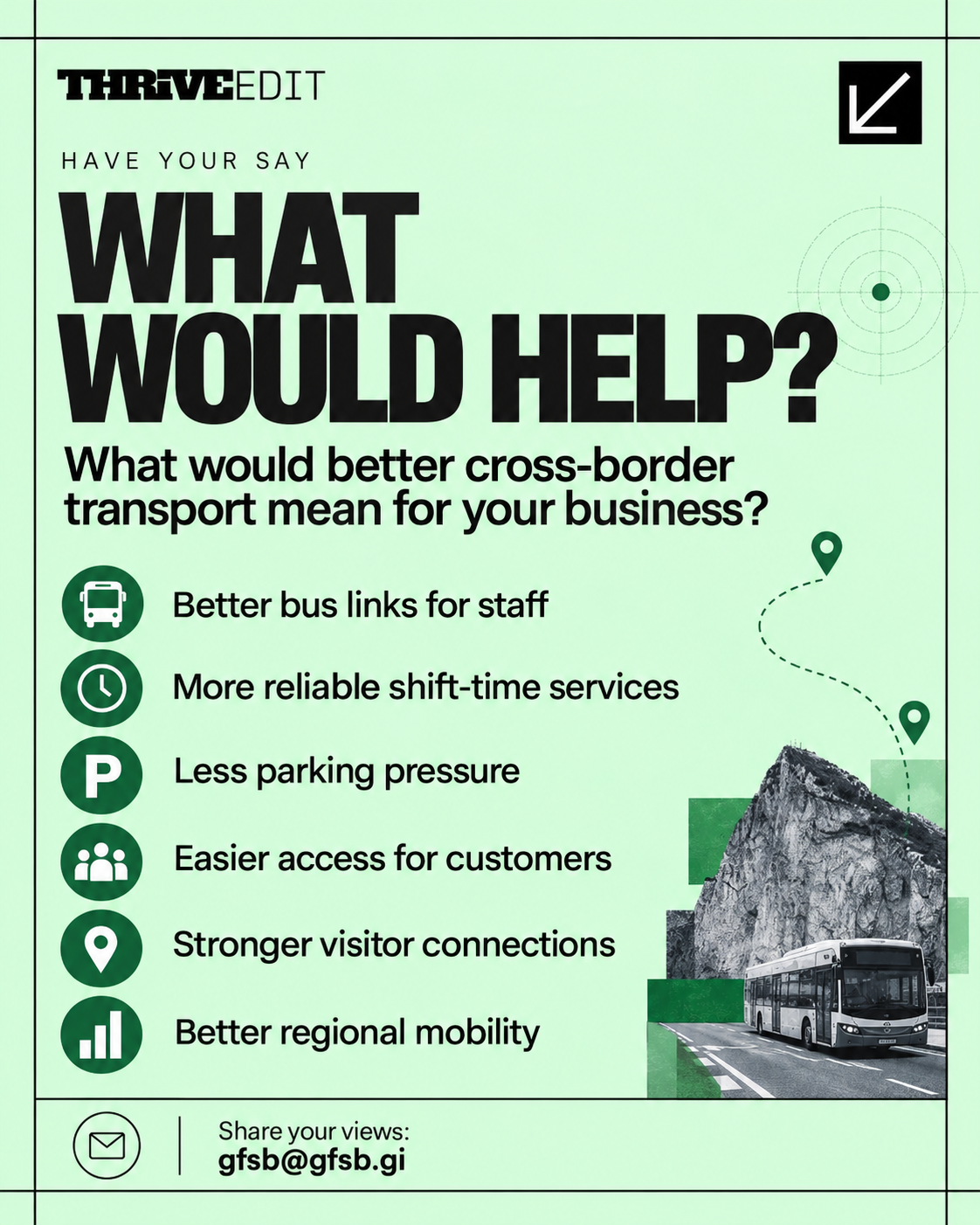
New frontier lanes and discussions around a cross-border transport interchange raise questions about buses, workers, visitors and business connectivity.
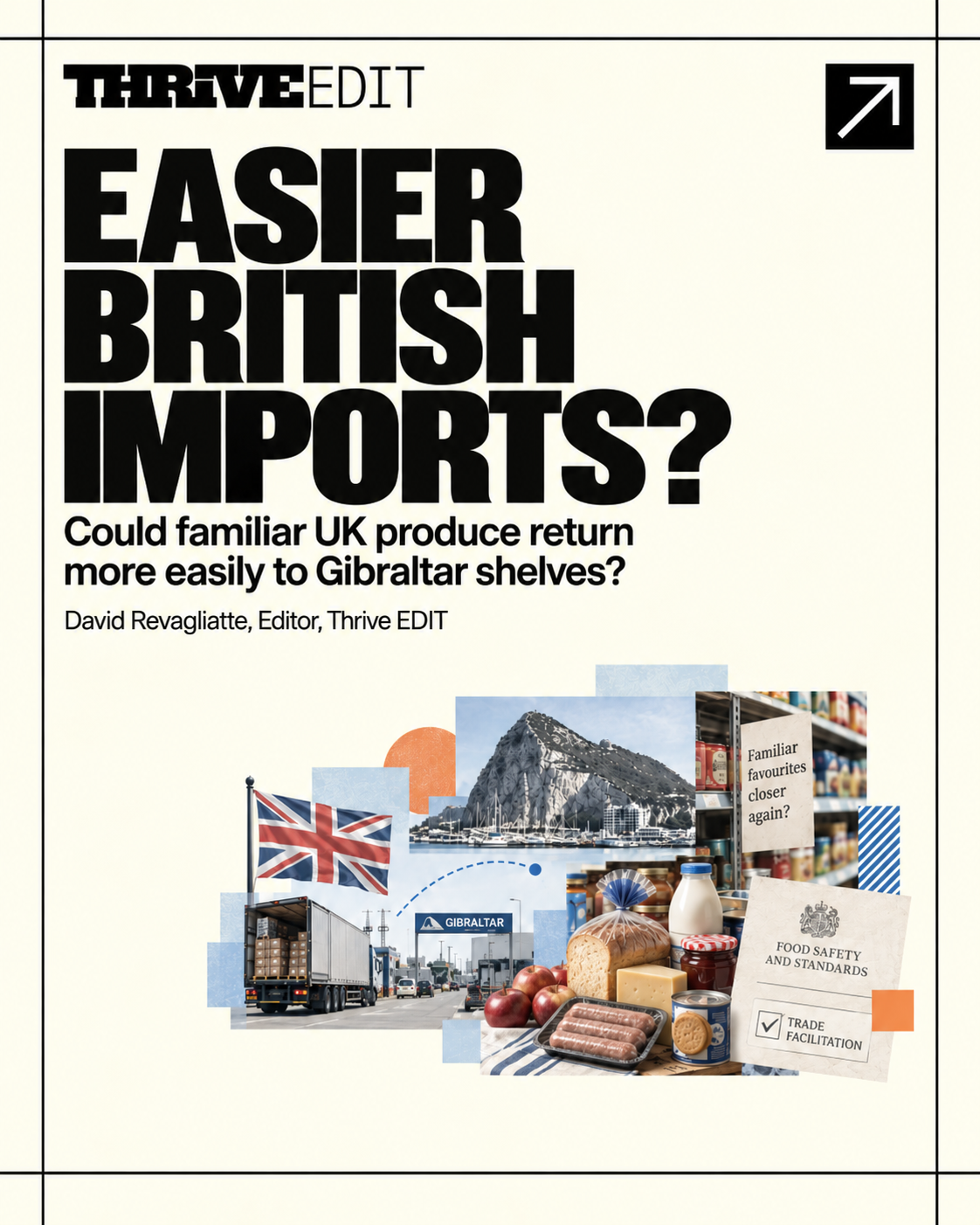
Could a future UK-EU food agreement make it easier for British produce to return to Gibraltar shelves? British produce has long been part of Gibraltar’s shopping experience; I wrote about it a couple of years ago, before we had a Treaty in place. From supermarket staples and fresh food to familiar household brands, we’ve spent […]