
 Gibraltar Federation of Small Businesses


 Gibraltar Federation of Small Businesses

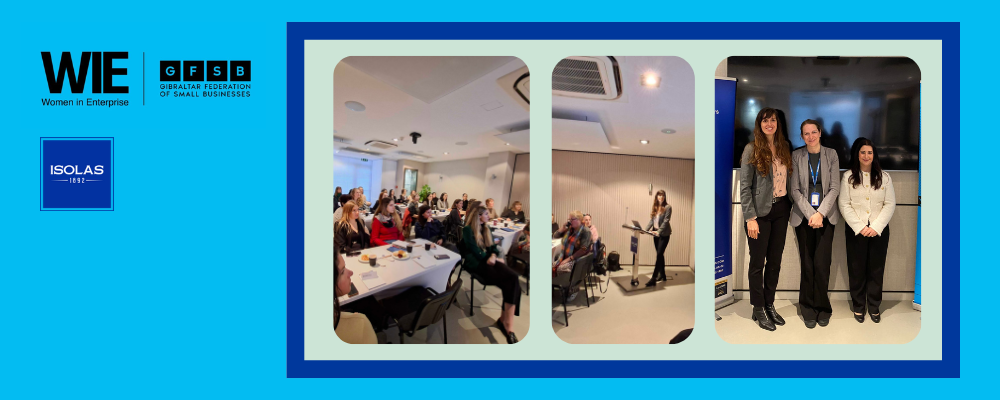
The Women in Enterprise session on Negotiation and Knowing Your Worth was delivered and chaired by Krystle Robba, Registrar at the University of Gibraltar and WIE Board Member, and grounded firmly in lived experience rather than theory. Contributions came from Lianne Garcia, Head of Enterprise Services at Gibtelecom, and Danielle Victor, Senior Associate at ISOLAS LLP, bringing perspectives from tech, enterprise and litigation to the table.
Lianne shared insights shaped by a career spanning operations, customer experience, product management, communications and marketing, often in male-dominated tech environments where she was the only woman in the room. Danielle drew on 15 years’ post-qualification experience as a barrister and litigation lawyer, specialising in personal injury and employment disputes, including advising on how to prevent disputes before they arise. Together, their contributions anchored the session in practical, real-world negotiation scenarios.
Negotiation is not neutral
Our recent Women in Enterprise session on Negotiation and Knowing Your Worth opened with a clear reality check: negotiations rarely happen on a level playing field. Perception, gender, age, seniority and presence often shape outcomes before a position is even stated. For many women, particularly in male-dominated or hierarchical environments, authority is not assumed and must be actively established.
The confidence gap is not imagined
Participants reflected on how being younger-looking, physically smaller or quieter in presence can lead to underestimation. Over time, this can create pressure to over-prove competence, gradually eroding confidence. The session acknowledged a dual truth: bias can be external and structural, but it can also become internalised. Recognising that distinction is a critical first step in regaining control at the negotiating table.
Calm beats force
A recurring theme was emotional control. Negotiating when emotions are high often leads to rushed decisions and blurred priorities. Calm, measured communication preserves authority and keeps discussions focused on outcomes rather than ego. Silence and pauses were reframed as strategic tools, not awkward gaps. Used deliberately, they slow the conversation, invite reflection and signal confidence.
Clarity is power
Clear, precise communication emerged as essential. Ambiguity weakens positions quickly. Participants explored how filler phrases such as “I think” or “to be honest” can subtly undermine credibility, even when expertise is strong. The takeaway was simple: firmness does not require aggression, and removing unnecessary qualifiers strengthens authority.
Listen to unlock better outcomes
Active listening was positioned as a negotiation skill, not a courtesy. Understanding what the other party actually wants can transform outcomes. The session used the familiar orange analogy: two people argue over an orange, only to discover one wants the peel and the other the juice. The message was clear: negotiation does not have to be zero-sum if intentions are properly understood.
Flexibility needs boundaries
While creativity and problem-solving were encouraged, equal emphasis was placed on defining red lines. Participants were urged to know their bottom line before entering any negotiation and to hold it firmly throughout. Flexibility should apply to how outcomes are achieved, not whether core needs are met. Without boundaries, flexibility risks becoming self-compromise.
Gendered labels are not the truth
Many shared experiences of being described as “difficult”, “emotional” or “bossy” for behaviour that would likely be praised as assertive in male counterparts. The session reinforced that advocacy is not aggression, and calm authority remains authority. Participants were encouraged not to shrink themselves in response to stereotypes, nor to internalise them as personal failings.
Make experience visible
One practical tactic discussed was proactively signalling experience. When competence is underestimated, waiting for recognition rarely works. Using framing such as “In my experience…” or “In similar matters I’ve handled…” helps reset dynamics without confrontation and grounds authority in facts.
Data builds confidence
Preparation and evidence were highlighted as powerful anchors, particularly in pay, fees or responsibility discussions. Market benchmarks, comparable roles and measurable outcomes shift negotiations away from subjective judgement. Data supports arguments and strengthens confidence going into the room.
Shared challenges, shared learning
The session closed with group reflection, where participants shared moments of accepting less than they deserved alongside examples of successful negotiations. A key insight emerged: many challenges that feel personal are structural and widely shared.
International Women’s Day
The session was generously hosted and supported by ISOLAS, whose venue and sponsorship created space for open, thoughtful discussion on confidence, equity and negotiation. Thank you to everyone who attended. The next Women in Enterprise event takes place on International Women’s Day, 10 March at 5pm, and all are warmly invited.



Governments and geopolitical strategists use simulations to test what might happen when other players react. The same thinking can help businesses challenge assumptions, anticipate competitors and prepare for decisions before real money is on the line.

From Hong Kong to Abu Dhabi, Gibraltar is pursuing new industries and investors as part of a major economic diversification drive. Minister Nigel Feetham says the campaign is already generating business. The bigger question is how far those opportunities can spread through Gibraltar’s wider economy.

Gibraltar plans a new residency route for financially independent over-55s alongside a new business think tank announced at GibLink London.
New frontier lanes and discussions around a cross-border transport interchange raise questions about buses, workers, visitors and business connectivity.

Could a future UK-EU food agreement make it easier for British produce to return to Gibraltar shelves? British produce has long been part of Gibraltar’s shopping experience; I wrote about it a couple of years ago, before we had a Treaty in place. From supermarket staples and fresh food to familiar household brands, we’ve spent […]


