
 Gibraltar Federation of Small Businesses


 Gibraltar Federation of Small Businesses

Knowing how to price your products and services is never easy. And in a world where volatility seems to be the order of the day, pricing products and services can get extra complicated…
A new business may set prices too low in the hope of winning work. A sole trader may absorb too many costs personally. An owner may keep old prices in place for too long because raising them feels uncomfortable. Pricing may already be carefully structured at more established firms, but the world around it has changed.
As we continue to prepare for the practical implications of the UK-EU Treaty, some firms may need to consider how any Treaty-related transaction taxes, cross-border costs or administrative changes could affect their margins. And don’t get me started on the global outlook…
What does pricing really mean?
Pricing is not simply deciding what feels fair or matching what a competitor charges. It is the process of understanding your costs, your value, your market and your capacity, then setting a price that allows the business to operate sustainably.
For a small service business, that could mean a consultant deciding on a day rate. For a salon, it could mean setting the price of a treatment. For a designer, accountant, tradesperson or fitness instructor, it could mean choosing between hourly rates, fixed packages or retainers.
The mistake many businesses make is starting with the customer’s likely reaction, rather than the business’s actual numbers.
A price should answer three basic questions. What does it cost to deliver the product or service? What does the customer receive in return? And does the price leave enough margin for the business to survive, invest and grow? If the answer to the last question is no, the price is not sustainable.
Why small businesses undercharge
There are many reasons small businesses undercharge, and most of them are human.
Some owners fear losing work. Others feel uncomfortable talking about money. Many compare themselves with larger competitors, online providers or people operating with very different cost structures.
In Gibraltar, this can feel even more acute. The market is small. People know each other. Business relationships are personal. Saying “this is my price” can feel awkward when the customer is also a neighbour, friend, former colleague or regular face in town.
But undercharging has consequences. It can create long hours, low margins and constant pressure to take on more work simply to stand still. It can also make it harder to invest in better equipment, training, staff, technology or premises.
The result is a business that looks active from the outside but feels fragile from the inside.
There is another risk. If prices are too low, customers may start to question the quality of the product or service. Cheap is not always reassuring. In many sectors, a price that is too low can weaken trust rather than build it.
The difference between cost and value
Cost is what it takes to deliver the product or service. This includes obvious expenses such as materials, stock, rent, wages, software, insurance, utilities and tax. It also includes less visible costs, such as preparation time, administration, training, travel, marketing and the owner’s own unpaid hours.
Value is what the customer gains. That might be convenience, expertise, peace of mind, speed, confidence, better results or reduced risk.
For example, a business adviser may spend two hours with a client, but the value may lie in helping that client avoid an expensive mistake. A photographer may spend one day on a shoot, but the value may be a set of images that support a business for years. A tradesperson may complete a job quickly because they have spent years learning how to do it properly.
Customers are not only paying for time. They are paying for judgement, skill and outcome.
That distinction is important. If businesses price only by the hour, they may unintentionally punish themselves for becoming better and faster.
How to review your prices
First, identify the full cost of delivering the product or service. Include direct costs, overheads and the time required before and after the actual work. Many small businesses forget the invisible labour around each job: emails, calls, quotes, revisions, travel, invoicing and chasing payment.
Next, look at capacity. How many clients, appointments, orders or projects can realistically be delivered each week without damaging quality or exhausting the owner or team? This matters because a business does not have unlimited time or resources to sell.
Then consider margin. After all costs are covered, what is left? If the answer is very little, the business may be relying on volume when it actually needs better pricing.
Finally, compare the market, but do so carefully. Competitor prices are useful context, not instructions. A competitor may have lower overheads, different staff costs, a different level of experience or a completely different strategy.
How to raise prices without losing trust
Raising prices can feel uncomfortable, but it does not have to damage relationships if handled clearly.
The key is communication. Customers are more likely to accept a price increase when they understand what is changing, when it takes effect and why it is necessary.
For regular customers or clients, give notice. Explain the new rate or fee simply. Avoid over-apologising. A business does not need to justify every line of its accounts, but it can explain that prices have been reviewed to reflect rising costs, continued service quality or the level of work involved.
It can also help to review the structure of what is being sold. Some businesses may benefit from clearer packages, minimum fees, deposits, cancellation terms or retainers. Others may need to stop offering discounts that have quietly become permanent.
Not every customer will accept a higher price. That is part of the process. The aim is not to keep every customer at any cost. The aim is to build a customer base that values the work and allows the business to operate properly.



Governments and geopolitical strategists use simulations to test what might happen when other players react. The same thinking can help businesses challenge assumptions, anticipate competitors and prepare for decisions before real money is on the line.

From Hong Kong to Abu Dhabi, Gibraltar is pursuing new industries and investors as part of a major economic diversification drive. Minister Nigel Feetham says the campaign is already generating business. The bigger question is how far those opportunities can spread through Gibraltar’s wider economy.

Gibraltar plans a new residency route for financially independent over-55s alongside a new business think tank announced at GibLink London.
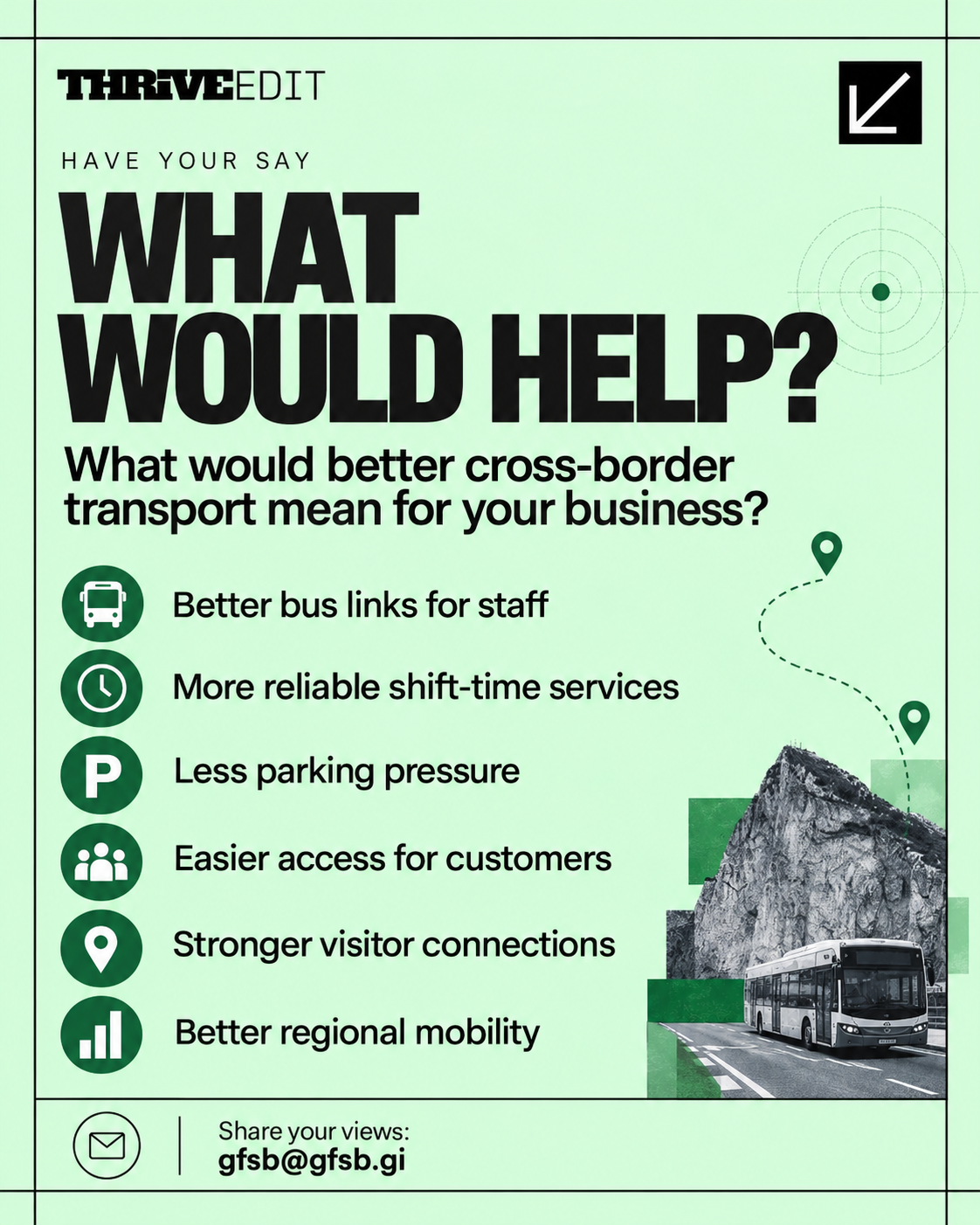
New frontier lanes and discussions around a cross-border transport interchange raise questions about buses, workers, visitors and business connectivity.

Could a future UK-EU food agreement make it easier for British produce to return to Gibraltar shelves? British produce has long been part of Gibraltar’s shopping experience; I wrote about it a couple of years ago, before we had a Treaty in place. From supermarket staples and fresh food to familiar household brands, we’ve spent […]