
 Gibraltar Federation of Small Businesses


 Gibraltar Federation of Small Businesses

If you’ve walked or driven through the frontier in the last week, you’ll have experienced that ‘surreal’ feeling that everyone has been talking about. People are breezing through thinking they’ve simply forgotten to show their passport. Big win for the free movement of people.
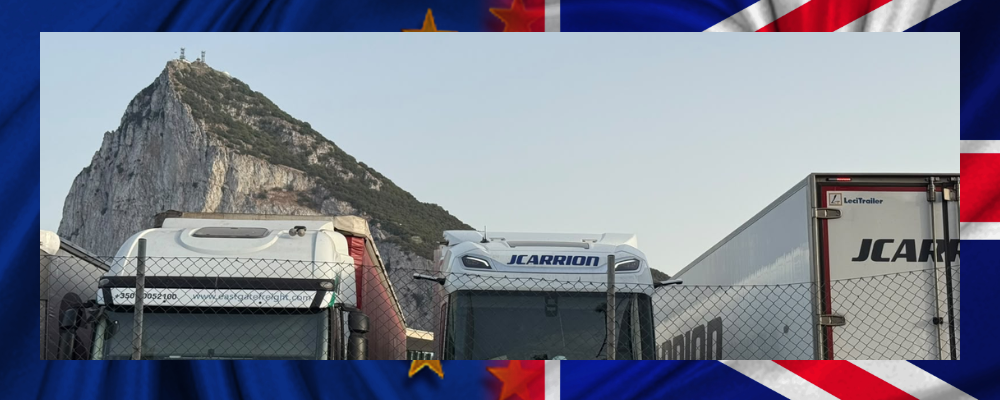
That same fluidity, however, has yet to be seen with the movement of goods. In what’s been a ‘chaotic’ week for those importing to Gibraltar, we assess the mood and delve into the reasons why this may have happened.
The mood
After speaking to those on the front line over the past 48 hours, the mood isn’t great. Whilst most accept that implementing a customs regime of this scale was never going to be seamless, some industry figures told the GFSB they had been warning for months that some of these problems were foreseeable. One described how “we have been trying for months to clarify this whole issue because customs agents and freight forwarders were seeing many problems. We continue to insist that they must resolve them.”
Another source said the bottleneck is now less about Spanish customs and more about Gibraltar’s ability to process consignments quickly enough. They pointed to ongoing IT adjustments, businesses racing to adapt to systems that were only finalised shortly before implementation and queues building as vehicles wait for clearance. “The backlog is affecting carriers,” they said, adding that “Spanish companies have been working against the clock to adapt as quickly as possible to a new situation where we weren’t aware of the processes until almost the provisional entry into force of the Treaty.”
The frustration isn’t confined to one sector. Businesses report delays affecting everything from commercial laundry and medical supplies to empty beer kegs, gas cylinders, delivery trolleys and ship spares. One shipment of marine equipment reportedly failed to reach a vessel before it departed Gibraltar because it had not cleared customs in time. Another major courier has suspended parcel services, with one industry source warning that “businesses will feel this and the public will certainly start to notice.”
On Tuesday, a shipment of medicines destined for Gibraltar was delayed after a documentation issue in Spain prevented it from crossing the frontier. Government ministers, senior officials and HM Customs intervened directly, with the issue identified and resolved before pharmacies experienced any significant stock shortages. Customs officers have since begun visiting major importers to help businesses navigate the new documentation requirements and prevent similar issues arising again.
While many remain hopeful these are simply early implementation issues that will settle over the coming days, there is growing concern about where sentiment could head if they do not. One experienced industry figure described the situation as “quite fluid”, adding that if systems begin functioning properly, businesses will simply conclude these were “mere teething issues.” If not, they warned, the situation could escalate quickly.
What’s changed?
Unless you’ve been living under a rock, you’ll know that on the 15th July, Import Duty begun giving way to Transaction Tax. At the same time, goods entering Gibraltar are now moving through a much more formal customs process. That means importing is no longer just about bringing stock across the frontier. Every shipment now needs the right declarations, supporting evidence and, in many cases, the correct customs registrations before it can be released.
Even transitional goods ordered before implementation aren’t automatically exempt. Government guidance makes clear that what matters is when the movement of the goods began, not simply when they were purchased.
The GFSB is keen to highlight to members that they should make sure that they have the appropriate documentation from suppliers to show when goods ordered began to move. Check with your customs agent or freight handler what you need for this. Customs agents and freight handlers are already overwhelmed with work so these requests may take time to process.
People move freely. Goods don’t.
The new arrangements allow people to cross the frontier freely. Goods, however, must now move through a customs system designed to identify the importer, the declarant, the applicable tax treatment and, where required, the appropriate EORI and Spanish NIF registrations.
Under the new arrangements, importing goods is no longer just a matter of arriving at the frontier with stock and paying the old duty. The process now depends on who is importing, who is making the customs declaration, who is paying the relevant tax and whether the right customs identification is in place.
Government guidance says traders operating customs movements connected with Spain and the wider EU customs territory may need an EORI number. For Gibraltar traders operating movements in or through Spain and the EU customs territory, a Spanish-issued EORI is required. That Spanish EORI is linked to a Spanish NIF, meaning a trader cannot obtain the EORI without first obtaining the NIF.
Basically, without an EORI, traders cannot participate in EU customs procedures. The guidance explains that these systems need to identify the consignee, declarant and responsible parties connected with the movement, and trace customs liabilities, guarantees and transit procedures.
That means a van, lorry or consignment can be delayed if the paperwork does not clearly show who is responsible for the import, whether the business has the required EORI and NIF, whether a customs agent is acting on its behalf, or whether the agent is paying the relevant taxes and duties from its own account.
The Government has said that where a customs agent completes the formalities and pays the relevant taxes and duties from the agent’s own account on behalf of a Gibraltar business, the Gibraltar business will not require its own EORI or NIF for those movements. But if the business is importing directly and paying Transaction Tax from its own account, the registrations are more likely to be required.
So two businesses importing similar goods may have completely different experiences depending on how their agent, freight forwarder or logistics provider is handling the clearance.In many cases, a customs agent can complete these formalities on behalf of a Gibraltar business. In others, businesses importing directly will need their own registrations. That explains why two businesses importing almost identical products can have completely different experiences at the frontier.
Where are the hold-ups occurring?
Every shipment now raises a series of practical questions.
Each missing document or unanswered question adds another pause to the process. Multiply that across hundreds of consignments arriving every day and it’s easy to see why goods are currently moving far more slowly than people.
Members are also report difficulties getting to grips with the new systems they need to use, and reconciling information between platforms. No match and goods can get stuck in transit.
There are other more complex issues in play as well including security guarantee arrangements, exports to/from bonded warehouses, the impact of new rules relating to transport services into Gibraltar, the soon-to-be felt enforcement of Gibraltar’s business licensing regime and other issues.
What should businesses do?
Businesses importing goods should keep detailed records of dispatch dates, invoices, tracking information, customs paperwork and any conversations relating to delayed consignments. Just as importantly, record why delays occur. Was it missing documentation? A customs query? An EORI issue? Something else entirely?
The more evidence businesses retain, the easier it becomes to identify recurring problems and help Government and Customs refine the system. In so far as goods in transit are concerned, check that you have the correct documentation to prove that your goods were in transit prior 15 July 2026.
Can Friction be a good thing?
Whilst some have been asking the question – “what happened to freedom of movement of goods?” it’s worth noting that friction at the commercial frontier isn’t a bad thing. By friction we mean that there are still checks and customs clearance procedures, just different processes. A commercial frontier that does not equate to full freedom of movement of goods is precisely the outcome that the GFSB, at the behest of members, was advocating for at the outset of the Treaty negotiating process.
Whilst new hurdles and difficulties being experienced at the frontier need to be resolved, if they can be, then a commercial border with friction will be closer to the situation prior to the Treaty than at some points in the negotiating process it appeared was possible. Ultimately, some friction at the commercial frontier will prove to be a positive. Meanwhile, freedom of movement for persons, including with goods (albeit subject to personal allowances during a transition period) has been established.
Fight or Flight
There is no escaping the fact that this has been an incredibly frustrating first week for many businesses. Importers understand that implementing one of the biggest changes to Gibraltar’s customs arrangements in decades was never going to be effortless – teething problems are normal and all that, but they need assurances that these will be resolved quickly.
The encouraging sign is that, where genuine issues have emerged, Government, HM Customs and businesses have been working together to identify and resolve them quickly. If that collaboration continues, today’s delays should increasingly become tomorrow’s lessons.
The Treaty may have transformed how people cross the frontier. Making goods move with the same confidence is now the next challenge…
If you’ve been impacted at the border, what’s been your experience? We’d love to know – email us at gfsb@gfsb.gi



This week’s Do Better Business looks at cost-to-serve, price architecture and how businesses can make sure their pricing reflects the value and complexity built into what they actually deliver.

The frontier is easier to cross, Alcaidesa Marina’s €15m commercial development is taking shape and retailers are adapting to new import costs and changing customer habits. Drawing on recent conversations with Main Street businesses and our interview with Gemma Arias-Vasquez and Louis Montegriffo, we look at where Gibraltar retail goes next.

Algeciras and Tarifa are developing cruise offers of their own. Gibraltar remains the Bay’s established port of call, but a more ambitious regional tourism market makes the quality of each visitor’s experience here increasingly important. Thrive Editor, David Revagliatte explores what this could mean for local businesses. Gibraltar expects around 260 cruise calls in 2026. […]

New rules give eligible retailers and wholesalers a route to tax relief on some of the additional Transaction Tax incurred during the first 90 days of Treaty implementation. The detail is important, including who qualifies, how the deduction is calculated and the choice businesses will need to make between this measure and forthcoming modernisation support. […]

Last week’s GFSB Summer Party brought members together for an evening of conversation, new connections and a chance to reconnect ahead of Q4. With thanks to justbank and Capurro Insurance for supporting the event, we’ve pulled together some of our favourite photos from the night.