

 Gibraltar Federation of Small Businesses


 Gibraltar Federation of Small Businesses

The frontier is easier to cross, a €15m commercial development is taking shape metres from Gibraltar and retailers are still adjusting to the new cost of bringing goods onto the Rock. The post-Treaty retail market is starting to show its shape, and competition for spend is getting more interesting.
By David Revagliatte, Editor, Thrive EDIT
For all the predictions made before 15 July, Gibraltar’s new retail landscape was never going to reveal itself in a fortnight.
When I sat down recently with Business Minister Gemma Arias-Vasquez and BMI Group Managing Director Louis Montegriffo, both came at the early post-Treaty picture from slightly different directions. Louis said the immediate gain had been confidence and certainty rather than the sudden economic boom some might have hoped for. Gemma had spent that morning walking Main Street and speaking to traders, where she said goods were flowing more consistently after a difficult opening period.
She was also seeing something change at street level. Visitors were staying longer and some shops were adjusting their opening hours and trading patterns to reflect a changing mix of customers coming into Gibraltar.
That feels closer to the commercial reality now emerging. Easier movement gives Gibraltar businesses access to more potential customers, while Gibraltar residents can also reach a growing range of shopping, dining and leisure options across the frontier with considerably less friction.
The competitive question is increasingly about what compels someone to spend once they arrive…
Across the frontier, work has started on the commercial expansion of Alcaidesa Marina. The €15m project covers almost 50,000 square metres opposite La Línea’s Palacio de Congresos, with approximately 7,500 square metres of retail, 6,400 square metres of restaurants and leisure, 1,400 square metres of nautical services, 8,500 square metres of green space and parking capacity eventually reaching around 1,500 vehicles.
La Línea and Alcaidesa Marina have also established an employment initiative expected to support between 300 and 400 jobs around the new commercial and leisure offer. Current plans have pointed towards opening during the autumn.
The mix is as relevant as the scale. This is being developed as somewhere to shop, eat and spend time, with marina activity and leisure wrapped around the retail offer.
Main Street has very different strengths, from its independent businesses and British brands to a town centre where shops, hospitality, heritage and attractions sit within a remarkably compact area. Alcaidesa nevertheless provides a useful indication of how nearby commercial destinations are evolving.
Consumers increasingly judge the whole experience around a purchase: access, parking, opening hours, food, leisure, stock availability and how easy it is to work out what is there before making the trip.
One of the more interesting observations from my conversation with Gemma and Louis was the way some Main Street businesses were already responding to different visitor behaviour.
Gemma described people coming into Gibraltar more easily, staying for longer and changing the customer mix retailers were seeing, with some shops already adjusting their hours and opening patterns.
The Government’s early figures were encouraging, with euro-denominated sales reportedly rising by more than 240% against the fortnight immediately before 15 July. The GSD questioned whether the underlying data demonstrated a meaningful increase in customers, while traders themselves were understandably more cautious about drawing conclusions so soon after implementation. Gibraltar Broadcasting Corporation
A few months of trading gives businesses a better opportunity to look at patterns rather than snapshots.
Greater frontier fluidity means visitors travelling along the coast can consider Gibraltar without building a lengthy queue into the day. Gibraltar residents have gained the same convenience in the other direction. The result is a retail market with easier access on both sides and more choice for the customer.
Gemma’s Main Street conversations also picked up a difference between businesses in how they had adapted. She described firms that were managing, others doing well and some doing very well, with the stronger performers having put mechanisms in place to cope with the changes following 15 July.
The competitive landscape is evolving at the same time as the economics (and logistics) of importing stock.
Many retailers have faced higher landed costs alongside the additional customs work associated with implementing a completely new system. Government has since published the Transaction Tax (Deductions) Rules 2026, giving qualifying retail and wholesale businesses a deduction against assessable profits where Transaction Tax paid during the first 90 days exceeds the Import Duty that would previously have applied. The relief covers the period from 15 July to 12 October and is subject to eligibility, certification and compliance requirements. Gibraltar Government
Businesses using the deduction will also be unable to claim under the forthcoming modernisation scheme, which Government says will support investment in premises, processes, IT and staff training. Gibraltar Government
For a retailer carrying significant imported stock, the Transaction Tax deduction may offer meaningful support. A business already considering a refurbishment, better systems or staff development may want to compare that relief with the modernisation scheme once its full details are available.
The timing is interesting because many of those investments also influence how effectively a retailer competes.
Whilst trading on a duty free shopping experience is no longer a reality, Main Street has never relied on price alone.
Our independent shops offer specialist knowledge, personal service and after-sales relationships. Gibraltar retains distinctive brands and products, VAT-free shopping and a town centre where somebody can combine retail, food, heritage and tourism within a relatively small area.
Opening hours can follow actual footfall rather than long-established habit. Google Business Profiles, websites and social channels can make products, services and opening information easier to find before somebody arrives. Click-and-collect, messaging and straightforward online enquiries can remove small pieces of friction that make a competing purchase elsewhere feel easier.
For products readily available on both sides of the frontier, range, expertise and service become more important. Exclusive lines, knowledgeable staff and strong after-sales support give customers reasons to choose one business beyond a direct price comparison.
The wider town centre also plays a role. The Gibraltar Tourist Board introduced on-street entertainment this summer specifically to encourage visitors to spend more time around Main Street’s shops, cafés, restaurants and attractions. Gibraltar Government
On one particularly busy August cruise day, around 6,000 passengers arrived on MSC Virtuosa while Main Street entertainment was also running, giving a practical example of tourism activity and town-centre retail operating together.
Our lead story this week, Cruise Market Widens, looks at the same challenge from another direction. Gibraltar already attracts substantial visitor numbers. The commercial opportunity lies in turning more of that footfall into longer stays and broader spending across local businesses.
The BMI conversation also touched on what “shared prosperity” might look like once you bring it down from Treaty language into everyday commercial activity.
During our discussion, Gemma spoke about Gibraltar businesses growing while also using opportunities across the frontier, including logistics and closer cooperation. Louis described easier movement as something capable of supporting investment and spending on both sides of the border.
For a retailer, that regional economy is very tangible. A customer in Sotogrande or San Roque can reach Main Street more easily. A Gibraltar resident can just as easily spend a Saturday afternoon in La Línea or further along the coast, with barriers gone, building stronger customer loyalty must now become a priority.
That should encourage a more outward-looking view of Gibraltar retail, where neighbouring businesses and developments are watched as commercial intelligence rather than simply as something happening across the border.
Businesses also have far more useful information available to them than broad estimates of whether Main Street feels busier. Average transaction values, euro and sterling sales, conversion rates, visitor versus resident customers, busy periods and changes in product mix can show whether increased movement is translating into additional revenue.
Staying on top of that information can drive practical decisions. If later visitors are spending, opening hours can shift. If a product category is losing ground to competitors across the border, the response might involve range, pricing or service. If more visitors are entering the shop but fewer are buying, the customer proposition may need attention.
Government’s Business Transition Advisory Group has now reviewed the first ten weeks of Treaty implementation with Customs and business representatives, including operational issues and the support being introduced for affected firms. Further support measures are expected.
The experience of retailers should help inform that work because the sector sees both ends of the transition: the changing cost and complexity of bringing goods onto the Rock and the changing behaviour of customers once those goods reach the shelf.
Christmas will provide the first sustained test of the new retail environment, just as Alcaidesa Marina brings another substantial commercial offer into the market across the frontier.
Gibraltar enters Q4 with plenty in its favour: an established shopping district, strong independent businesses, significant visitor traffic and much easier access from the surrounding region. The challenge will be turning that access into spend through the right mix of price, convenience, product availability, opening hours and the wider town-centre experience.
It’s looking like the Treaty has brought confidence and certainty, but the commercial benefits were never likely to arrive overnight. Retail behaviour will evolve in much the same way, as customers gradually settle into new habits and decide where they prefer to spend their time and money.
That gives Gibraltar’s retailers a real opportunity to shape those habits rather than simply react to them.




Governments and geopolitical strategists use simulations to test what might happen when other players react. The same thinking can help businesses challenge assumptions, anticipate competitors and prepare for decisions before real money is on the line.

From Hong Kong to Abu Dhabi, Gibraltar is pursuing new industries and investors as part of a major economic diversification drive. Minister Nigel Feetham says the campaign is already generating business. The bigger question is how far those opportunities can spread through Gibraltar’s wider economy.
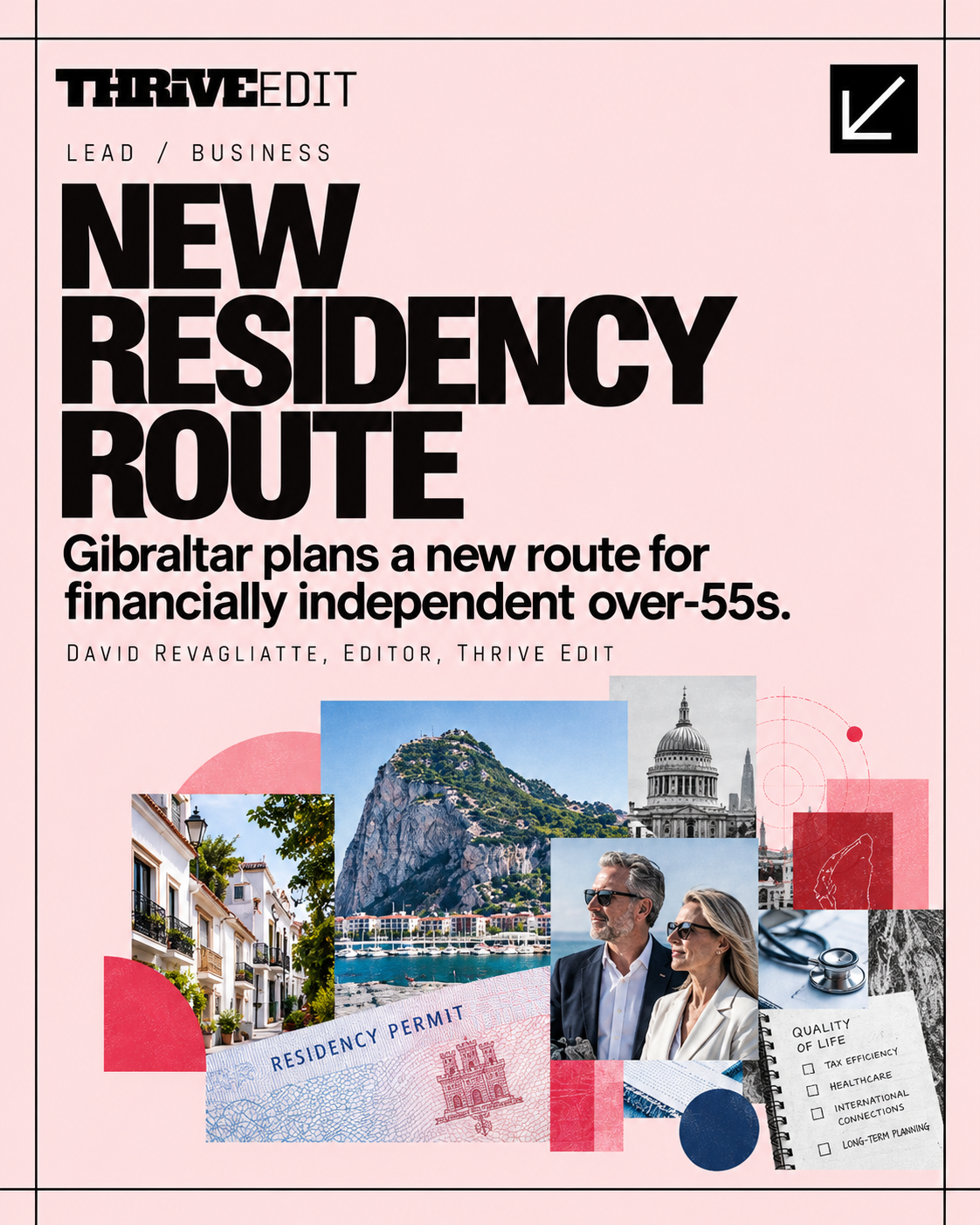
Gibraltar plans a new residency route for financially independent over-55s alongside a new business think tank announced at GibLink London.

New frontier lanes and discussions around a cross-border transport interchange raise questions about buses, workers, visitors and business connectivity.

Could a future UK-EU food agreement make it easier for British produce to return to Gibraltar shelves? British produce has long been part of Gibraltar’s shopping experience; I wrote about it a couple of years ago, before we had a Treaty in place. From supermarket staples and fresh food to familiar household brands, we’ve spent […]