
 Gibraltar Federation of Small Businesses


 Gibraltar Federation of Small Businesses

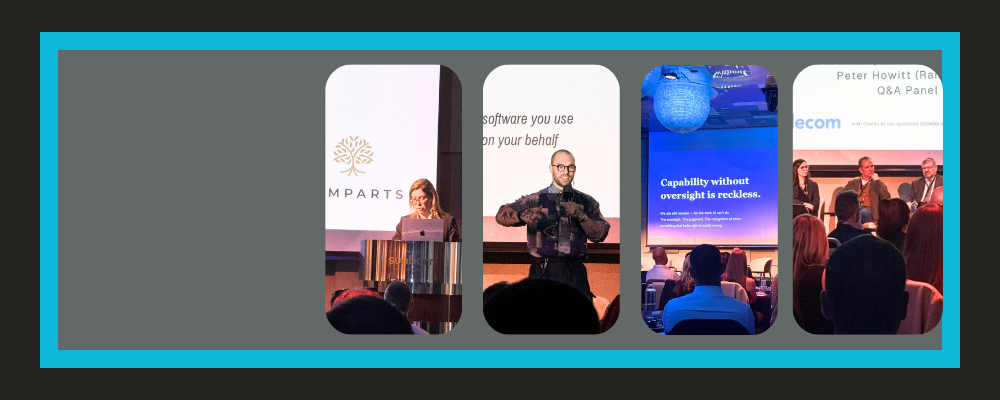
Yesterday’s inaugural AI Summit Gibraltar was the brainchild of Toby White, CEO of Artimus Consulting, and Scott Simmons, co-founder of the Legal Balance Institute – I know them both and I know how much time and thought they are contributing to building our local AI scene.
The event kicked off with originality – a short film, mood-setting film. Created by the team at Creative Rock Stars using AI, it depicted a giant rock lion rising from the sea, crossing the border (no Schengen checks required!) and settling into what would become Gibraltar. A confident start to a packed agenda that covered adoption, ethics, the future of work and some of the larger questions around where all of this is heading. These were my main takeaways.
1. A responsible approach to AI is required
The Hon. Gemma Arias-Vasquez, Minister for Health, Care and Business, opened in a way that felt measured and honest. She was clear that the question is no longer whether this technology will shape the future, because it already is. The more important question, in her view, is whether we are prepared to use it well. “We should not be interested in AI just because it is fashionable. We should be interested in it where it helps us do things better, where it improves productivity, reduces unnecessary administrative burden, supports better decisions and improves outcomes for the people we are trying to help. That must be the test.”
She also spoke from her own experience, noting that within her portfolio covering health and care, she already sees the practical potential of AI to support better coordination, more efficient administration and a better patient experience, saying, “AI is not a gimmick and it is not a replacement for people. It is a tool that can help people work more effectively.”
With so much of our economy built on reputation and well-regulated sectors, she argued that innovation needs to strengthen confidence rather than undermine it. She closed with a simple statement of intent: “Gibraltar should be ambitious, but it should also be responsible. That is how we will use AI well.”
2. Beware of over-reliance and develop your talent
Paul Addicott-Evans, CEO of AECS, brought things down to a practical level. The examples he shared made clear how capable AI already is, with tasks that would normally take days being completed in minutes. But he was equally direct about the risks of over-reliance, citing a healthcare use case where the system worked almost all the time, but not quite all the time. In that context, that margin is unacceptable.
One slide resonated particularly for smaller or less digitised businesses: “The organisations that will struggle most are the ones where the real work lives in people’s heads.” Where knowledge exists in people’s minds or on paper rather than in accessible systems, the ability to adopt AI effectively is limited from the outset.
He also raised a point that is easy to overlook. The early-stage work AI is now taking on, the drafting, the summarising, the revising, is also how junior professionals develop into senior ones. Take that process away, and you have not just saved costs. You have removed the mechanism through which people get good at their jobs.
3. Time-based billing is under threat
Scott Simmons’ contribution felt particularly relevant to Gibraltar, given how much of the professional services sector here still operates on an hourly billing model. His argument was not that time-based billing is wrong, but that it was never really designed to be permanent. It evolved, became embedded, and is now being exposed by a technology that can do much of the underlying work faster and more cheaply than any individual could. AI compresses the very activities the billable hour monetises: research, drafting, summarising, revising and analysing. When production work can be done in a fraction of the time, hours stop being a pricing mechanism and start looking like a liability.
Albert Azis-Clauson’s keynote later in the day added a sharper commercial edge to this. Traditional professional services models, built around roughly 80% of revenue covering personnel costs and 20% as profit, are already being disrupted. AI-native firms operating with leaner, senior-led structures are approaching margins of 50% to 60% by pricing on outcomes rather than hours. That is not a theoretical projection. Those firms already exist. The direction of travel is towards charging for results rather than time. For legal, accounting and professional services in Gibraltar, that touches something fairly fundamental about how value is defined and how businesses are structured.
4. Ethics around AI are still being shaped
The panel discussion, chaired by Jonathan Scott of the Gibraltar Government, shifted the event into more human-led, ethical spaces. The contributors brought a deliberately wide range of perspectives: Toby White from Artimus Consulting, James Lasry from Hassans, Kerstin Andlaw from TAO, and Peter Howitt from Ramparts. There was no single narrative being reinforced, and the discussion was more useful (and much more entertaining) for it.
Much of the day up to that point had been about frameworks, use cases and how organisations might begin to approach AI. The panel felt closer to the conversations people are actually having in practice, less polished and more open about the things that do not yet have clear answers. Questions around the pace of adoption, where responsibility sits when things go wrong, and how far organisations should move before they fully understand the implications all came up, and none of them were resolved neatly.
5. Keep things simple
Albert Azis-Clauson, CEO and General Partner of Tramlines, closed the main programme with a keynote that deliberately stepped back from the detail shared earlier in the day.
He was straightforward about his intention from the outset. Rather than adding more complexity, he wanted the audience to be able to go to the pub and talk about AI and sound like they knew what they were talking about. He built his explanation around a simple framework. “AI really is a prediction engine attached to a piece of memory, attached to an interface, and we can string multiple of those agents together to do more complex tasks. At its basis, that’s really all we’re talking about.” Every instance of AI, from ChatGPT to the most complex enterprise system, is some combination of those three things.
From there, he turned to how organisations should actually approach adoption, and his advice was direct. “Find problems in your industry, find problems in your company, find problems in your life, and see where AI can be applied.” Starting with the technology rather than the problem, he argued, is where most organisations go wrong.
He also made a point that carried particular weight for Gibraltar specifically. Small, skilled, affluent economies have an advantage that larger ones do not. “Your size of population has no barrier to your competition. In fact, it is an asset.” Larger, more embedded industries in bigger economies simply cannot move as fast.
He closed with a thought on where genuine value now lies. “For the first time in history, technology is not the barrier to entry. It is domain expertise, tacit knowledge, and access to networks.” In a world where the technical barriers to building with AI are rapidly disappearing, the defensible asset is knowing your industry deeply, and being present and ready when the larger structural shift arrives.
Save the date
The themes held together, the pacing worked, and the closing remarks from Glendon Martinez, Chief Secretary of His Majesty’s Government of Gibraltar, gave the day institutional weight beyond the commercial conversation.
The questions raised are simple enough. Are you starting with the problem or the technology? Does the knowledge that runs your business live in systems or in people’s heads? And when the shift comes, will you be ready? The next AI Summit Gibraltar takes place on 15 April 2027.



Governments and geopolitical strategists use simulations to test what might happen when other players react. The same thinking can help businesses challenge assumptions, anticipate competitors and prepare for decisions before real money is on the line.
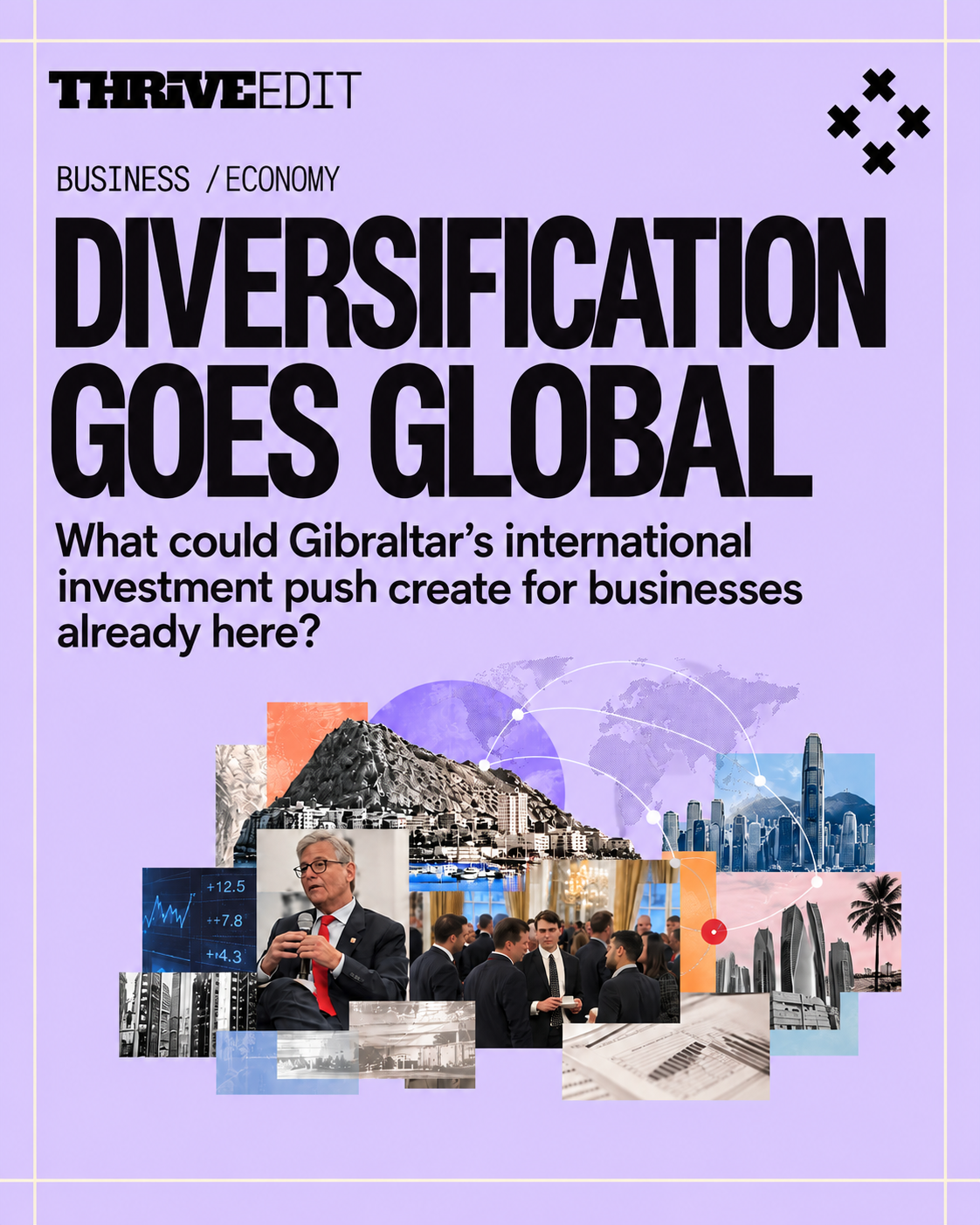
From Hong Kong to Abu Dhabi, Gibraltar is pursuing new industries and investors as part of a major economic diversification drive. Minister Nigel Feetham says the campaign is already generating business. The bigger question is how far those opportunities can spread through Gibraltar’s wider economy.
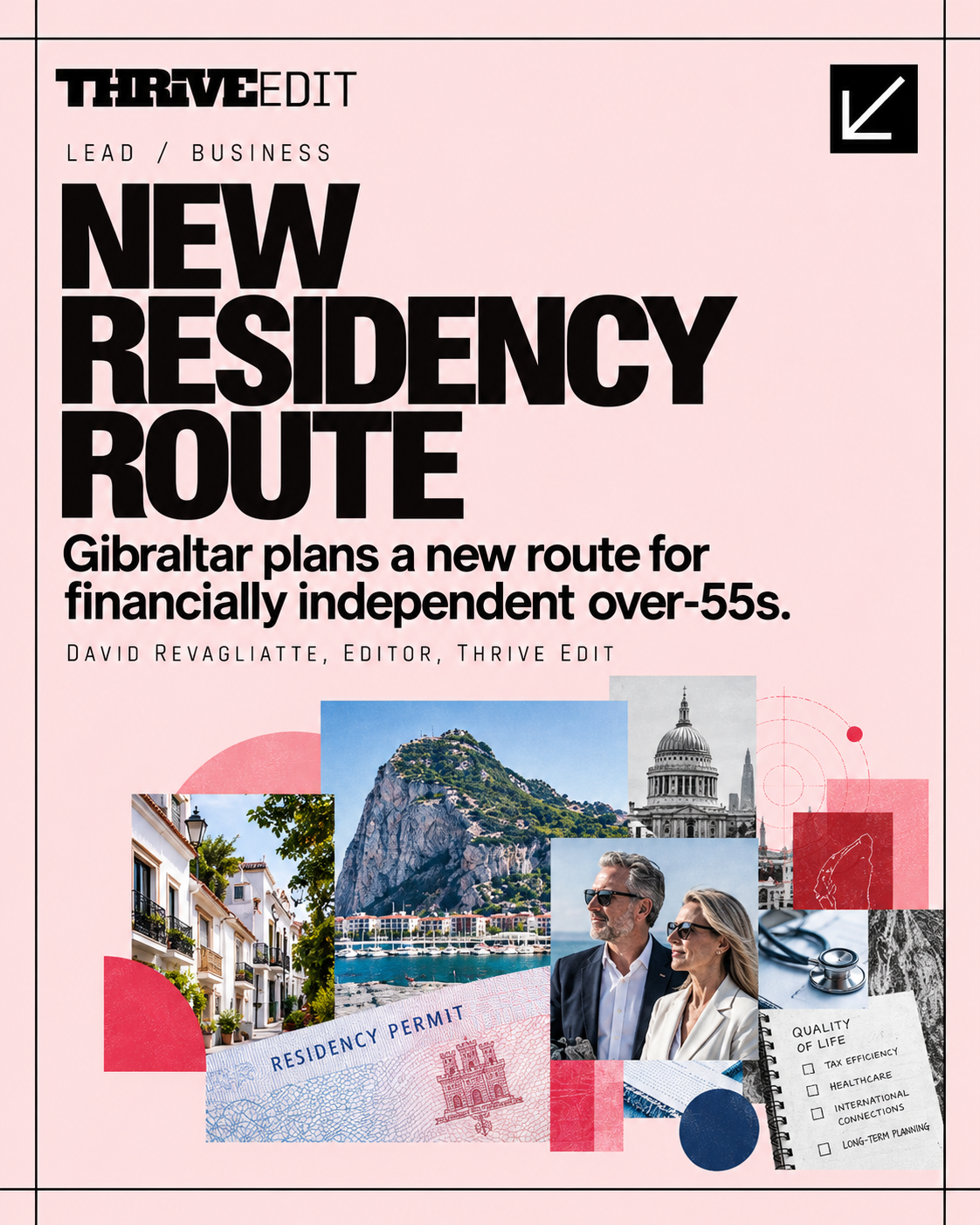
Gibraltar plans a new residency route for financially independent over-55s alongside a new business think tank announced at GibLink London.
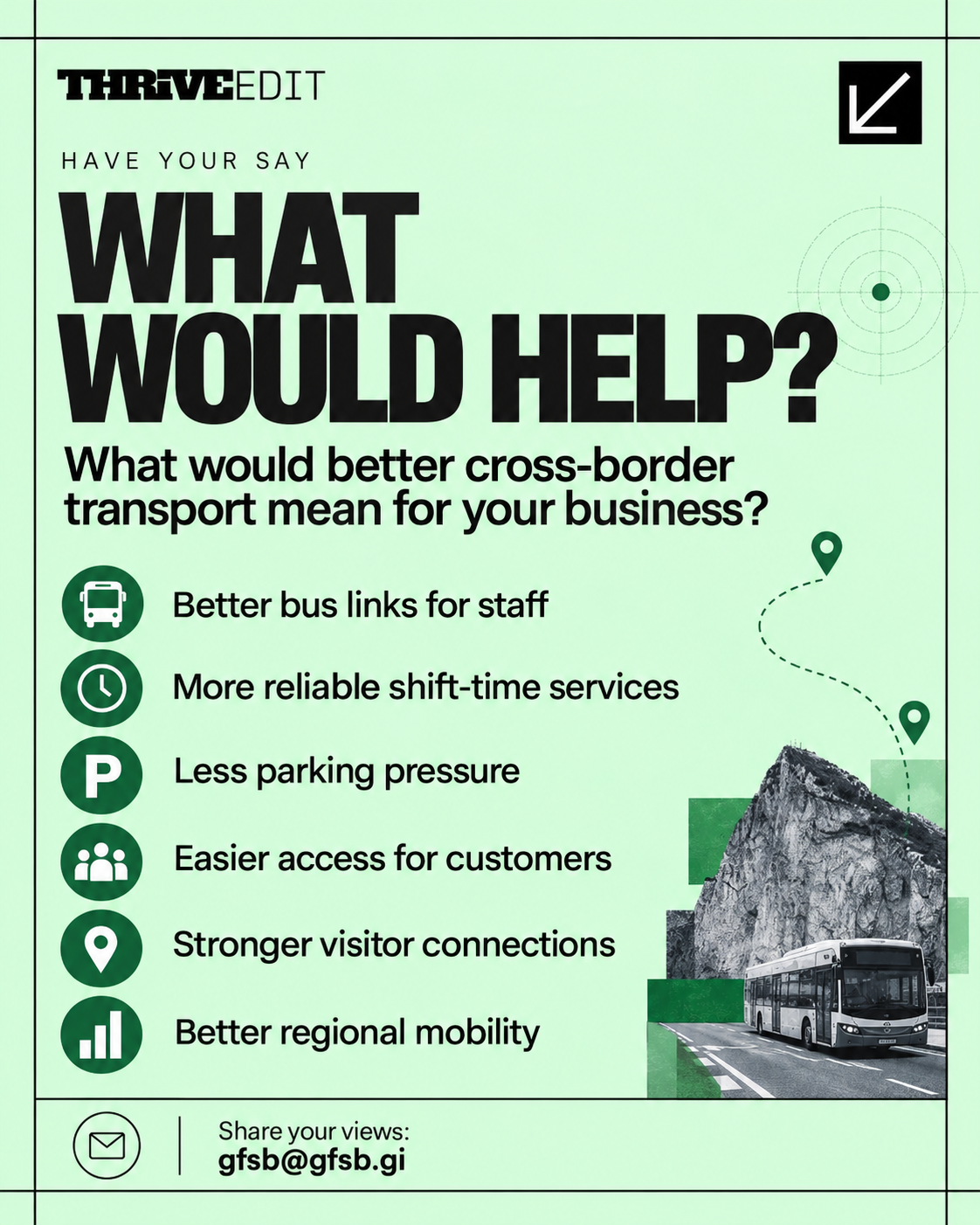
New frontier lanes and discussions around a cross-border transport interchange raise questions about buses, workers, visitors and business connectivity.

Could a future UK-EU food agreement make it easier for British produce to return to Gibraltar shelves? British produce has long been part of Gibraltar’s shopping experience; I wrote about it a couple of years ago, before we had a Treaty in place. From supermarket staples and fresh food to familiar household brands, we’ve spent […]


