

 Gibraltar Federation of Small Businesses


 Gibraltar Federation of Small Businesses

Article provided by Reda Harma
Something significant took place in London in March 2026. Visa — the payment network underpinning hundreds of millions of everyday transactions worldwide — formally announced that it is building infrastructure for a future in which artificial intelligence initiates and completes payments autonomously, on behalf of consumers. That announcement deserves attention well beyond the payments industry.
It is called agentic commerce, and it marks a meaningful turning point in how commerce is conducted.
What is agentic commerce?
An AI agent is software capable of acting independently on a person’s behalf — not merely answering questions, but executing decisions. Researching options, making selections, completing transactions, and managing follow-up, all without requiring the individual to approve each step.
Imagine your AI agent notices the office is running low on printer paper. Without being asked, it finds the best available price, places the order, and processes the payment — all before you have even thought about it.
Visa’s Agentic Ready programme is designed to ensure that the global payment infrastructure is prepared for precisely this reality. The programme launched first in Europe and UK, and deliberately so. European markets already possess the technical prerequisites — advanced digital identity systems, tokenisation, and strong authentication frameworks — that agent-initiated transactions will depend upon to function securely and at scale.
The question of data and trust
For an AI agent to act meaningfully on someone’s behalf, it requires access to personal data: preferences, credentials, transaction history, behavioural patterns. That creates a fundamental question about who controls that information, under what conditions it is accessed, and what recourse exists when something goes wrong.
This is the challenge that Inrupt is building infrastructure to address. Co-founded by Sir Tim Berners-Lee — the British computer scientist who invented the World Wide Web in 1989 — Inrupt is developing what it describes as a trust layer for the decentralised internet, based on an open standard known as the Solid protocol.
The Solid protocol allows individuals to store their personal data in a secure, portable digital space called a Pod — a personal online datastore that the individual owns and controls. Rather than data residing permanently on a platform’s servers, it is held by the individual, who grants and revokes access to applications and services on their own terms, in real time.
Visa and Inrupt have been collaborating for over two years, including a live proof of concept. Their shared thesis is that agentic commerce, to function at scale, must be built on genuine individual consent and data sovereignty — not on the assumption that convenience justifies permanent data transfer. Visa’s own consumer research reinforces that position: data security, privacy, and lack of control are the three principal concerns deterring roughly half of consumers from engaging with AI-driven commerce.
Why Gibraltar is well placed for what comes next
The companies designing this infrastructure — the trust layers, the identity frameworks, the regulated payment rails — need a home. And Gibraltar has been building the right conditions for precisely this kind of business.
In 2017, Gibraltar became the first jurisdiction in the world to introduce a regulatory framework specifically designed for distributed ledger technology businesses. That was a deliberate strategic choice — a signal that Gibraltar’s regulatory authorities were prepared to engage seriously with technology-native business models that did not fit the conventional existing regulatory categories, and to do so before the rest of the world had caught up.
That same regulatory character is now directly relevant to agentic commerce. Firms building at this frontier require a regulator that engages substantively with novel technology, a legal framework capable of accommodating new commercial models, and a payments ecosystem with genuine international credibility.
Gibraltar offers all three. Xapo Bank, one of the world’s first fully regulated crypto-native private banks, operates here, holding both a banking licence and a DLT Provider authorisation. Bitso, one of Latin America’s leading digital asset platforms, operates from its Gibraltar-regulated entity, bringing significant cross-border payment experience to the jurisdiction. Bullish, the institutional digital asset exchange, worked directly with HM Government of Gibraltar and Gibraltar Financial Services Commission to develop the world’s first dedicated regulatory framework for the clearing and settlement of crypto derivatives — a world first, designed and built in Gibraltar. Revolut — Europe’s most valuable fintech company, with over 70 million customers globally ,and a participant in Visa’s Agentic Ready programme— was reported to be in the final stages of a Gibraltar licence application, described by Gibraltar’s Hon Minister for Justice, Trade and Industry Hon Nigel Feetham KC MP as a further sign of the jurisdiction’s growing international appeal.
The physical infrastructure is being built to match. In September 2025, Pelagos Data Centres announced plans for a £1.8 billion, 250MW facility near the Port of Gibraltar — one of the largest single investment project in Gibraltar’s history — designed specifically to support AI and cloud computing workloads, and targeting net-zero operational emissions by 2030.
The broader picture
Agentic commerce is still in its formative stages. The regulatory questions surrounding it — around authorisation, liability, consumer consent, and data protection — remain open across European and UK jurisdictions. But the direction of travel is clear. Visa has formalised its commitment. Inrupt is building the consent architecture. Regulators are beginning to ask the right questions publicly. And Gibraltar sits at the intersection of payments, distributed ledger technology, and AI-ready infrastructure, with a track record of translating that position into tangible commercial and regulatory advantage.
This is a space that is moving quickly. Gibraltar is already in it.
This article is for information purposes only and does not constitute legal or financial advice. If you have expertise to share with the GFSB’s network, please contact editor@gfsb.gi with a few details.




Governments and geopolitical strategists use simulations to test what might happen when other players react. The same thinking can help businesses challenge assumptions, anticipate competitors and prepare for decisions before real money is on the line.
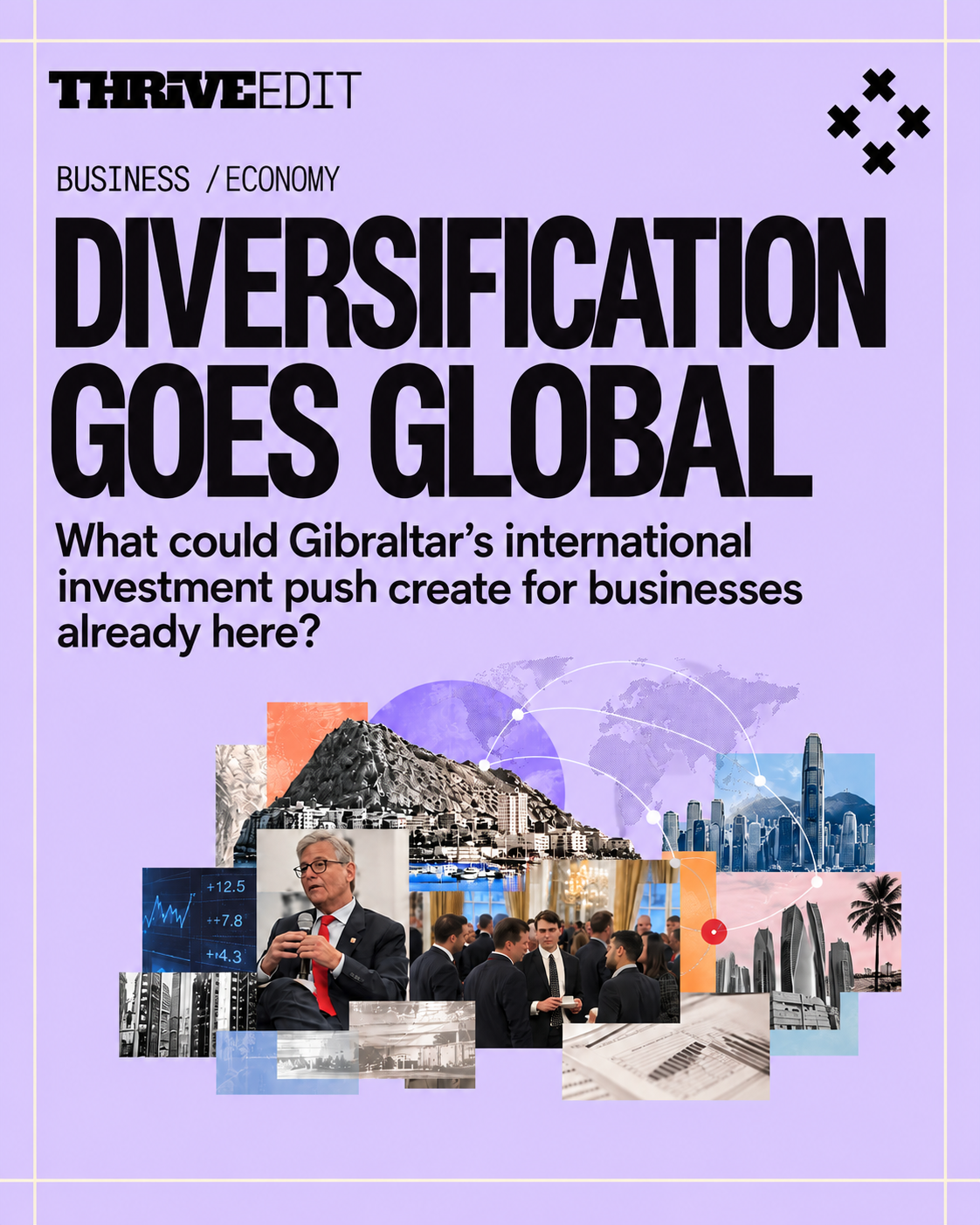
From Hong Kong to Abu Dhabi, Gibraltar is pursuing new industries and investors as part of a major economic diversification drive. Minister Nigel Feetham says the campaign is already generating business. The bigger question is how far those opportunities can spread through Gibraltar’s wider economy.

Gibraltar plans a new residency route for financially independent over-55s alongside a new business think tank announced at GibLink London.
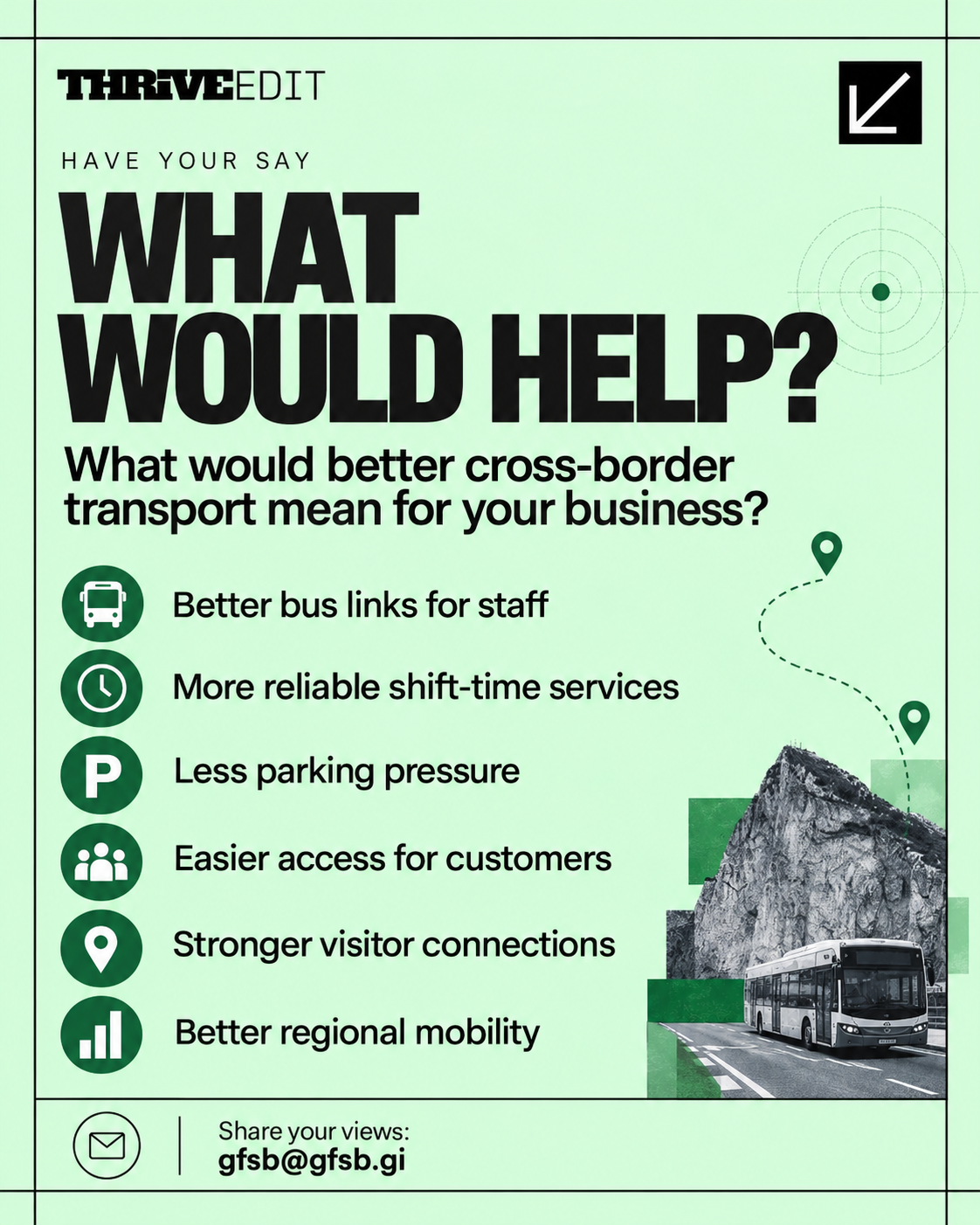
New frontier lanes and discussions around a cross-border transport interchange raise questions about buses, workers, visitors and business connectivity.

Could a future UK-EU food agreement make it easier for British produce to return to Gibraltar shelves? British produce has long been part of Gibraltar’s shopping experience; I wrote about it a couple of years ago, before we had a Treaty in place. From supermarket staples and fresh food to familiar household brands, we’ve spent […]