

 Gibraltar Federation of Small Businesses


 Gibraltar Federation of Small Businesses

The UK, EU, Gibraltar and Spain have completed work on the legal text of the long-awaited UK–EU treaty covering Gibraltar’s post-Brexit relationship. The news that work on the legal text of the UK–EU treaty on Gibraltar has been completed did not come from No.6 Convent Place, but from Brussels. The first public confirmation appeared in a Gibraltar Chronicle report sourced directly from the European Commission, rather than from the Gibraltar Government or the UK. For some, that was an eyebrow-raising moment.
That aside, it is a major milestone, but it is by no means the end of the process. Several formal stages still lie ahead before the treaty can take effect.
What’s just happened
On 17 December, the European Commission confirmed that negotiators had completed work on the legal text of the future UK–EU agreement on Gibraltar. The work was finalised on 12 December, following months of drafting after the political agreement announced on 11 June.
A Commission spokesperson told the Gibraltar Chronicle:
“This political agreement has been followed since June by intensive work between the negotiating teams to finalise the legal text, which was completed on 12 December 2025.”
Crucially, this means the drafting phase is complete. It does not mean the treaty is in force, nor that the text is ready for immediate publication.
Why the text has not been published yet
One of the most important points for businesses to understand is that, although completion of the legal text has been announced, the document itself has not been made public and no date has been given for publication.
Speaking to GBC in an interview explaining the next steps, Deputy Chief Minister Dr Joseph Garcia said:
“This is an international treaty. And as a national treaty, you have to be careful what you say and when you say it.”
He explained that once the European Commission formally briefed EU member states, controlling the flow of information became difficult:
“Once the Commission has made the public statement effectively… it’s very difficult to contain that information because there are 27 countries… at that point, it’s better really to just tell people, you know, this has happened.” Treaty text interview
What happens next: the legal review
In the same GBC interview, Dr Garcia outlined the next formal phase, known as the legal scrub.
“A legal scrub involves lawyers from the two signatories, the United Kingdom and the European Union. Gibraltar, obviously, will also be involved… they will check all the text of the treaty from beginning to end,” he said. Treaty text interview
This process checks for legal consistency, structure, cross-references and technical accuracy across the entire document. Dr Garcia noted that this stage alone “can take several weeks”.
The European Commission confirmed this position in comments to the Chronicle:
“The text is currently undergoing legal review by the EU and the UK before we can proceed with our respective internal procedures.”
Translation into EU languages
Dr Garcia also told GBC that once lawyers agree the final legal wording, the treaty must be translated into all official EU languages.
“We’ve been negotiating in English… but the European Union has 24 languages, and it needs to be translated into each of those languages… they all become equal at that point,” he said. Treaty text interview
This translation work is carried out in parallel, but it still adds time before the treaty can move forward.
Signature does not mean implementation
After legal review and translation, the treaty can be formally signed by the UK and the EU. Whether this is done quietly or through a public ceremony has not yet been decided.
Dr Garcia stressed during the GBC interview that signature is not the end of the road:
“After that, clearly, it doesn’t mean the treaty comes into effect straight away. There needs to be a period of implementation to allow that to happen.” Treaty text interview
Ratification: how approval will work
Dr Garcia explained to GBC that ratification will take place through separate UK and EU processes.
In Gibraltar, the process will begin with parliamentary scrutiny:
“There will be a debate and a discussion on the treaty and on its contents, and then on a motion, the Gibraltar Parliament will signal to the United Kingdom… we urge the United Kingdom now to ratify it.” Treaty text interview
The UK Parliament will then follow the Constitutional Reform and Governance Act process, laying the treaty for 21 sitting days.
On the EU side, the treaty will move through the European Council and then require the consent of the European Parliament.
When will the text be published?
Dr Garcia confirmed in his interview with GBC that the treaty text will be made public, but only once there is a consolidated and agreed version.
“Yes, the treaty text will be published once there is a consolidated agreed treaty text,” he said. Treaty text interview
However, he declined to give a specific timetable:
“I’ve been in this business too long to sort of burn my fingers by giving a specific timeframe.”
No official timeline has been provided for publication of the text, but the GFSB understands that the next step in the process will take at least several weeks, and with Christmas intervening, publication is unlikely before early next year.
What this means for businesses right now
Completion of the legal text is a significant and positive step, closing the negotiation phase and moving the process into delivery.
At the same time, businesses should note that:
• The treaty text has not yet been published
• Ratification has not begun
• Implementation will follow only after approval
As the Chronicle reported, the treaty aims to “bring confidence and legal certainty to the lives and well-being of the people of the whole region by promoting shared prosperity”. That certainty will become clearer once the text is published and scrutiny begins.
GFSB Brext Q+A
Last week we published a Brexit AI Q+A which we hope acts as an information centre that can answer members questions relating to Gibraltar’s Brexit Agreement. Through an intuitive AI interface, members can ask any question they wish and receive a reliably sourced, explanatory answer. Each answer clearly cites the original source of the information contained in the answer, giving users confidence as to the accuracy and provenance of the information provided. Access it here.


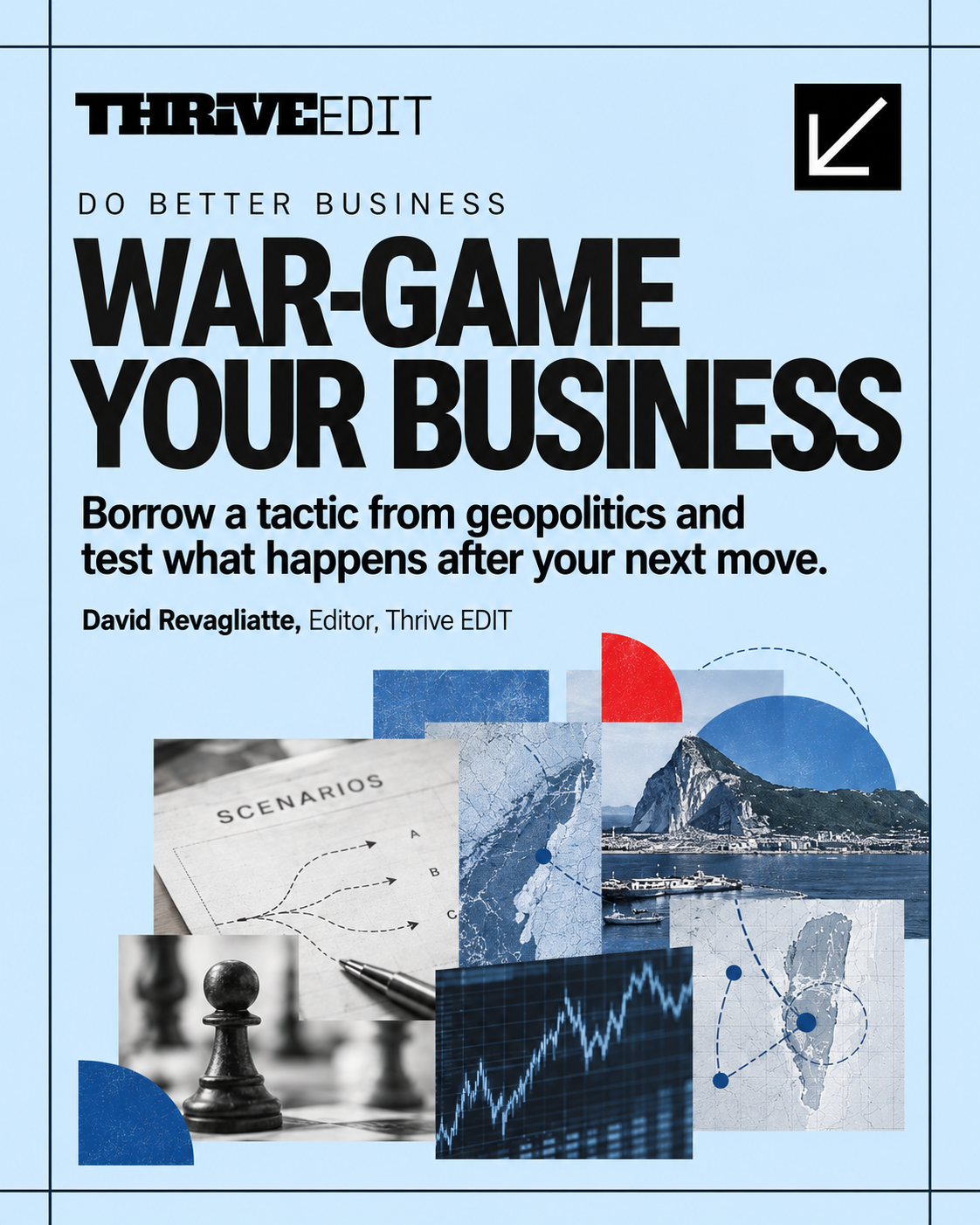

Governments and geopolitical strategists use simulations to test what might happen when other players react. The same thinking can help businesses challenge assumptions, anticipate competitors and prepare for decisions before real money is on the line.
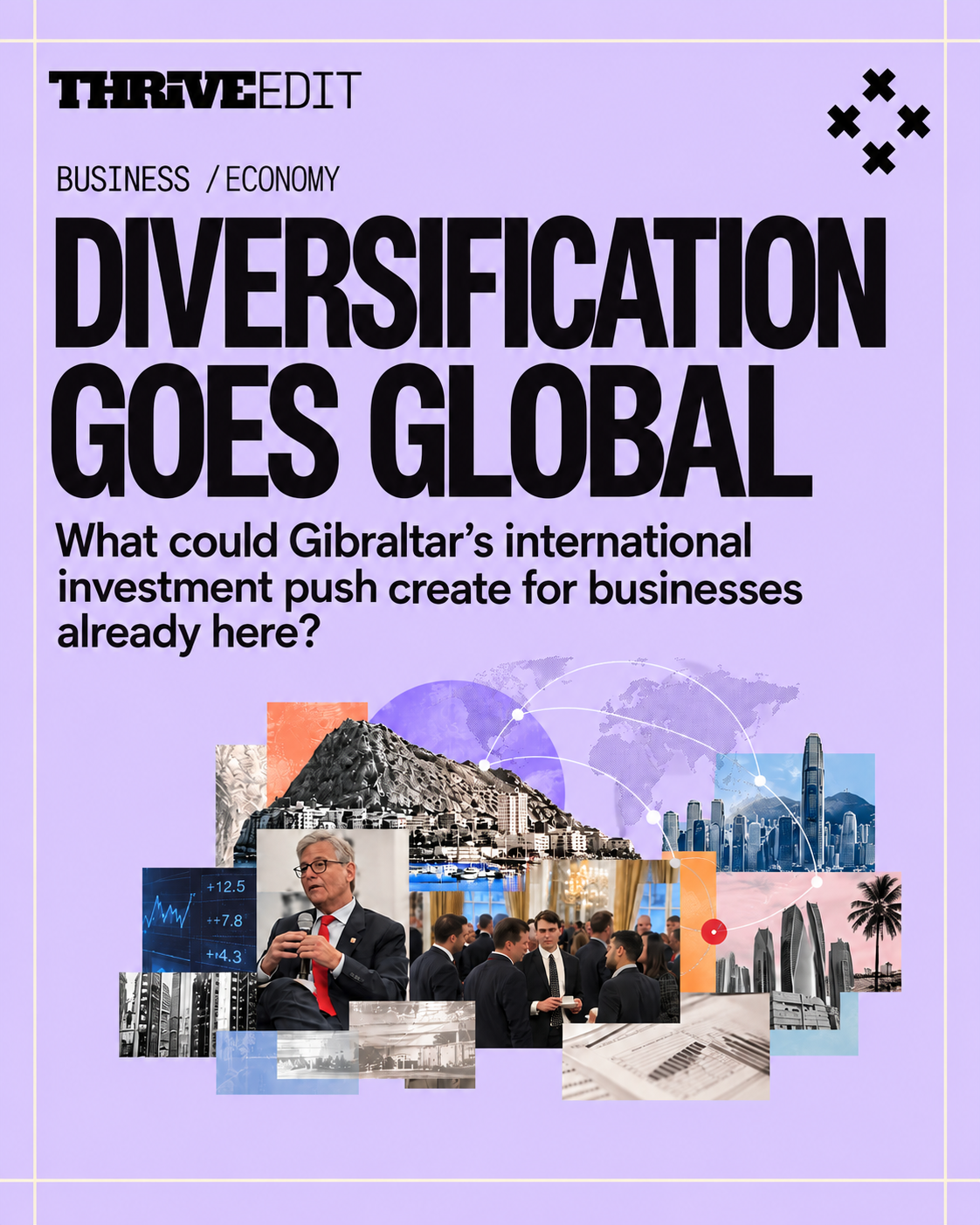
From Hong Kong to Abu Dhabi, Gibraltar is pursuing new industries and investors as part of a major economic diversification drive. Minister Nigel Feetham says the campaign is already generating business. The bigger question is how far those opportunities can spread through Gibraltar’s wider economy.

Gibraltar plans a new residency route for financially independent over-55s alongside a new business think tank announced at GibLink London.

New frontier lanes and discussions around a cross-border transport interchange raise questions about buses, workers, visitors and business connectivity.
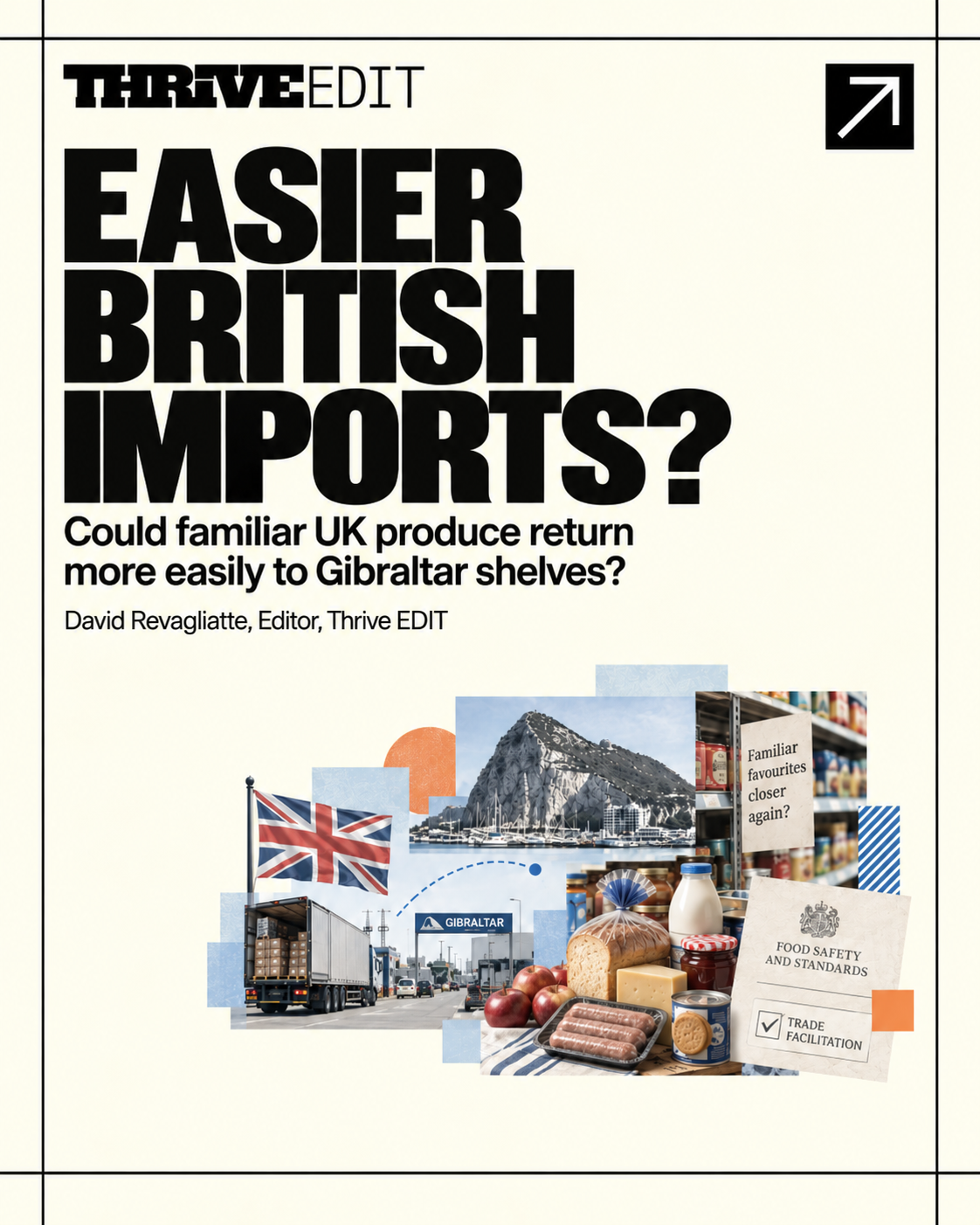
Could a future UK-EU food agreement make it easier for British produce to return to Gibraltar shelves? British produce has long been part of Gibraltar’s shopping experience; I wrote about it a couple of years ago, before we had a Treaty in place. From supermarket staples and fresh food to familiar household brands, we’ve spent […]