
 Gibraltar Federation of Small Businesses


 Gibraltar Federation of Small Businesses

GFSB members are being invited to review a detailed submission sent to HM Government of Gibraltar on 23 February 2026 outlining lawful ways to ease the impact of VAT-style taxation on SMEs under EU State aid rules.
Why this paper exists
The document analyses how governments within the EU lawfully reduce VAT burdens on small and medium-sized enterprises while remaining compliant with EU State aid rules.
Although Gibraltar is not part of the EU VAT regime, the paper assumes Gibraltar will be subject to EU State aid disciplines and argues that any Transaction Tax relief must be structured accordingly.
The big idea
The submission identifies multiple mechanisms already used across the EU that could, in principle, be adapted locally. These fall into six broad categories:
Each mechanism is analysed against EU Treaty articles, regulations and eligibility thresholds.
Key mechanisms in plain terms
De minimis aid
Since January 2024, EU rules permit up to €300,000 in aid over a rolling three-year period without formal notification to the European Commission. This can include grants, soft loans, guarantees or tax advantages, provided the benefit is transparent and tracked centrally from 1 January 2026 onwards.
SME VAT exemption
Under the VAT Directive, Member States may exempt small businesses below national turnover thresholds, now harmonised up to €85,000. This reduces compliance burdens but removes the right to deduct input VAT.
Postponed import VAT
The paper highlights postponed import VAT accounting, where VAT is declared on the return rather than paid at the border. This is described as cash-flow neutral and not State aid because it alters timing, not liability.
Cultural and heritage aid
High thresholds under the General Block Exemption Regulation allow significant investment or operating aid for cultural purposes without notification, subject to conditions.
Deferred VAT
VAT payment deferral is legally possible but must be structured either within de minimis limits or as notified State aid. COVID-era schemes are cited as precedent.
A broader funding proposal
The submission also suggests that Government consider direct SME support through a reconstituted Business Improvement District, fully Government-funded, using the same legal frameworks that permit EU-level SME support.
Why this matters now
With Transaction Tax arrangements approaching implementation, the document aims to demonstrate that relief mechanisms can be structured in ways already recognised in EU law, reducing the risk of legal challenge.
We are strongly urging our members to read the full submission and share feedback. Clear, practical and legally robust solutions will depend on detailed sector input before any policy decisions are finalised.




Governments and geopolitical strategists use simulations to test what might happen when other players react. The same thinking can help businesses challenge assumptions, anticipate competitors and prepare for decisions before real money is on the line.

From Hong Kong to Abu Dhabi, Gibraltar is pursuing new industries and investors as part of a major economic diversification drive. Minister Nigel Feetham says the campaign is already generating business. The bigger question is how far those opportunities can spread through Gibraltar’s wider economy.

Gibraltar plans a new residency route for financially independent over-55s alongside a new business think tank announced at GibLink London.

New frontier lanes and discussions around a cross-border transport interchange raise questions about buses, workers, visitors and business connectivity.
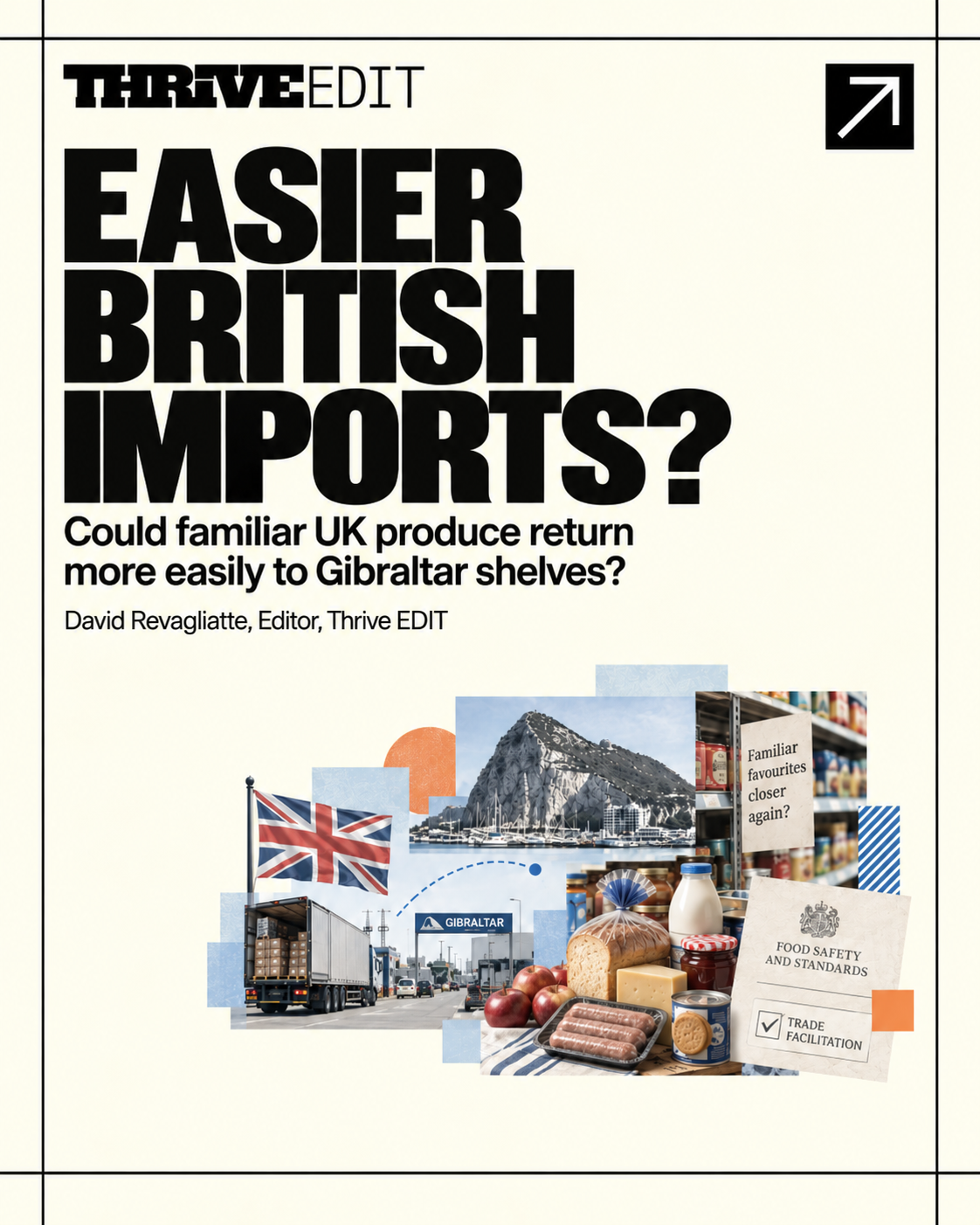
Could a future UK-EU food agreement make it easier for British produce to return to Gibraltar shelves? British produce has long been part of Gibraltar’s shopping experience; I wrote about it a couple of years ago, before we had a Treaty in place. From supermarket staples and fresh food to familiar household brands, we’ve spent […]