
 Gibraltar Federation of Small Businesses


 Gibraltar Federation of Small Businesses

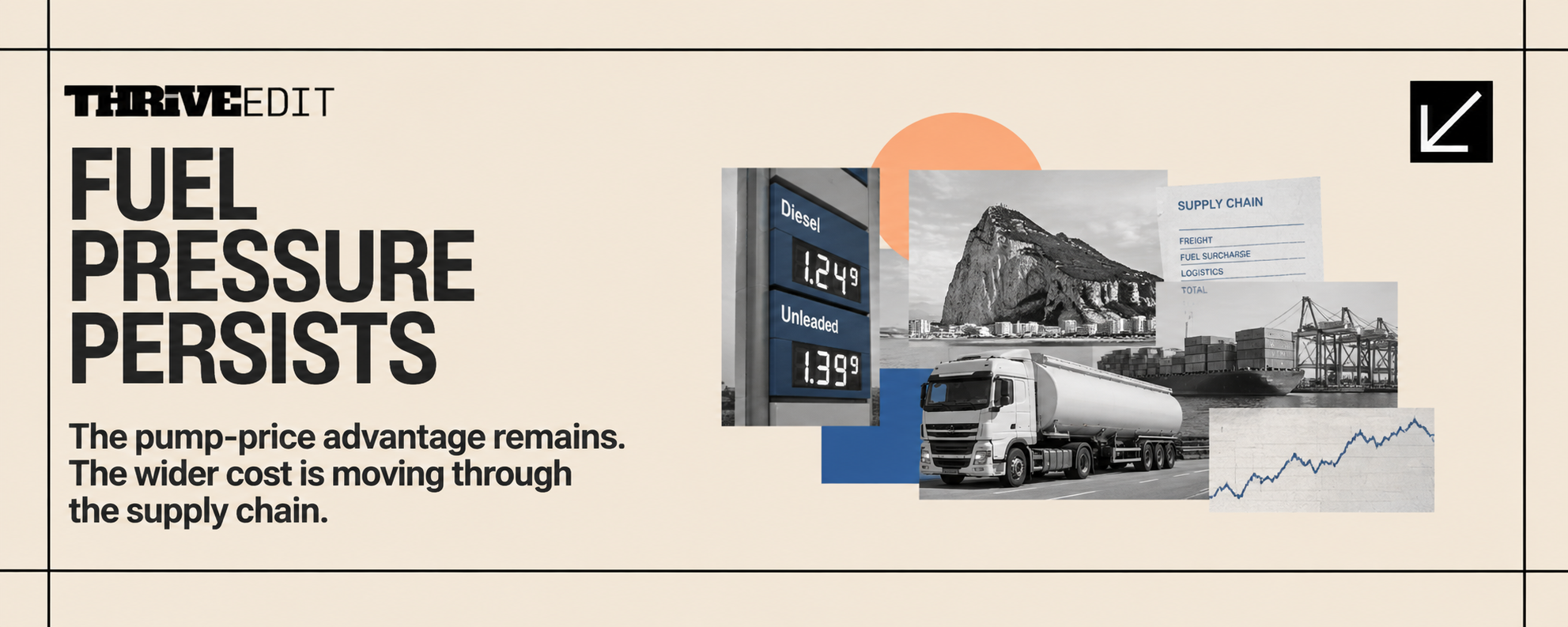
Fuel has long been one of the areas where Gibraltar enjoys a clear advantage over our neighbours. Drive across the frontier and the difference at the pump is still noticeable. At the time of writing, GibOil is listing diesel at around £1.34 per litre and unleaded 95 at around £1.40 per litre. At current exchange rates, that is roughly €1.57 and €1.64 respectively.
Across Spain, prices are higher. Recent figures put diesel at around €1.88 per litre and petrol at around €1.91, although prices vary between individual stations. In the Campo, some forecourts have recently been displaying prices approaching €2 per litre. Gibraltar remains cheaper, but local prices have still been rising as international markets tighten.
Government has already moved to soften some of the pressure. In March, it reduced the proposed duty on fuel from 28p to 14p per litre, with 3p continuing to go towards the Gibraltar Climate Fund. The decision was linked directly to geopolitical developments and rising international fuel prices, with Government saying it wanted to shield consumers and businesses from external pressures as far as possible.
Gibraltar has historically maintained lower fuel duties than Spain, contributing to the price difference residents, businesses and visitors have become accustomed to.
The new Treaty arrangements also provide a three-year transitional period governing allowances on goods moving between Gibraltar and the EU. Standard quantitative limits continue to apply to fuel, alongside tobacco and alcohol, during that period.
For now, Gibraltar retains a meaningful fuel-price advantage over the Campo.
Anyone filling up regularly in Gibraltar will already have noticed that fuel has become more expensive.
The increase is being driven by a tighter global energy market. Conflict in the Middle East has disrupted crude and refined-fuel supply, while Ukrainian attacks on Russian refineries and restrictions on Russian diesel exports have removed further volumes from the market. Middle Eastern diesel shipments have also fallen sharply, leaving inventories low at a time when refineries in several major markets are already operating close to capacity.
The result has been particularly acute for diesel, with European futures more than doubling since the start of the year. Gibraltar is of course exposed to those same wholesale markets. Our lower duty regime helps reduce the final price paid at the pump, but it cannot remove the underlying increase in the cost of the fuel itself. That is why prices here are rising even while Gibraltar remains cheaper than the Campo.
For companies operating vans, taxis, delivery vehicles or machinery, the effect is direct and obvious. For many other businesses, it appears through suppliers and logistics. Gibraltar imports the overwhelming majority of what it consumes. Retail stock, food and drink, construction materials and other goods all have to travel to reach the market.
A retailer may still be buying relatively cheap fuel locally while the truck carrying its stock has crossed several countries at far higher fuel prices. A restaurant may see higher transport costs reflected in the price of deliveries. A contractor may pay more for materials because freight has become more expensive further up the chain. Wholesalers may face higher distribution charges before goods even reach Gibraltar. The exposure will vary significantly by sector, but the common thread is transport.
International diesel markets remain tight. Supply disruption from the Middle East and Russia has reduced the volume of refined fuel entering global markets, while inventories in several major economies remain low. That has pushed diesel prices higher and raised the prospect of sustained pressure into 2027.
The Campo is already feeling some of that strain. Local reporting has highlighted rising costs for transport operators, self-employed workers and businesses, with the region’s dependence on road travel and logistics making fuel particularly sensitive.
Gibraltar is partially protected by its lower duty regime, but freight and supplier costs are still exposed to the same international pressures.
The clearest way to understand the impact is through what is actually happening inside businesses. Some companies may already be seeing higher delivery charges or fuel surcharges. Others may be noticing imported goods becoming slightly more expensive to land in Gibraltar.
Transport-intensive businesses may be feeling the impact directly through their own vehicles. Other firms may have seen little change so far.
A shop on Main Street will experience fuel costs differently from a construction company, restaurant, insurer or logistics operator. The effect will also depend on how much transport sits within each firm’s supply chain and how much of any increase suppliers are choosing to absorb or pass on.
Fuel is also arriving within a broader period of business adjustment. Many businesses are already managing changes linked to customs, Transaction Tax, workplace pensions, staffing and other operating costs. That makes it important to look at cumulative cost pressure rather than any single line in isolation.
A business may absorb a small increase in delivery costs without difficulty. Several increases arriving together can begin to affect already stretched margins.
Some firms may respond by reviewing suppliers, consolidating deliveries, adjusting pricing or changing transport patterns. Others may find that the impact remains manageable within existing margins. The response will depend on sector, scale and exposure.
Gibraltar’s lower fuel price still creates a meaningful difference. At current indicative prices, filling a 50-litre diesel tank in Gibraltar at around £1.34 per litre costs roughly £67, equivalent to around €78 at current exchange rates.
At €1.88 per litre, the same volume in Spain would cost around €94. For businesses operating several vehicles or covering high mileage, that gap remains commercially significant.
Are you seeing higher fuel-related costs in your business? Have delivery charges, supplier costs or margins changed, or have you noticed little impact so far? Share your experience with the GFSB at gfsb@gfsb.gi.




Last week’s GFSB Summer Party brought members together for an evening of conversation, new connections and a chance to reconnect ahead of Q4. With thanks to justbank and Capurro Insurance for supporting the event, we’ve pulled together some of our favourite photos from the night.

Toby White explains Know Your Agent, agentic commerce and how businesses can prepare as AI assistants begin booking, buying and acting for customers.

Nutritional coach and therapist MJ Feeke shares practical ways to support steadier energy, concentration and mood through a busy working day.

Europe’s SMEs are calling for growth, investment and proportionate regulation. We look at the lessons from SME2B Business Forum Europe for Gibraltar businesses.
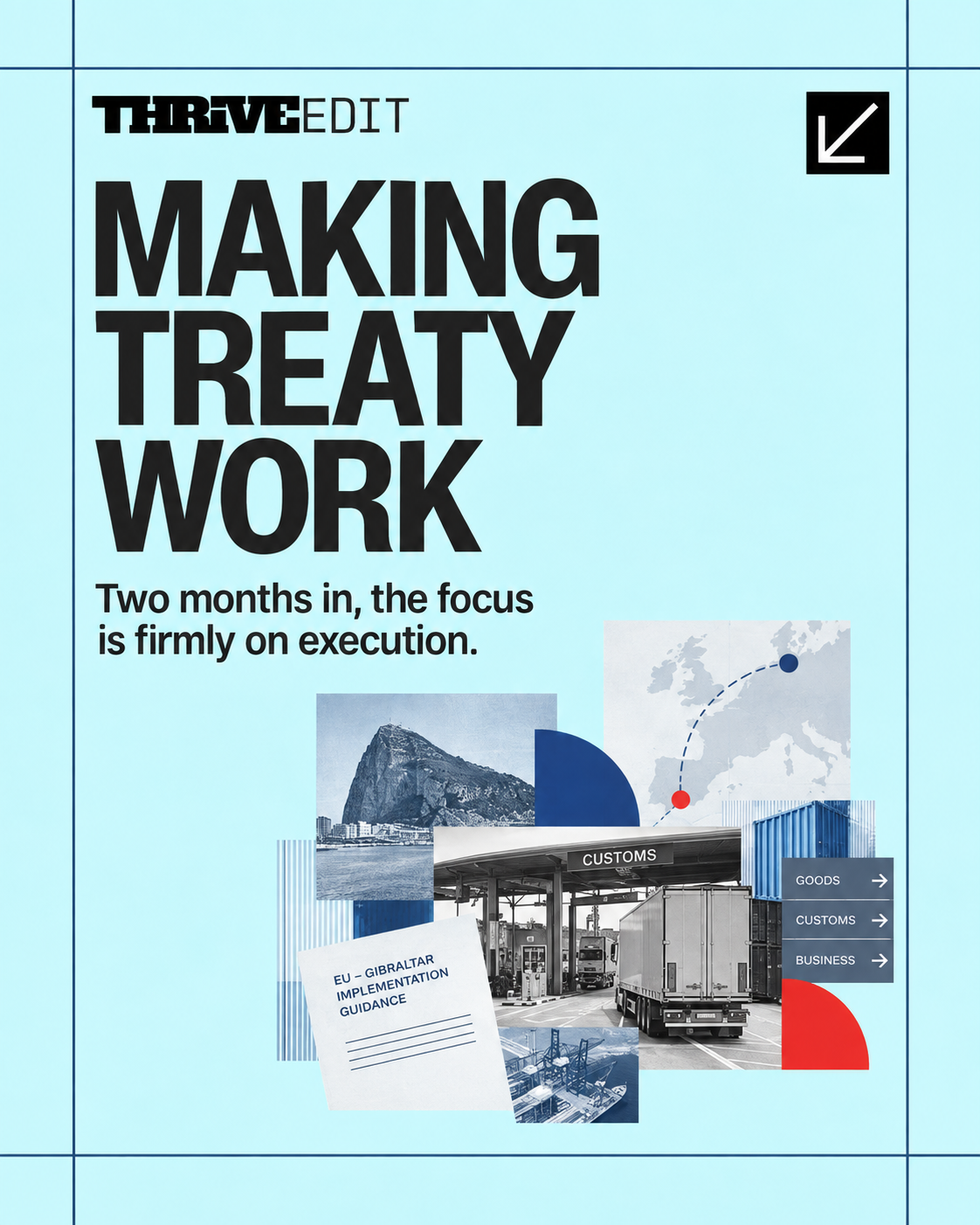
Two months into Gibraltar’s new Treaty arrangements, customs remains the main operational pressure point. We examine implementation, business friction and what comes next.