

 Gibraltar Federation of Small Businesses


 Gibraltar Federation of Small Businesses

GBC has published a detailed analysis of the full UK–EU Treaty text, breaking down what the agreement means in practice. We recommend members read the full article HERE.
Below, we’ve extracted the elements most relevant to businesses, focusing on the operational, customs, border and regulatory changes that will shape day-to-day trading.
The Port
Passengers arriving at the Port from outside the Schengen area will be submitted to border checks at the airport border crossing point. They will be escorted by both Gibraltar and Schengen officials.
Spain is to be kept informed of crew lists and passenger lists.
An exemption from visa requirements under EU law will apply to civilian sea crew members when they land to board a ship or go ashore to transit to another country, and who hold a seafarer’s identity document issued in accordance with the relevant international conventions. The ferry to and from Morocco will end. There will be no cruise liners calling directly into Gibraltar from any third country other than the UK.
Free Movement
Circulation between Gibraltar and all EU member states will not require border checks.
In exceptional circumstances, where there is a serious threat to public policy, public health or internal security, border controls can be re-instated for an initial period of 10 days, which can be extended for another 20, and thereafter in monthly periods up to six months. This is in accordance with what is set out in the Schengen Borders Code.
Residence Permits and Visas
EU citizens and third country EU residents can stay in Gibraltar for 90 days in any 180 without requiring a visa. Gibraltar residents can stay in any Schengen EU member state for 90 days in any 180 without requiring a visa. Visas may be required for anyone carrying out a paid activity.
Exemptions include business travel, sportspersons and artists, journalists, and intra-corporate trainees.
Gibraltar residents are exempt from wet-stamping, the Entry/ExitSystem (EES), and ETIAS.
They also have the right to transit through Schengen EU Member States (even if they do not have the travel requirements) to return home unless they are on the national list of alert of that country and the alert is accompanied by instructions to refuse entry or transit.
Residence will be proved by an ID card or residence permit.
Short stay visas for nationals of third countries who require them to visit Gibraltar will be issued by Spain.
Gibraltar has the right to ask Spain to refuse a short stay visa for Gibraltar on reasons pertaining to public policy, internal security or public health.
Gibraltar can exceptionally issue a limited number of short stay visas at the External border on humanitarian grounds. This would only be for an initial 15 day period, which can be extended for another 15 days – and is only for Gibraltar. It does not grant access to the Member States.
Long stay visas will not be issued. Gibraltar will be responsible for issuing residence permits after notifying the Spanish authorites. Spain can, however, refuse their issue if it deems there to be a threat to public policy, internal security, public health, or the international relations of any of the member states. In other words, if the person seeking residence in Gibraltar constitutes a threat to the Schengen States.
Specialised Committees
The treaty establishes three specialised committees with representatives from the EU and the UK.
1.On circulation of persons
2.On the economy and trade
3.On aviation
Goods, Customs and Transaction Tax
The treaty creates a customs union between the UK and the EU, in respect of Gibraltar. Gibraltar is not joining the EU Customs Territory. It is entering into a bespoke arrangement that enables the free circulation of goods between Gibraltar and the EU without customs checks at the land frontier.
The current import duty regime will be replaced by a new transaction tax, charged on importation (up to 17% in the next three years) After three years, the rate can be re-visited (but never 2 percentage points below the lowest standard of VAT in any Member State).
Alcohol and tobacco will be subject to excise duty, as will energy products and electricity
All revenue from the transaction tax and excise duty will be charged in Gibraltar.
Statistics will be provided to the Specialised Committee on Economy and Trade.
Essential goods, including food and pharmaceuticals, will be zero-rated. Solar panels and books will also not be subject to the transaction tax. A rate of 5% will apply to other specified categories such as children’s clothing, plants, bicycles, works of art, and antiques.
UK medicinal products or devices will be allowed to enter but must state they are ‘UK only’. In the case of devices, these must be only for use by the GHA. They can not be moved to the European Union.
Gibraltar’s traders will be able to access the EU Customs Union market.
They will be able to sell to customers across the EU, and EU consumers will be able to buy from Gibraltar, without customs barriers. All goods sold on the Rock must be EU compliant.
Goods from Ceuta and Melilla will be subject to the same treatment as goods to the EU.
EU goods may also be moved by sea, including from Gibraltar to third countries.
Union goods arriving at Gibraltar by sea will be customs cleared in Algeciras.
Spain will carry out customs clearance for goods from non-EU countries destined for Gibraltar at designated customs posts in La Linea, Algeciras, and Sagunto in Valencia. A subsidiary designated customs post will be designated in Portugal. Member States shall maintain separate accounts for non-EU goods destined for Gibraltar. The monies collected will be returned to Gibraltar.
By way of collection costs, Spain shall keep a percentage of the import duties collected, in accordance with the EU’s applicable retention rate.
After a three-year transition, the allowance system for individuals will disappear entirely. Individuals will be able to travel between Gibraltar and the EU with any quantity of goods for personal use, with no restrictions – the same rules that apply between EU member states.
An independent consultative body will assess whether the new arrangements are creating distortions in either direction.
Tobacco
There will be an exchange of information to combat tobacco smuggling including identifying individuals.
A tobacco traceability system will be set up in keeping with EU law.
Traceability information on the movement of tobacco products in Gibraltar will be shared with Spain.
Monitoring mechanisms to exchange information with the EU competent authorities on tobacco products entering or leaving Gibraltar are to be established.
Additional measures such as picture warnings on packeting, the banning of tobacco for oral use, and cross-border distance sales will be adopted.
Confiscated tobacco will be disposed of.
Cash Control
Any amount of cash over €10,000 needs to be declared at the airport when entering and leaving Gibraltar, and details as to its purpose and provenance must be given. This is standard EU law.
Road Transport
Transport operations and road haulage operators will require a licence when operating within the EU. The treaty details the requirements and obligations and the infringements that could lead to its revocation.
In the EU, the EU Member States would issue the licences.
The transport of goods within the ‘Contiguous Frontier Zone’ (Campo de Gibraltar) will be possible.
Gibraltar driving licences will be recognised in that area.
Emergency ambulances and those dealing with serious medical cases can transfer patients beyond the Campo to listed establishments in Spain.
Frontier Workers
The treaty enshrines the rights of frontier workers with EU law replicated in this respect.
Family members will enjoy a right to equal treatment in the access to social and tax advantages.
Frontier workers made redundant will be entitled to unemployment benefits from the jurisdiction they were made redundant in.
As a frontier worker, you will have no access to social housing (as you will lose frontier worker status).
Posted Workers
Gibraltarians posted to Spain (within the Contiguous Frontier Zone) for a limited period may be allowed to work there.
This is reciprocal.
Level Playing Field Commitments
The treaty includes a level playing field chapter, based on the UK–EU TCA and going further in certain areas. Gibraltar will align with the EU state aid regime by implementing relevant rules and guidance domestically, enforced by an Independent Gibraltar Body. Gibraltar commits to maintaining and not regressing from high standards on tax transparency, anti-money laundering, and labour and social standards. Gibraltar will maintain equivalence with EU environmental standards and reduce emissions, alongside expansive provisions on trade and sustainability.
Information on who benefits from State Aid needs to be publicly available.
Each party is to set up an independent authority or body to oversee the State Aid system. It would have recovery powers for any unauthorised state aid. The Specialised Committee on Economy and Trade would have the final decision on whether any party’s state aid is detrimental to the other. Remedial measures would be introduced if this is proved to be the case.
Financial Provision
Both parties shall provide funding to promote cohesion between Gibraltar and the Contiguous Frontier Zone. This will be used for matters such as training and employment.
Termination Clause
The agreement can be terminated, in whole, or in part, if either party considers there’s been a serious and substantial breach in the treaty’s obligations. Before this happens, the Co-operation Council must meet with a view of seeking a timely and mutually agreeable solution. It has 30 days in which to do this.
A serious and substantial breach would have to be exceptional, threatening peace and security, or one that carries international repercussions. An act or omission that goes against the Paris Agreement on Climate Change would fall into this category. The agreement can also be terminated by written notification through diplomatic channels and would cease to be in force a year after notification.
Furthermore, should Spain ask for its termination because of an adverse evaluation of the Schengen aspects of the treaty, the EU would comply. Parties can also ask to be temporarily released from treaty obligations. This would happen a week after notification, when border controls between Gibraltar and the EU would be re-instated. The UK and Gibraltar would have its own separate concordat.
What Happens Next?
This is a complex and consequential agreement, and the detail matters. The GFSB is now reviewing the full Treaty text in greater depth and will publish further analysis for members in the coming days, focusing on the practical implications for different sectors.
In the meantime, we encourage members to read the full GBC analysis, consider how the provisions may affect their operations, and share any immediate questions or concerns.





How can businesses tell whether workplace training actually works? Explore practical ways to connect learning, behaviour and measurable performance.
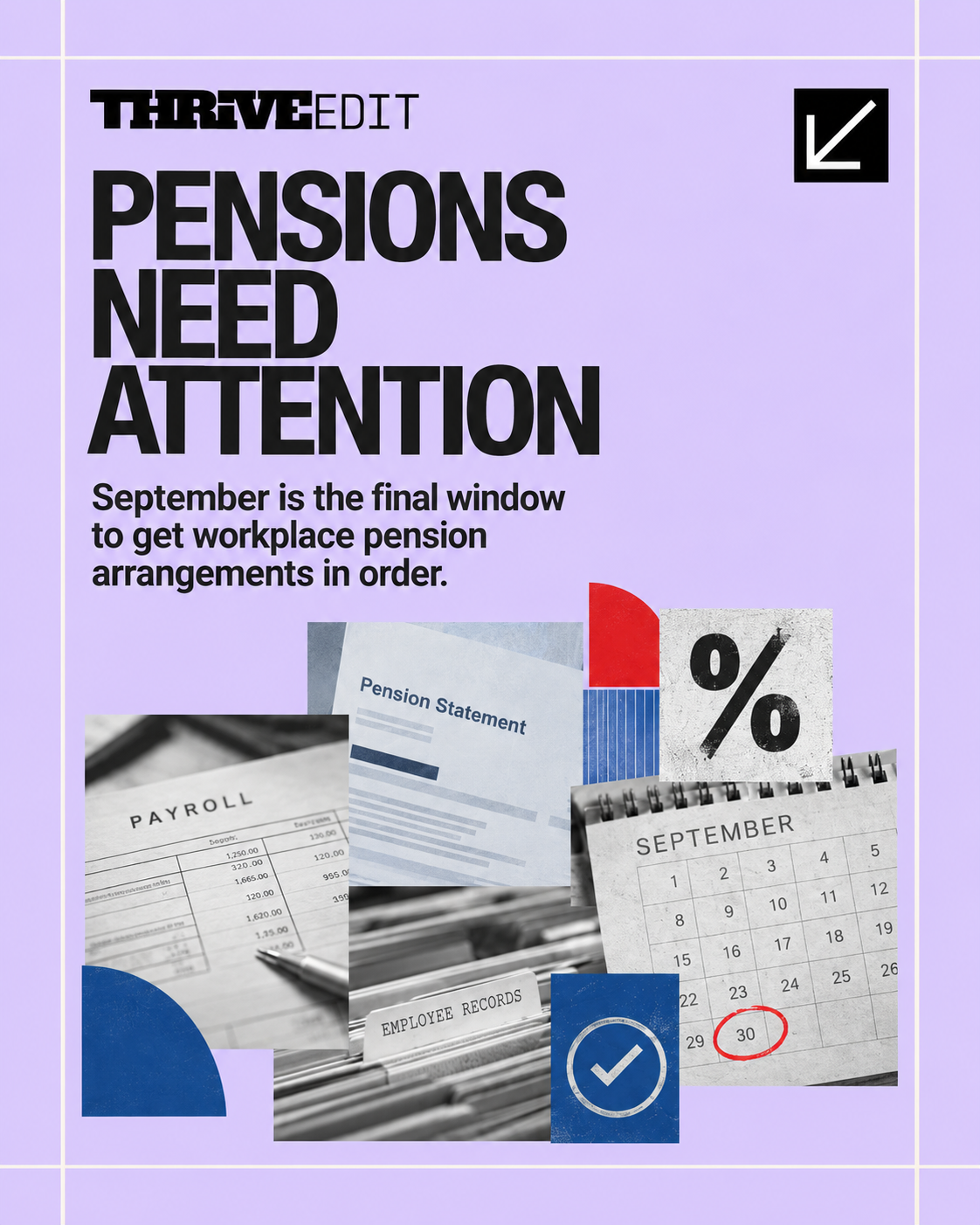
Employers with 15 to 50 staff are now inside the final workplace pension extension window. Check eligibility, contributions, opt-outs and compliance requirements.

Investment in automation, logistics, tourism and green technology across the Campo de Gibraltar is reshaping the regional skills base. Here’s what Gibraltar employers should watch.
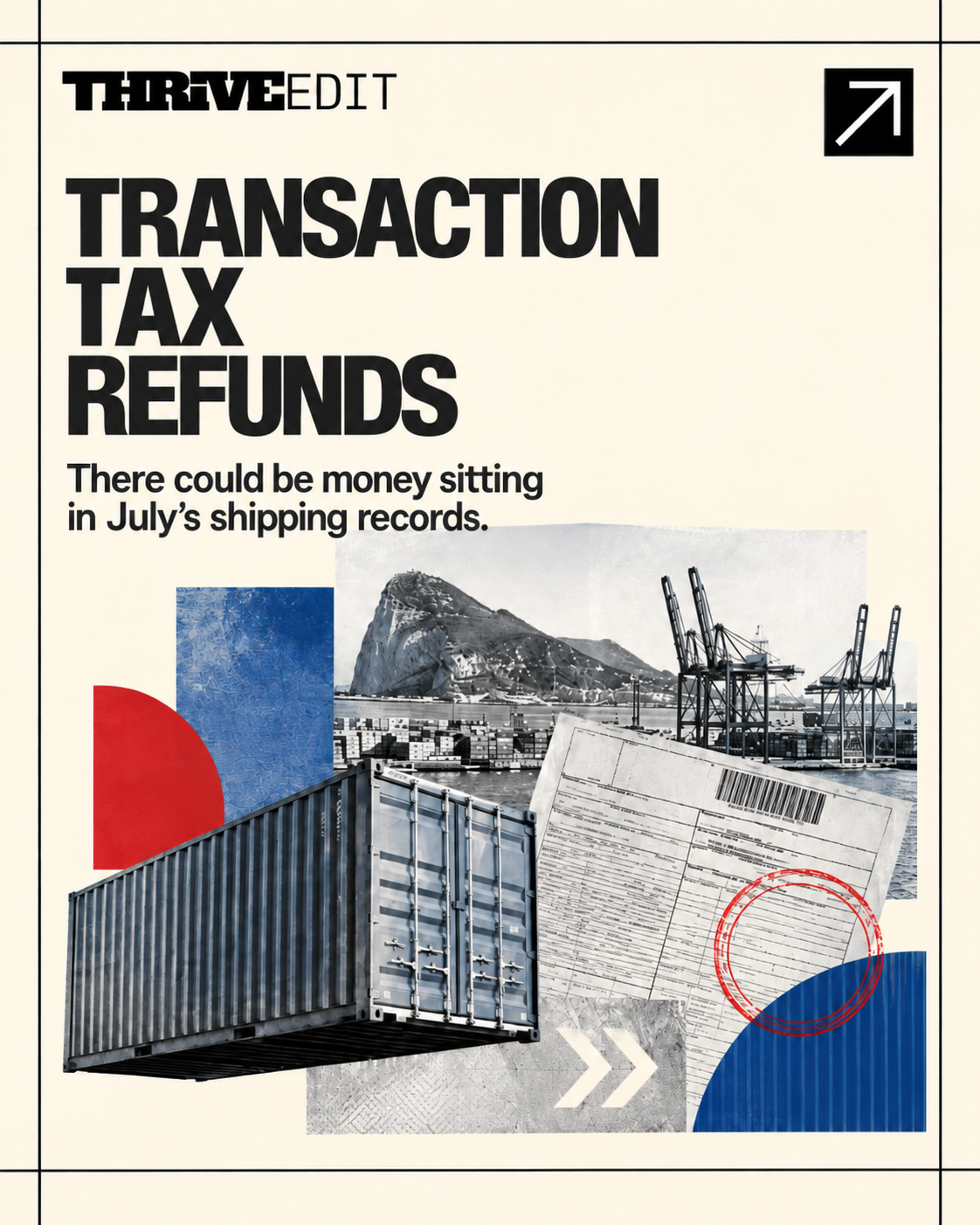
Imported goods around the Treaty changeover? It is worth going back through July’s paperwork. HM Customs has introduced a refund process for qualifying consignments that had already started their journey to Gibraltar before 15 July but were cleared afterwards.

Clocked out in August? Good for you. Thrive EDIT Editor David Revagliatte rounds up the Gibraltar business stories worth clocking back into. August is supposed to be the month when Gibraltar collectively eases off the accelerator. Judging by the news cycle, nobody told 2026. The first full month of life under the new Treaty arrangements brought a mixture of early optimism and very real teething problems for businesses. New employment rules landed, a pensions deadline crept closer, one of Gibraltar's most important airlines changed hands and a major local bank announced job cuts.