
 Gibraltar Federation of Small Businesses


 Gibraltar Federation of Small Businesses

David Revagliatte, Thrive EDIT Editor
Spain’s snap election lands just weeks before the Gibraltar Treaty reaches its final European ratification stage. With the new arrangements already operating, our attention is turning to whether today’s positive cooperation can withstand a change of government in Madrid.
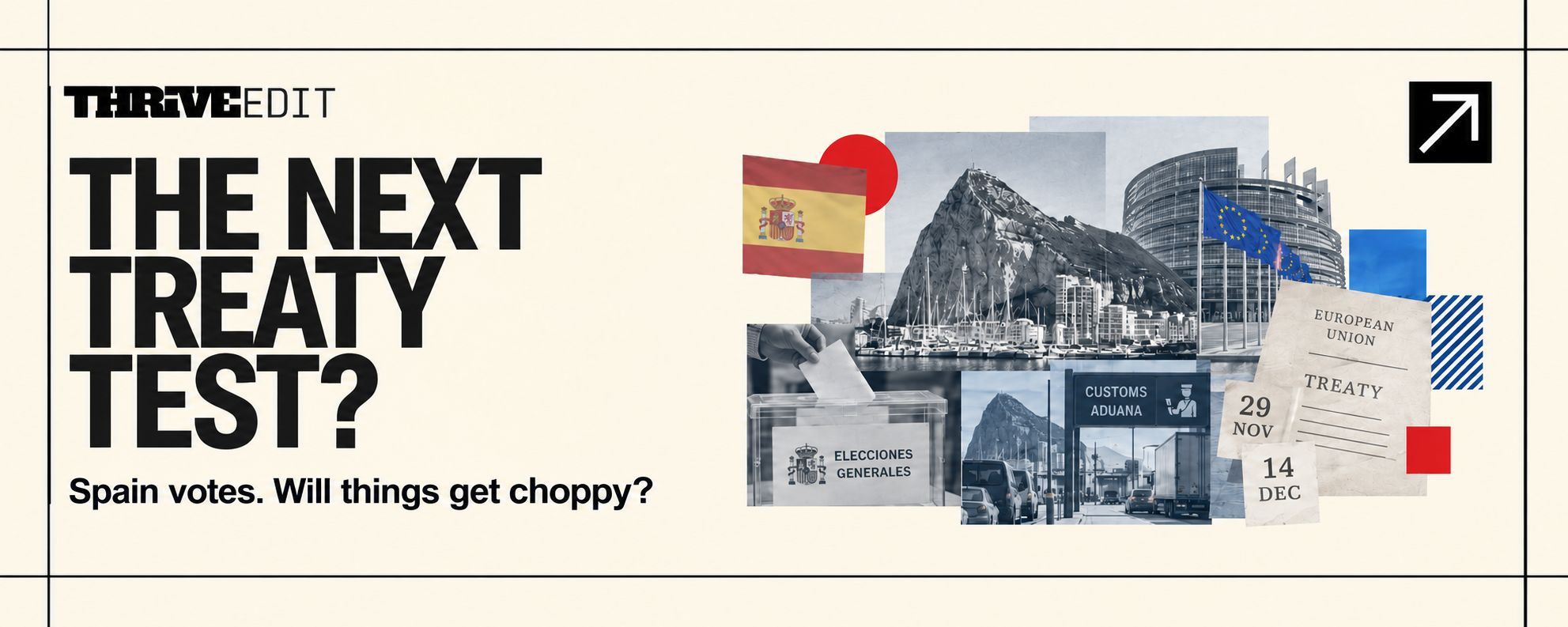
Vienen curvas people! Spain will go to the polls on 29 November, adding a major political event to the first months of our new relationship with the European Union. The European Parliament currently lists 14 December as the indicative date for its consent vote on the UK-EU Agreement on Gibraltar, barely two weeks after the Spanish election.
The electoral timetable provides an important qualification. Spain’s newly elected Congress and Senate are not due to convene until 23 December, after the expected European Parliament vote. Only then can the process of forming a new government move forward through consultations, an investiture debate and, potentially, coalition negotiations.
Depending on the election result, Spain could therefore enter 2027 before a new government is fully in place. The administration that negotiated the Treaty is consequently expected to remain in a caretaker capacity during the European Parliament’s current December ratification window.
The immediate question is less whether the Spanish election disrupts ratification and more whether the cooperative relationships developed during negotiation and implementation remain as effective once Spain’s next government takes office. That is a possibility Attorney General Michael Llamas raised before the election was called.
Speaking to the Gibraltar Chronicle in September, Llamas gave a broadly positive assessment of the first two months of provisional implementation. He described cooperation between Gibraltar Customs and its counterparts in La Línea as “excellent”, with officials in daily contact to resolve the practical issues emerging from an entirely new customs framework.
That working relationship has been important because goods have proved the most complex area of implementation. Questions about individual consignments, product requirements, customs procedures and Transaction Tax have frequently required officials on both sides to work through cases that could not have been fully anticipated when the Treaty was drafted.
Gibraltar has also shared its customs guidance with Spain’s Agencia Tributaria to encourage consistent interpretation of the new arrangements. Llamas acknowledged, however, that this level of operational cooperation has benefited from political support in Madrid for the Agreement. Asked in September what might happen under a future Spanish government taking a different approach, he was cautious about predicting the political impact. The Agreement is between the United Kingdom and the European Union. Spain’s responsibilities in implementing it therefore sit within wider EU Treaty obligations rather than being a purely bilateral matter between Madrid and Gibraltar.
If implementation were to fail systematically, the Agreement includes mechanisms that allow issues to move beyond day-to-day Gibraltar-Spain relations and into the formal UK-EU structures created by the Treaty. That distinction becomes more relevant now that political change in Spain is a live possibility.
Pedro Sánchez called the election after his minority government suffered another parliamentary defeat over housing measures. The campaign formally begins on 13 November ahead of polling on 29 November.
Current polling shows a fragmented political landscape, with the Partido Popular ahead in several surveys and Vox potentially significant to the arithmetic required to form a government. The official campaigning period hasn’t yet begun, and the composition of Spain’s next administration will depend on the result and any negotiations that follow.
The new Cortes will not assemble until 23 December. The King must then consult the political parties before nominating a candidate for prime minister, who must secure Congress’s confidence through an investiture vote. If the election produces a result requiring coalition or support agreements, those negotiations could carry into January.
That makes the sequencing around Gibraltar clearer. On the European side, the Treaty is currently awaiting a committee decision, with the European Parliament listing 14 December as the indicative plenary date for consent. Gibraltar Government said following meetings in Brussels on 2 October that it remained reassured the EU ratification process was on track for December.
The election result will therefore be known by then, but Spain’s next government should not yet have taken office.
As we all know, political attitudes can still influence goodwill and how smoothly an international agreement works in practice. A future Spanish administration would inherit a Treaty already signed, provisionally applied and, if the current European timetable holds, potentially through its final European Parliament consent stage.
The Treaty requires extensive cooperation in areas including customs, Schengen arrangements, policing, transport and the movement of goods. Formal obligations create the framework, but effective daily administration also depends on officials being empowered to resolve problems quickly and governments maintaining constructive channels when more difficult issues arise.
Vox has formally opposed it and argued that it fails to advance Spain’s sovereignty position sufficiently. The PP has questioned aspects of the ratification process and, together with Vox, previously argued that the Agreement should be put to a vote in the Spanish Congress and Senate.
Those positions do not establish how either party would administer an Agreement already operating if it entered government. They do explain why Gibraltar businesses will be interested in the approach adopted once Spain’s post-election administration is formed.
The issue is particularly relevant because the first months of implementation have demonstrated how much can be achieved through routine cooperation away from national political debate.
One of the Treaty’s longer-term tests is whether cooperation can become sufficiently institutionalised to operate effectively regardless of which governments hold office. The Agreement establishes formal structures including a Cooperation Council and specialised committees covering areas such as Schengen, goods and trade, and the airport. These provide routes through which implementation issues can be addressed and disputes escalated.
Llamas’s assessment in September was that the underlying framework was working even while officials dealt with a relentless flow of practical questions.
His comments also highlighted the distinction between cooperative political relationships and enforceable Treaty obligations. Positive relations between Gibraltar and Madrid can make implementation considerably easier, but the Agreement was constructed so that compliance does not depend entirely on goodwill between individual governments.
If a new Spanish administration is less enthusiastic about the Agreement, businesses will watch whether the surrounding structures are strong enough to preserve the predictability established in the opening months.
Spain’s election will take place against a Treaty landscape that is very different from the one that existed during the years of negotiation.
The Agreement is signed. It has been provisionally applied since July. Businesses and officials are already working within it, and the European ratification process is approaching its final stages.
The Spanish political calendar also means the immediate ratification timetable and the formation of a new government are unlikely to collide directly. If the European Parliament maintains its indicative 14 December vote, that decision will come before Spain’s new Cortes convenes.
The biggest test comes once the ballots have been counted and the dust settles. Gibraltar has so far benefited from constructive cooperation with Madrid during implementation. The question for 2027 is whether that cooperation has become sufficiently embedded in the Treaty’s legal and institutional framework to remain effective if Spain’s political leadership changes.




Customers now discover businesses through Google, Maps, AI answers and assistants. Learn how to track search visibility and build a practical baseline.
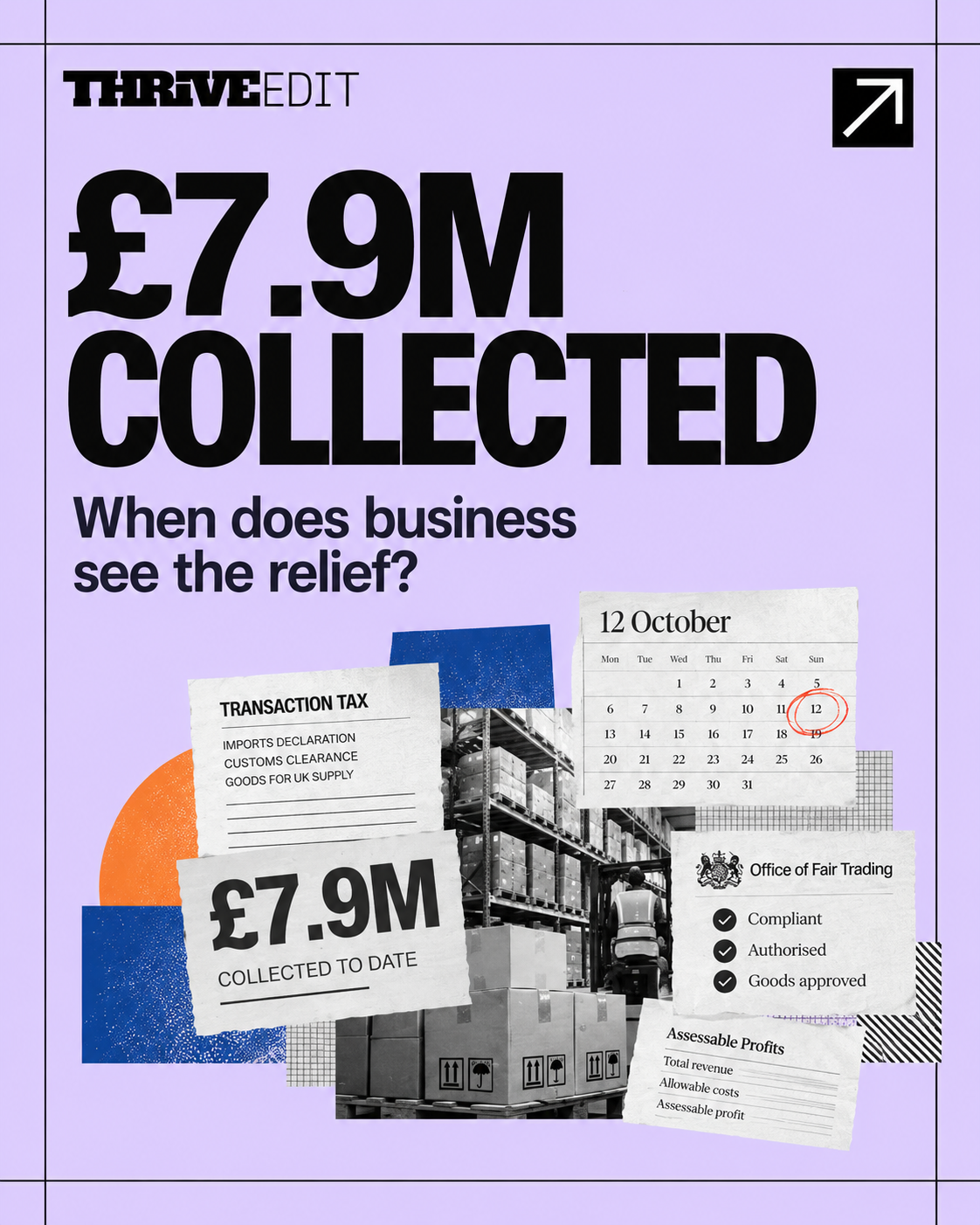
Nearly £8 million in Transaction Tax has been levied since 15 July. With the first 90-day support period ending on 12 October, qualifying businesses are now looking for clarity on how much relief they can access and when they will feel the benefit.

This week’s Do Better Business looks at cost-to-serve, price architecture and how businesses can make sure their pricing reflects the value and complexity built into what they actually deliver.

The frontier is easier to cross, Alcaidesa Marina’s €15m commercial development is taking shape and retailers are adapting to new import costs and changing customer habits. Drawing on recent conversations with Main Street businesses and our interview with Gemma Arias-Vasquez and Louis Montegriffo, we look at where Gibraltar retail goes next.

Algeciras and Tarifa are developing cruise offers of their own. Gibraltar remains the Bay’s established port of call, but a more ambitious regional tourism market makes the quality of each visitor’s experience here increasingly important. Thrive Editor, David Revagliatte explores what this could mean for local businesses. Gibraltar expects around 260 cruise calls in 2026. […]