
 Gibraltar Federation of Small Businesses


 Gibraltar Federation of Small Businesses

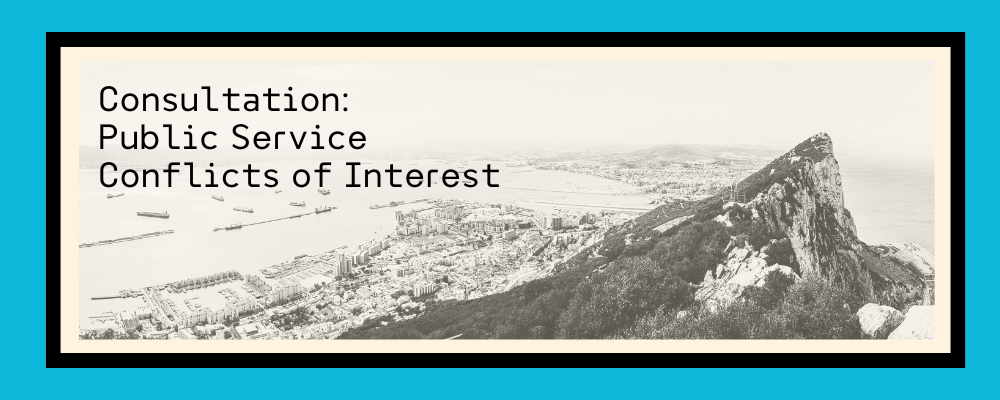
The Government has launched a consultation on a new Public Service (Standards and Conflict of Interests) Bill, legislation that would significantly reshape how public officials declare interests, handle conflicts, accept gifts, and are held to account. The Gibraltar Federation of Small Businesses has been invited to participate in this consultation and is circulating the briefing paper to members to gather informed feedback.
The Bill arises directly from Recommendations 1 and 2 of the McGrail Inquiry, following the Final Report into the retirement of the former Commissioner of Police, published in November 2025.
What the Bill is trying to do
The stated purpose of the Bill is to ensure that public business in Gibraltar is conducted in a way that is transparent, accountable, fair and in the public interest. It would also put the Standards in Public Life into statute for the first time, including openness, integrity, honesty, objectivity and leadership.
These standards would apply across a wide range of public officials and public bodies, as set out in a detailed schedule to the Bill.
Declaring interests and conflicts
A central feature of the draft legislation is the creation of formal, published registers of personal interests for every public body.
Public officials would be required to register and declare relevant personal interests and any conflicts of interest. Public bodies would also need to publish their arrangements for how conflicts are declared and managed, with limited scope for exemptions or redactions on grounds such as security or commercial sensitivity.
Public officials would have a statutory duty to avoid conflicts of interest and to resolve them immediately and in favour of the public interest where they arise.
Gifts, hospitality and meetings
The Bill would require all public bodies to publish clear rules governing the acceptance of gifts and hospitality, including thresholds, registration requirements and disclosure arrangements.
It would also introduce new obligations around the conduct of public business, including registers of official meetings and the taking and publication of minutes, subject to defined exemptions and redactions.
A new Commissioner with enforcement powers
The legislation proposes the creation of an independent Commissioner of Standards in Public Life, appointed through the Specified Appointments Commission.
The Commissioner would have powers to investigate complaints or act on their own initiative. Possible outcomes range from advice and reprimands to public naming, referral to regulators or law enforcement, and agreement of rectification measures.
Failure to comply with obligations under the Act could constitute a criminal offence, punishable by fines or imprisonment, subject to a defence of having taken all reasonable steps to comply.
What happens next
The Bill includes provision for extensive transitional arrangements, recognising that implementation will require time, administrative changes and new systems across the public sector.
Subordinate legislation, guidance and model arrangements would follow, all subject to parliamentary scrutiny.
Why the GFSB is engaging
While the Bill is focused on public officials, it has clear implications for how businesses interact with government, regulators and public bodies. Transparency, disclosure rules, meeting protocols and enforcement mechanisms all shape the operating environment for SMEs.
The GFSB has been invited to participate in the consultation and is sharing the briefing paper with members. The aim is to collect practical, business-focused feedback and distil it into a response that reflects members’ real-world experience before submitting it to HM Government of Gibraltar.
Next step: Members are encouraged to read the consultation note and share views with the GFSB on what works, what may create unintended consequences, and where clarity will be essential. This is a significant governance reform, and member input at this stage matters.


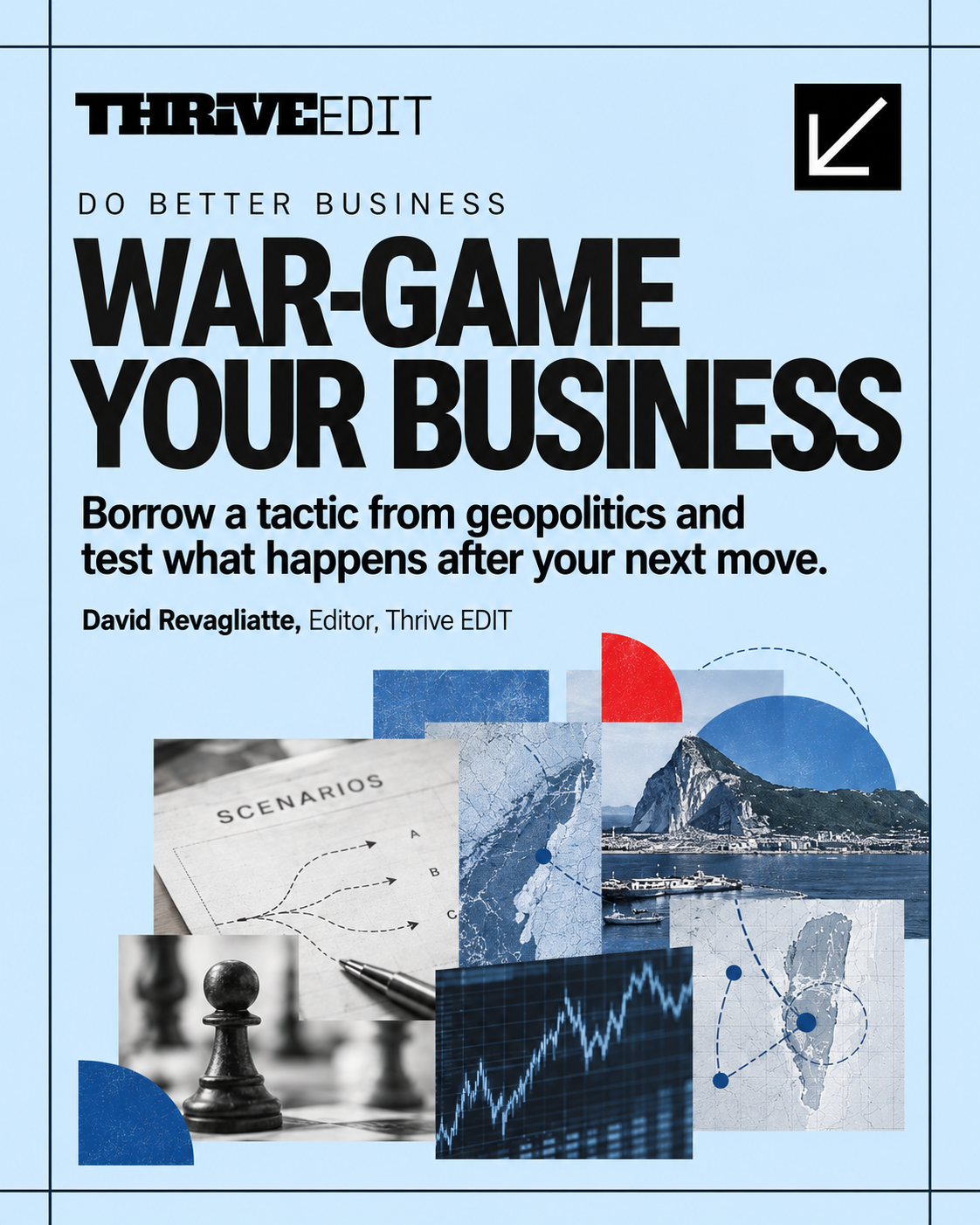

Governments and geopolitical strategists use simulations to test what might happen when other players react. The same thinking can help businesses challenge assumptions, anticipate competitors and prepare for decisions before real money is on the line.
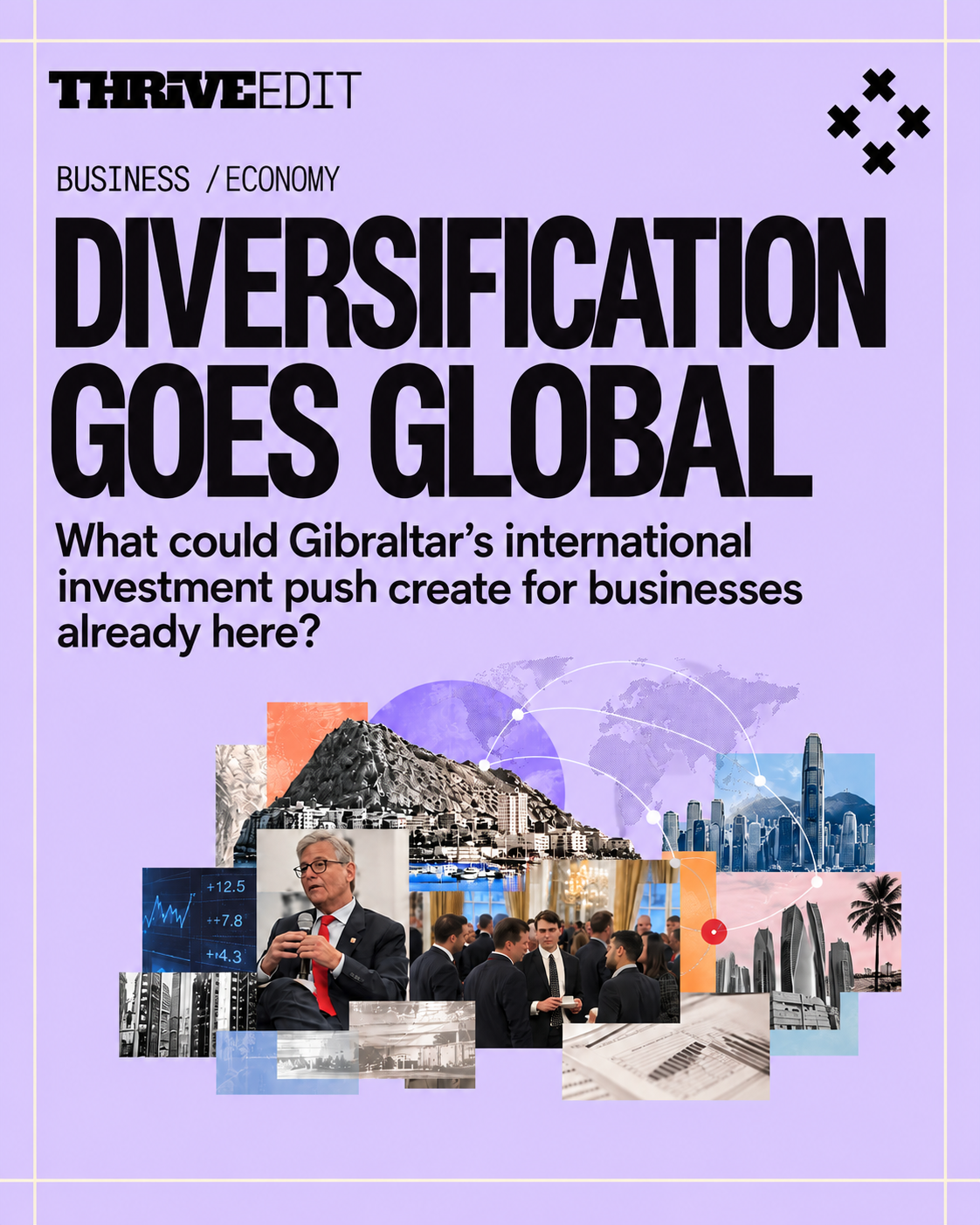
From Hong Kong to Abu Dhabi, Gibraltar is pursuing new industries and investors as part of a major economic diversification drive. Minister Nigel Feetham says the campaign is already generating business. The bigger question is how far those opportunities can spread through Gibraltar’s wider economy.

Gibraltar plans a new residency route for financially independent over-55s alongside a new business think tank announced at GibLink London.
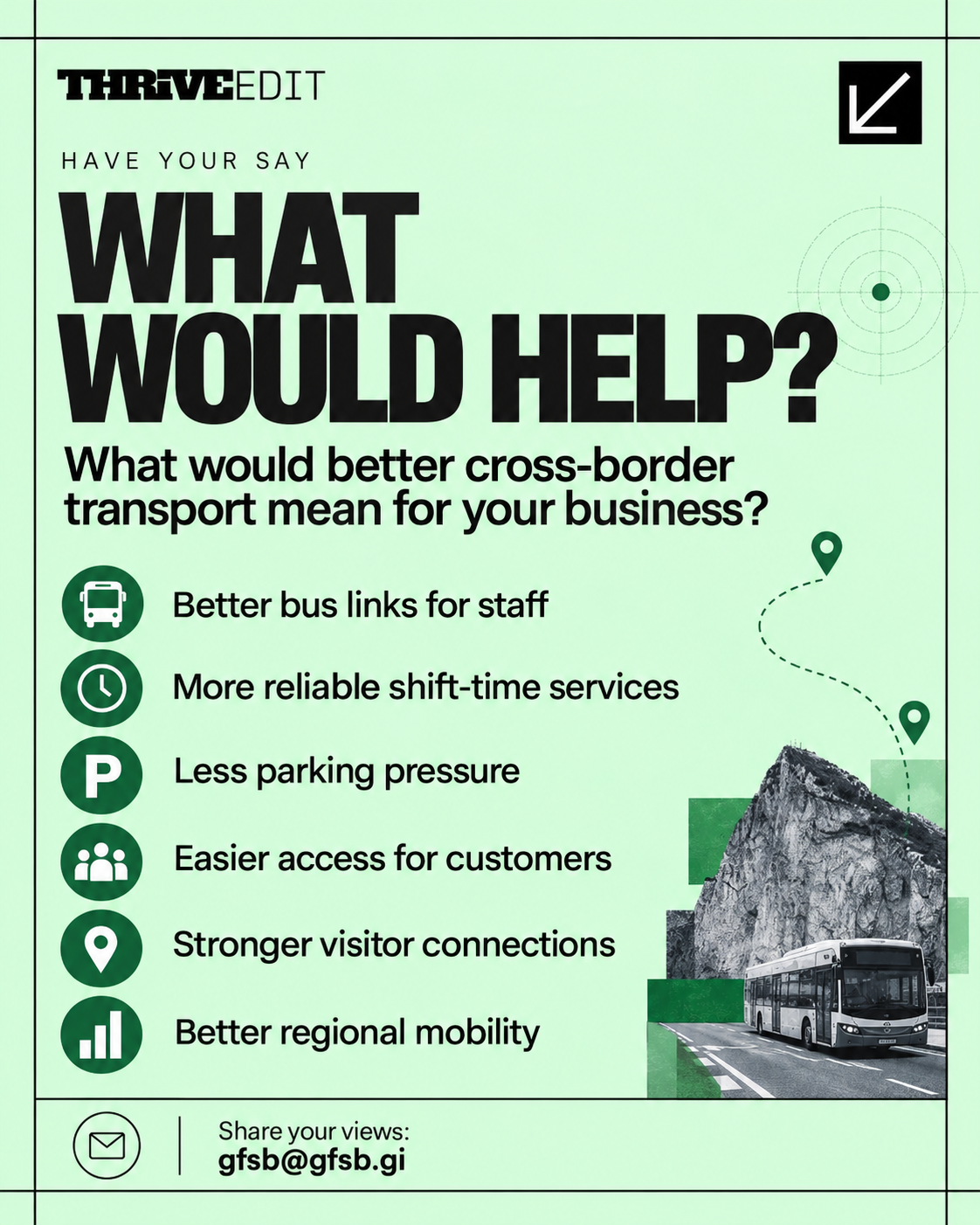
New frontier lanes and discussions around a cross-border transport interchange raise questions about buses, workers, visitors and business connectivity.
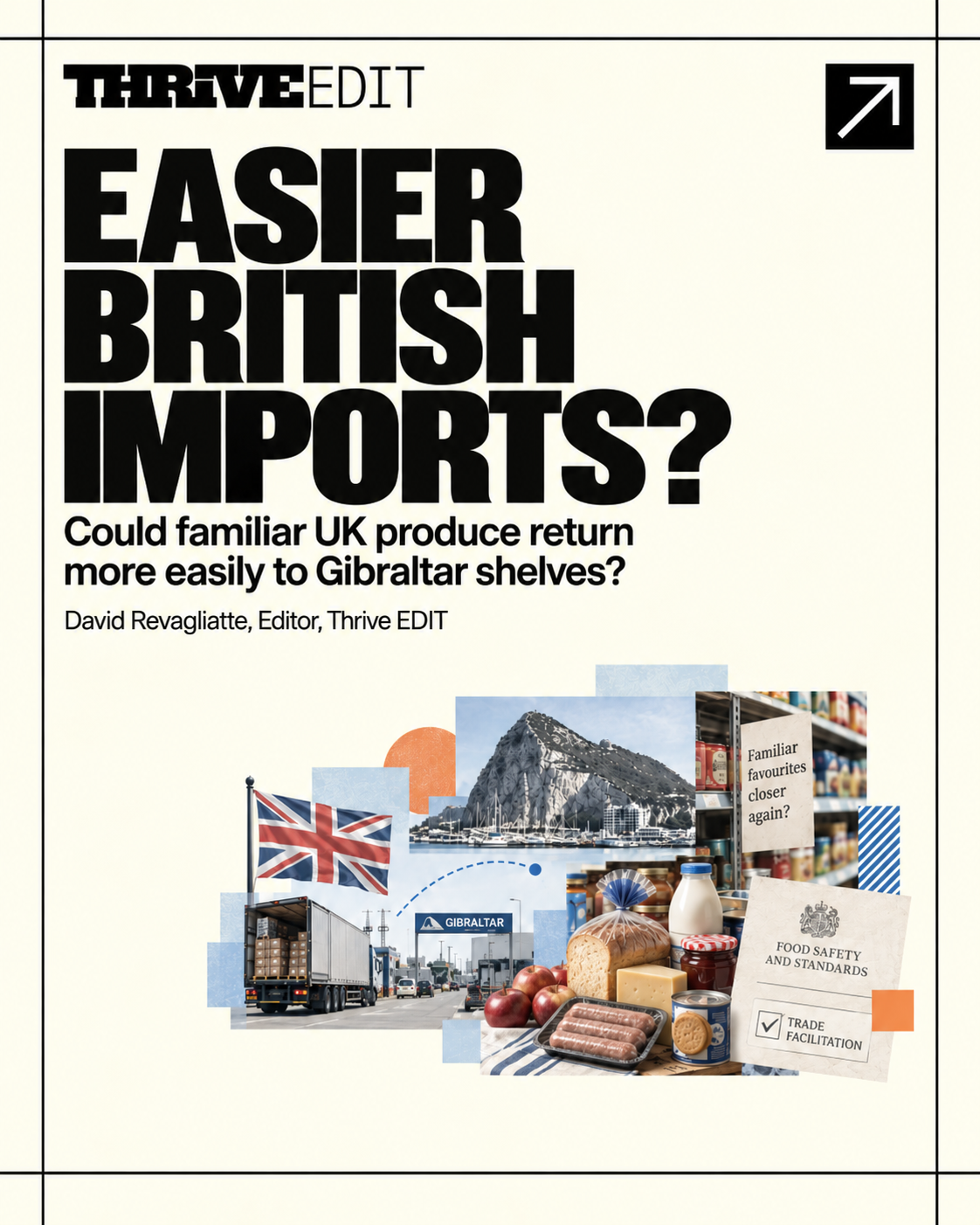
Could a future UK-EU food agreement make it easier for British produce to return to Gibraltar shelves? British produce has long been part of Gibraltar’s shopping experience; I wrote about it a couple of years ago, before we had a Treaty in place. From supermarket staples and fresh food to familiar household brands, we’ve spent […]