
 Gibraltar Federation of Small Businesses


 Gibraltar Federation of Small Businesses


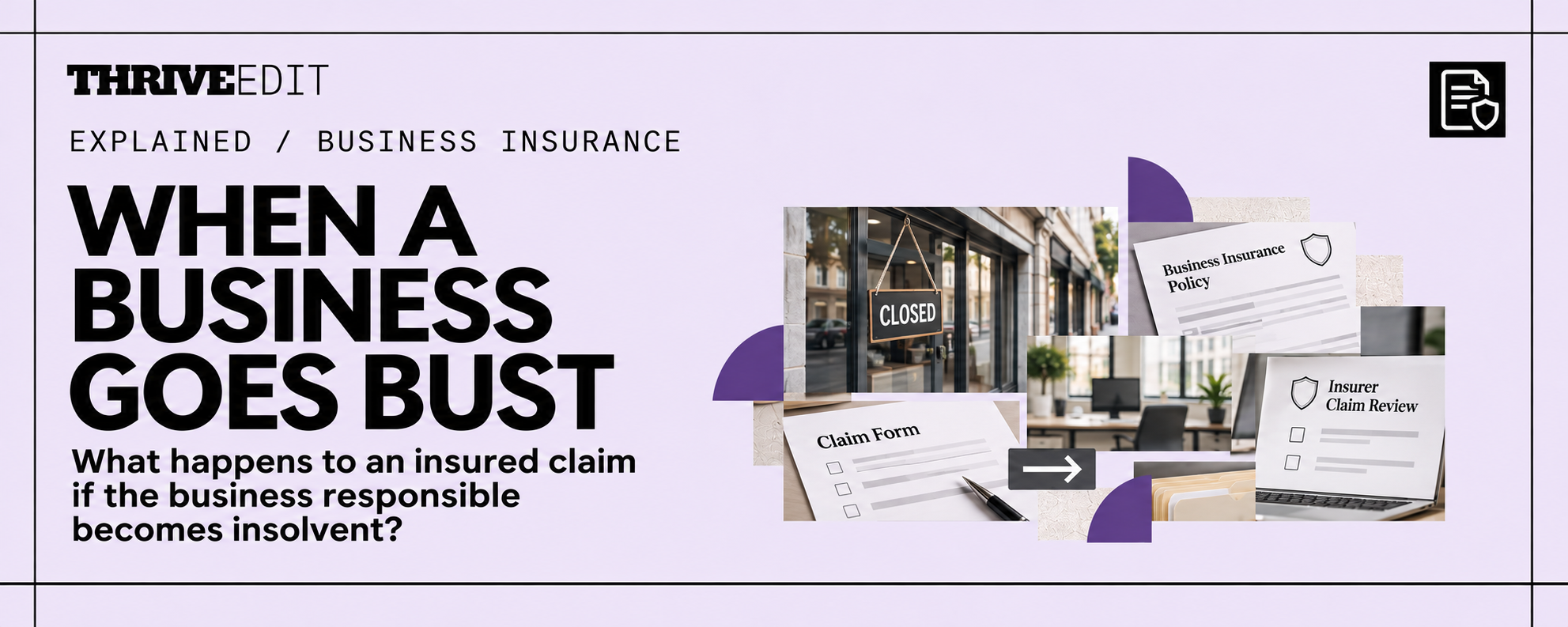
New legislation aims to make it easier to pursue an insurance claim when the business or person responsible becomes insolvent. Here’s what has changed and why it could be relevant to Gibraltar businesses.
What happens if you have a legitimate insurance claim against a business, but that business becomes insolvent before the insurer pays? Until now, Gibraltar’s legal framework has created difficulties for claimants in that position.
An insurance payment that might otherwise have compensated an injured customer or employee could instead become part of the insolvent business’s estate, available to creditors. Parliament has now passed the Third Parties (Rights against Insurers) Bill 2026, which aims to address that problem. The Bill was approved on 20 November and would give eligible claimants a more direct route to pursuing the insurer.
Consider a customer who suffers an injury at a business premises and has a valid claim against the operator.
The business has liability insurance, but becomes insolvent before the claim is resolved. Under the new framework, the claimant could pursue the insurer directly where the circumstances qualify and the policy covers the liability. The legislation transfers the insured party’s relevant rights under the policy to the claimant, allowing a claim to proceed without first obtaining a separate judgment against the insolvent business.
The claimant would still need to establish that the business was legally responsible for the injury and that the insurance policy covered the liability. Both issues could be determined in the same proceedings. The legislation also provides a route for claims where an insured company has been dissolved or removed from the companies register.
Presenting the legislation, the Government explained that Gibraltar previously had comparable provisions, but they disappeared from the statute book following changes to insolvency legislation in 2014.
The new Bill restores those rights through a modernised framework based on UK legislation. It also gives claimants improved rights to request information about relevant insurance policies. This could be particularly useful where a claimant has little access to the records of a business that has ceased trading.
No. The insurer would generally retain the defences and limitations available under the insurance contract. A claim would still need to be legally valid and fall within the policy’s coverage. The legislation also does not mean that every unpaid debt owed by an insolvent business can be claimed from its insurer. Its purpose is to address qualifying insured liabilities where a third party has suffered a loss and the insured becomes insolvent.
The change could be relevant to businesses involved in liability claims, particularly those where customers, employees or other third parties may have suffered an insured loss. It may also affect businesses that need to pursue claims against suppliers or contractors that subsequently become insolvent.
For insurers and brokers, the new framework could change how qualifying claims are handled, particularly where the policyholder has ceased trading. The legislation is also a useful reminder for business owners to understand the liability insurance they hold, the risks covered and the importance of maintaining proper policy records.
Parliament has passed the Bill, although its formal commencement must still be confirmed.
Once in force, the revised framework should provide a more straightforward route for eligible claimants when the business responsible can no longer meet its obligations.
The change could help prevent insolvency from becoming an additional barrier to pursuing a valid insured claim.




Gibraltar’s proposed smoke-free generation law could change how retailers sell tobacco, disposable vapes and nicotine products. Our practical explainer covers the generational sales restriction, the proposed bans, compliance checks and the transition period for existing stock.

Gibraltar’s frontier is entering another phase of redevelopment, with work under way on a £6.3m multi-agency facility and further changes planned for transport and roads. We examine the construction timetable and what the changes could mean for commuters, visitors and local businesses.

due to apply until March 2028, and wider customs difficulties remain. We look at the products covered, the potential savings and what importers still need clarified.

Gibraltar entrepreneur and GFSB member Amanda Simmons has been named Business Leader 2027 by Ladies That Rock The Rock. The award recognises a remarkable career that has taken her from the Royal Air Force to international professional services and the creation of Advisiom Global M&A, headquartered in Gibraltar.

How comfortable are we talking about our own achievements? The latest GFSB Women in Enterprise breakfast explored personal branding, confidence and professional visibility, with Grace Davis, Zoe Frendo and Jessica Podesta sharing their experiences and practical advice on making yourself more visible at work.