

 Gibraltar Federation of Small Businesses


 Gibraltar Federation of Small Businesses

Gibraltar may be entering a different phase of its development. The expected implementation of the UK-EU Treaty, together with anticipated changes to Gibraltar’s residency rules, could alter the profile of people looking at Gibraltar as a base. If financial thresholds rise, Gibraltar may attract fewer casual applicants and a more concentrated group of internationally mobile, high-value residents. That could include the ultra high net worth market.
For local businesses, the question is not simply whether more wealthy people may come to Gibraltar. It is whether Gibraltar’s business community is ready to serve a customer segment with very different expectations around service, privacy, speed, quality and trust.
What does Ultra High Net Worth mean?
Ultra High Net Worth, often shortened to UHNW, usually refers to individuals with a net worth of at least US$30 million.
This is a small group, but an influential one. Altrata’s World Ultra Wealth Report 2025 estimated that there were 510,810 UHNW individuals globally at the end of June 2025, collectively holding US$59.8 trillion in wealth. Although they represent only a tiny share of the wider high net worth population, they account for a significant proportion of global private wealth.
This market is not uniform. Some UHNW individuals are entrepreneurs who have recently sold businesses. Some are family business owners. Some are inheritors. Some are investors, fund principals, technology founders, sports figures, digital asset investors or private family office clients.
The important point is that UHNW individuals rarely make decisions in isolation. Behind one person or family there may be lawyers, tax advisers, trustees, investment managers, accountants, property advisers, security consultants, private bankers, relocation specialists and family office staff.
Serving this market is therefore not just about selling luxury. It is about entering a wider professional ecosystem.
Why are UHNW individuals moving?
The global wealthy are becoming more mobile.
Henley & Partners’ Private Wealth Migration Report 2025 tracks millionaire migration and highlights a world in which wealth is increasingly moving between jurisdictions. It frames this movement around political stability, quality of life, investment migration, tax residency, security, family planning and access to opportunity.
Recent UBS research points in a similar direction. Its Global Family Office Report 2026, reported by Reuters, found that geopolitical conflict had become the top concern for family offices surveyed, with many considering multi-jurisdictional strategies. UBS surveyed 307 clients worldwide, with participating families having an average net worth of US$2.7 billion.
This matters because the UHNW market is not only looking for pleasant places to live. It is looking for places that can help families manage complexity.
For some, that means access to safe and stable residency. For others, it means wealth structuring, succession planning, education, healthcare, lifestyle, international connectivity or a second base outside their home country.
UBS has also highlighted the scale of the generational wealth transfer now underway. In 2025, 91 heirs inherited a record US$297.8 billion, and multigenerational billionaire families were overseeing US$4.7 trillion in assets.
That is important because the next generation of UHNW families often has different priorities. They may be more international, more focused on technology, sustainability, philanthropy, digital assets, lifestyle and privacy. Gibraltar businesses hoping to serve this market will need to understand those shifts.
What kinds of places attract this market?
The jurisdictions that attract UHNW individuals tend to share several characteristics.
They usually offer political and legal stability, a respected professional services sector, high-quality property, personal safety, international connectivity and a clear residency framework. Many also offer competitive tax or special residency regimes, although tax is rarely the only factor. Monaco is one of the best-known examples: small, safe, highly international, expensive and built around a dense ecosystem of wealth, property, yachting, private banking, family offices and luxury services.
Switzerland has long attracted global wealth through stability, privacy, banking expertise, education and quality of life. The UAE, particularly Dubai and Abu Dhabi, has grown rapidly as a wealth hub by combining connectivity, luxury infrastructure, financial centres, safety and an internationally minded business environment.
Italy offers a different model. Its special regime for new residents allows qualifying individuals transferring tax residence to Italy to pay a substitute tax on foreign income. The Italian regime has been widely discussed in the private wealth sector as one of Europe’s major draws for globally mobile wealthy individuals.
Singapore provides another example. It has positioned itself as a stable, well-regulated Asian wealth hub, with strong banking, family office and asset management credentials. The lesson across these examples is that UHNW attraction is rarely about one policy. It is about the whole ecosystem.
Where does Gibraltar fit?
Gibraltar already has built some relevant foundations. It has a long-established professional services sector, English common law roots, a regulated financial services environment, an international business community, a recognised Category 2 residency framework and proximity to Spain, the wider Mediterranean and the UK.
It is also moving into a new Treaty context. The UK-EU Agreement on Gibraltar includes provisions on frontier workers, transport and financial mechanisms, while Gibraltar Government technical notices have set out transitional arrangements for goods, transaction tax and EU standards linked to the Treaty’s implementation.
For UHNW individuals, that combination could be attractive if it brings greater fluidity, clearer cross-border arrangements and a more predictable long-term environment. But Gibraltar should not assume that wealthy residents will come simply because the rules change. The UHNW market has choices. Monaco, Dubai, Switzerland, Italy, Portugal, Malta, Singapore and others are competing for the same people and have established lifestyle and leisure markets geared towards this market.
Gibraltar’s opportunity is not to become a copy of those places. It is to be a small, connected, highly professional base for people who value discretion, access, responsiveness and a strong bridge between the UK, Gibraltar, Spain and the Mediterranean.
What opportunities could this create for local businesses?
The most obvious opportunity is property, but it should not be viewed too narrowly. UHNW residents often need more than a high-end apartment. They may require property search, acquisition support, interior design, security, maintenance, housekeeping, smart home installation, private chefs, personal training, wellness services, art installation, insurance and ongoing management.
Professional services could also see demand. Lawyers, accountants, fiduciary firms, tax advisers, trustees, relocation specialists and compliance professionals may all be part of the decision-making process. This market will expect joined-up advice, quick response times and absolute clarity about what can and cannot be done.
Financial services may also benefit, particularly where clients require private banking support, investment administration, fund structures, insurance, pensions, succession planning or family office coordination. The growth of global family office activity suggests that UHNW clients increasingly expect strategic oversight, not just individual services.
Hospitality and lifestyle businesses may find opportunities too. High-end dining, private dining, concierge services, health and wellness, personal training, beauty, medical services, luxury retail, events, cultural experiences and bespoke travel can all play a role.
There may also be opportunities in education and family support. Globally mobile families often look closely at schooling, tutoring, childcare, university preparation, sports coaching and enrichment opportunities for children.
For B2B firms, there is another angle: UHNW individuals are often business owners, investors or principals behind larger structures. They may need office space, boardroom facilities, local directors, corporate support, secure technology, cyber advice, communications support, reputation management or help building a local presence.
This is where Gibraltar’s small size can become an advantage. In a larger city, a new resident may be one of thousands. In Gibraltar, the right businesses can provide highly personal, responsive support.
What will this market expect?
The UHNW market is demanding, but not always in obvious ways. Service standards matter. So does privacy. So does speed. A slow reply, vague process or casual handling of personal information can quickly damage trust.
Businesses serving this segment need to think carefully about presentation, discretion and professionalism. Websites, proposals, contracts, follow-up emails, payment processes and staff training all matter. So does the ability to work with advisers rather than only the end client.
This market also dislikes friction. Businesses that can make things simpler will stand out. That could mean clear onboarding, secure document sharing, flexible appointment times, multilingual support, private meeting spaces, reliable introductions and a willingness to coordinate with other trusted providers.
It is also important not to confuse wealth with wastefulness. UHNW clients may spend significantly, but they are often advised by professionals and expect value, competence and accountability.
Luxury is not enough. Trust is the product.
The broader picture
If Gibraltar attracts more UHNW residents, the opportunity for local businesses could be significant. But it will not be automatic.
The businesses best placed to benefit will not necessarily be the ones that simply raise their prices or add the word “luxury” to their marketing. They will be the ones that understand the needs of globally mobile individuals and families, invest in service quality, protect confidentiality and build relationships with the advisers who influence decisions.
For Gibraltar, this is also about balance. Attracting international wealth can bring spending, investment, professional work and new opportunities. But it must sit alongside the needs of the local community, housing accessibility, public services and the character of Gibraltar itself.
A successful UHNW strategy should not be about turning Gibraltar into somewhere else. It should be about ensuring that, if this market grows, local businesses are ready to serve it well and Gibraltar captures the value in a way that supports the wider economy.
The UHNW market is small in number, but large in influence. If Gibraltar is entering a new phase, understanding this segment now could help small businesses prepare for the opportunities that may follo




Governments and geopolitical strategists use simulations to test what might happen when other players react. The same thinking can help businesses challenge assumptions, anticipate competitors and prepare for decisions before real money is on the line.
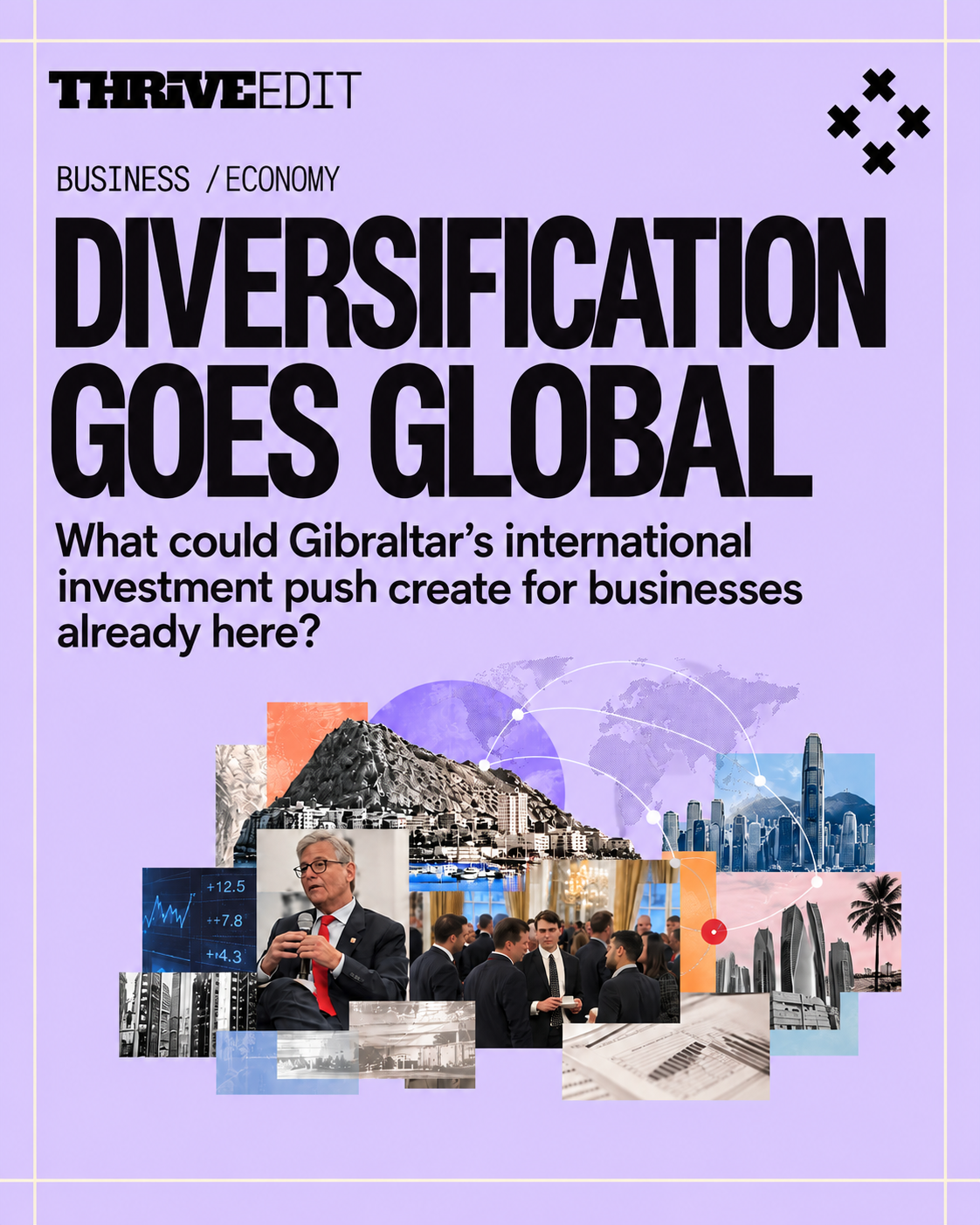
From Hong Kong to Abu Dhabi, Gibraltar is pursuing new industries and investors as part of a major economic diversification drive. Minister Nigel Feetham says the campaign is already generating business. The bigger question is how far those opportunities can spread through Gibraltar’s wider economy.
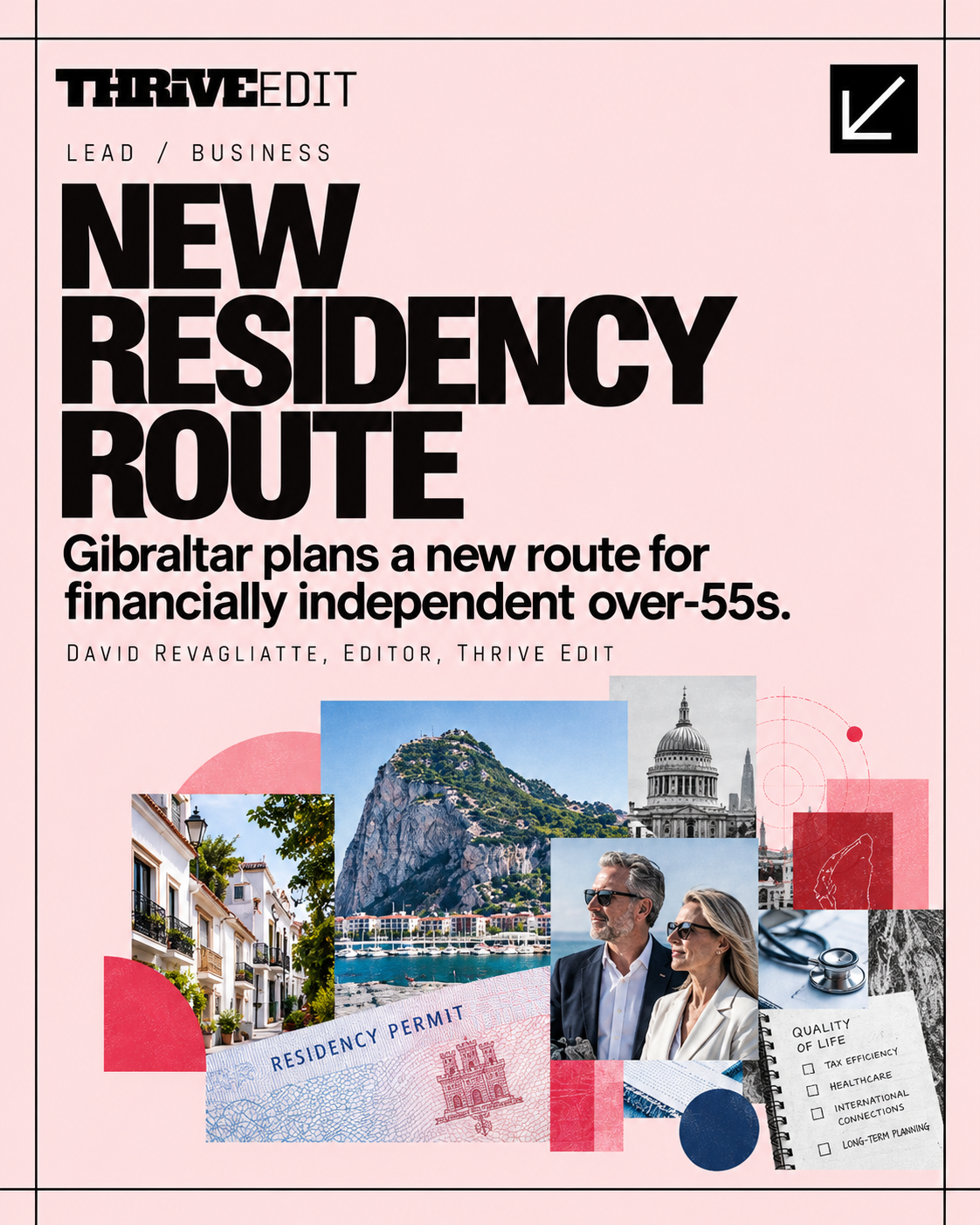
Gibraltar plans a new residency route for financially independent over-55s alongside a new business think tank announced at GibLink London.

New frontier lanes and discussions around a cross-border transport interchange raise questions about buses, workers, visitors and business connectivity.
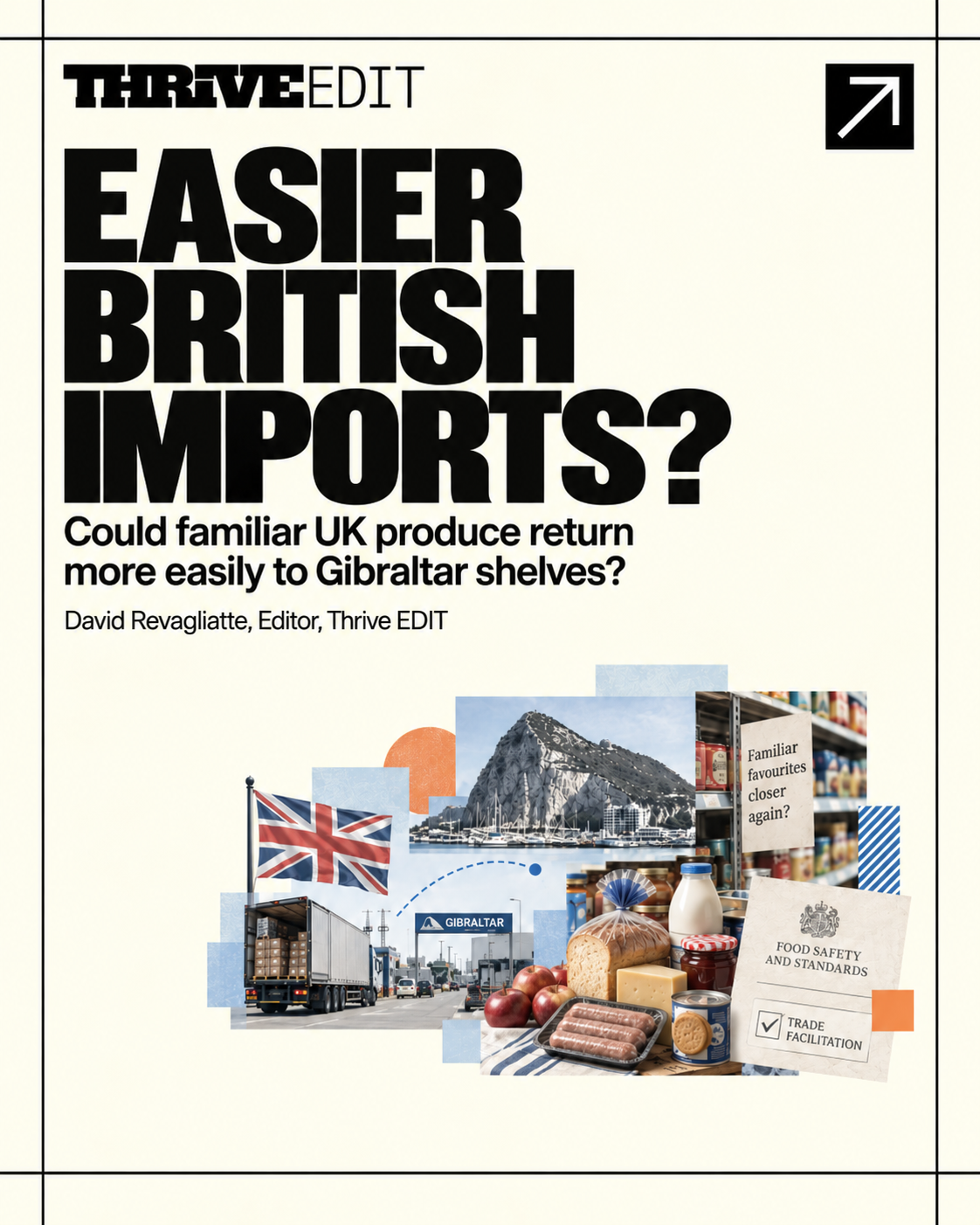
Could a future UK-EU food agreement make it easier for British produce to return to Gibraltar shelves? British produce has long been part of Gibraltar’s shopping experience; I wrote about it a couple of years ago, before we had a Treaty in place. From supermarket staples and fresh food to familiar household brands, we’ve spent […]